







Features:
-
Category:
-
Posted at:
-
Author:
- Fabienne Rauw
-
BAUNAT Antwerp
-


-
Reading time:13 minutes
In this article:
- What is considered a fine engagement ring, also known as a simple engagement ring?
- Reasons to opt for thin engagement rings
- Which setting styles work best with thin bands
- What to look out for
- Choosing BAUNAT
- Which metal should I choose for a thin band? Practical pros & maintenance
- How to order a custom thin-band engagement ring from BAUNAT
The timeless appeal of engagement rings with thin bands
Fine, finer, finest... Some people may like to show off a huge diamond ring on their finger, while others prefer something slightly more subtle. Engagement rings with thin bands are delicate and subtle, which is ideal for today’s professional men and women who love wearing their jewellery on a daily basis. A fine engagement ring allows you to wear it day in and day out and not the type of ring you must keep in a safe to protect its value.
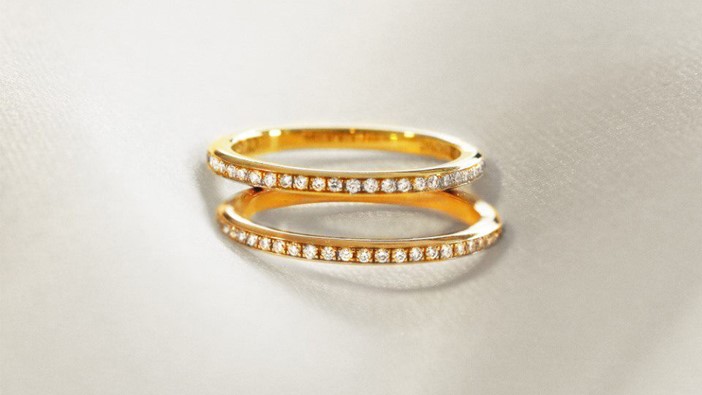
The subtleness is also popular amongst women who love more discrete jewellery that add that extra bit of sparkle without being too noticeable. Fine engagement rings are also trendy amongst fashionistas who love to stack several rings together on the same finger.
Read summary
Why Are Thin Band Engagement Rings So Popular?
Are you looking for an elegant yet subtle engagement ring? Thin band engagement rings offer a delicate alternative to bulkier traditional styles. With bands between 1.5-2mm (compared to the standard 2.5mm), these rings provide a refined aesthetic perfect for daily wear.
Thin bands are especially appealing to professionals and those who prefer understated jewelry. They're also ideal for fashionistas who enjoy stacking multiple rings on one finger. These rings come in two main styles: those featuring a center stone that becomes the focal point, or bands adorned with tiny diamonds for subtle sparkle.
Beyond their elegant appearance, thin bands offer practical benefits. They're more affordable, creating the illusion that diamonds appear larger while using less precious metal. They complement delicate fingers beautifully and are comfortable for everyday wear.
When choosing a thin band, opt for durable materials like platinum or 18kt gold, and remember to handle with care during active pursuits.
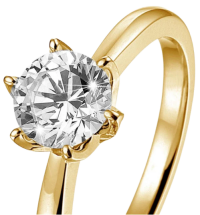
5 Questions to Find Her Perfect Engagement Ring
Are you planning to propose? Finding the right engagement ring is a defining step. Every ring is handcrafted in Antwerp from the finest materials by skilled artisans. Discover what engagement ring fits her personality.
Most viewed diamond jewels
-
![0.50 carat solitaire ring in white gold with four prongs and side diamonds]() Bestseller0.50 carat solitaire ring in white gold with four prongs and side diamondsFrom USD 3.190,00 (excl. VAT)
Bestseller0.50 carat solitaire ring in white gold with four prongs and side diamondsFrom USD 3.190,00 (excl. VAT) -
![1.90 carat solitaire ring in white gold with oval diamond]() Bestseller1.90 carat solitaire ring in white gold with oval diamondFrom USD 4.630,00 (excl. VAT)
Bestseller1.90 carat solitaire ring in white gold with oval diamondFrom USD 4.630,00 (excl. VAT) -
![0.70 carat solitaire ring in white gold with princess diamond and side diamonds]() Bestseller0.70 carat solitaire ring in white gold with princess diamond and side diamondsFrom USD 4.040,00 (excl. VAT)
Bestseller0.70 carat solitaire ring in white gold with princess diamond and side diamondsFrom USD 4.040,00 (excl. VAT) -
![1.00 carat solitaire ring in white gold with side diamonds]() Bestseller1.00 carat solitaire ring in white gold with side diamondsFrom USD 4.760,00 (excl. VAT)
Bestseller1.00 carat solitaire ring in white gold with side diamondsFrom USD 4.760,00 (excl. VAT) -
![0.70 carat solitaire diamond ring in white gold with side diamonds]() 0.70 carat solitaire diamond ring in white gold with side diamondsFrom USD 3.750,00 (excl. VAT)
0.70 carat solitaire diamond ring in white gold with side diamondsFrom USD 3.750,00 (excl. VAT)


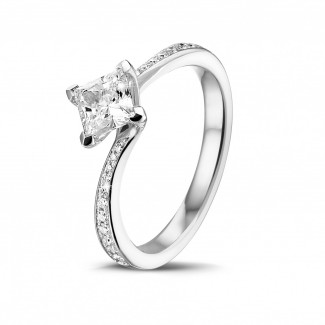


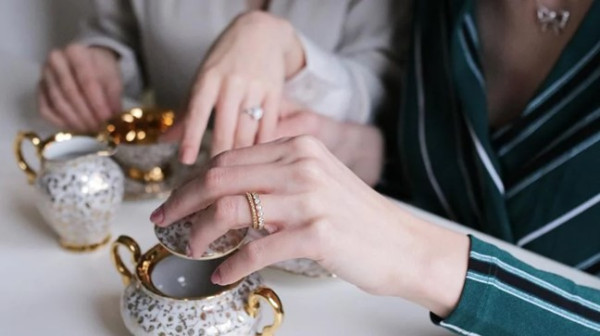
What is considered a fine engagement ring, also known as a simple engagement ring?
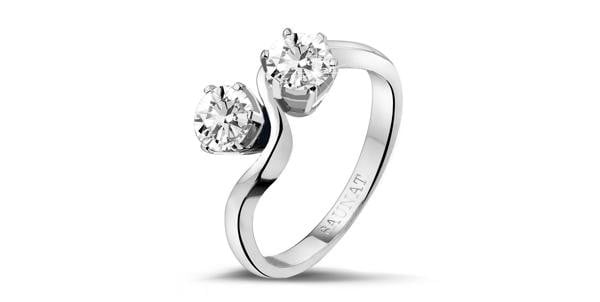
- With a centre stone: Many thin engagement rings showcase a small diamond or gemstone, delicately set in a slender band. This design emphasises elegance while allowing the stone to take centre stage.
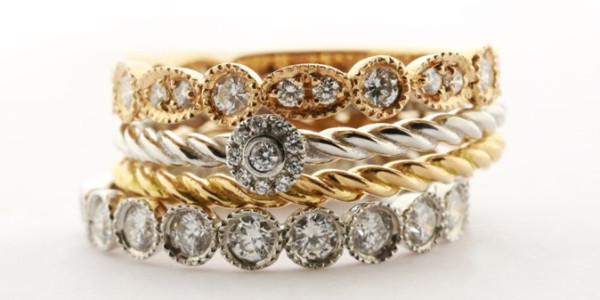
- Adorned with tiny stones: Another popular variation includes bands embellished with tiny stones, offering a subtle sparkle that enhances the ring's delicate appearance. These are often referred to as eternity rings, and can definitely be worn as an engagement ring for those who love the appeal of thin bands combined with small diamonds.
Ultimately, the choice between these designs depends on personal style and preference. Thin engagement rings are celebrated for their ability to embody both simplicity and sophistication, making them a favoured choice for many.
Reasons to opt for thin engagement rings
- Cost-effectiveness: Thin alloy bands are more affordable, allowing you to allocate your budget towards a larger diamond if you wish. The slimmer design not only reduces material costs but also creates an illusion that the diamond appears bigger and more prominent, enhancing its visual impact without the expense of a larger stone.
- Stacking possibilities: A thin band provides ample space to stack an engagement ring with your wedding band and other cherished rings, resulting in a uniquely beautiful ensemble.
- Perfect fit for delicate fingers: If your partner has slender fingers, a finer engagement ring can accentuate their elegant hand shape.
- Everyday wear: A fine engagement ring allows for daily wear and doesn't require being kept in a safe to protect its value.
Which setting styles work best with thin bands
Pavé shoulders: Pavé settings place small stones close together along the band, producing continuous sparkle without bulk. On thin bands pavé shows well but needs careful stone sizing and stronger metal around each setting. Pavé suits a delicate transition from band to centre stone, though there are limits on the maximum individual stone diameter that keep the setting secure.Channel and scallop settings: Channel-set stones sit between two metal strips and read as a streamlined line. On thin bands a shallow channel or scalloped profile works for half-eternity designs while keeping a low profile. Channels protect stone edges, but a very narrow full eternity risks thinning the metal between stones unless dimensions are conservative.
Flush (rub-over) and bezel styles: Flush or rub-over settings keep stones low and surrounded by metal. These options are well suited to thin bands meant for daily wear, because they reduce snagging and lower the chance of stones coming loose. Flush settings can make each stone look smaller than a prong-set pavé.
Prong-solitaire and claw profiles: A solitaire on a thin band highlights the centre stone. For very fine bands claws are often reinforced to keep the setting secure, which slightly alters the ring’s silhouette. Solitaires pair well with narrow bands because the lack of side stones keeps the design clean.
Durability and conservative minimum widths by style
These are practical, conservative guidelines to preserve long-term security and wearability. They are engineering-minded recommendations based on typical stone sizes and standard setting techniques, not guarantees. Full eternity (stones around the entire band): avoid widths below approximately 1.8–2.0 mm, because very narrow fully-set bands leave minimal metal between stones and increase deformation risk. Pavé shoulders and half-eternity designs: aim for bands at or above approximately 1.6 mm, depending on pavé stone diameter; smaller pavé diamonds allow narrower shoulders. Flush/rub-over settings and bezel accents: because stones are more protected, slightly narrower widths can be considered, but keep enough metal depth to set stones properly without over-thinning.What happens if you go thinner than recommended
If a design goes below these conservative guides, risks increase: stone loss becomes more likely, claws or bezels may need to be enlarged which changes the delicate look, or the maximum safe stone size is reduced. BAUNAT’s in-house jewellers review each design and advise on minimum viable dimensions for both appearance and security, often suggesting small adjustments to preserve the thin profile while protecting the stones.
What to look out for
Depending on the level of activity in your life, a fine ring may be a little fragile to some extent so it should be handled carefully when undertaking extreme activities like contact sports or surfing. Also, advise your fiancée to safely store their ring in a safe during your holidays. Sand, seawater, and pool water could damage the ring.
Choosing BAUNAT
When it comes to selecting a fine, simple engagement ring, BAUNAT's impressive collection of designer rings and personal service are second to none. Whether you prefer to wear our natural diamond rings independently or coupled with others for a stacked effect, BAUNAT's handcrafted rings are ready to adorn your hand beautifully.
Feel free to explore our extensive collection online or reach out to us for personalised guidance, ensuring you find the perfect ring to symbolise your love story.
Which metal should I choose for a thin band? Practical pros & maintenance
Platinum
Pros: Platinum is dense and keeps its mass at small widths, making it the preferred choice for ultra-thin fully set or pavé styles where structural strength matters. It develops a soft patina that some customers like.Maintenance notes: over time the surface may show fine scratches and a subtle patina; this is a natural ageing characteristic rather than damage.
18kt gold (yellow or rose)
Pros: 18kt yellow and rose gold offer warm tones and remain an excellent option for thin solitaire or flush-set rings. They balance appearance with sufficient gold content for durability at slim widths.Maintenance notes: gold will wear gradually and may show surface scratches; professional polishing restores the original finish.
18kt white gold
Pros: 18kt white gold gives the bright, silvery look many clients prefer while keeping the metal content at a premium level.Maintenance notes: all BAUNAT's jewellery in white gold is alloyed with high-quality palladium to make its silvery-white colour last longer. Using palladium ensures that the white gold alloy needs to be coated in rhodium less frequently. Pure white gold doesn’t exist. The white gold ring has always been a very popular choice for wedding rings.
Practical recommendations by use-case
- Platinum and white gold are both precious metals. Platinum is rarer and more expensive than white gold. It’s stronger too. White gold has a distinct shiny silver colour, whereas platinum looks more greyish-white. Both are mixed with other metals for strength. BAUNAT for example alloys its white gold with palladium, a rare precious metal which ensures a long lasting colour of the white gold. A ring in white gold is more traditional and more symbolic than a platinum one.- Everyday thin solitaire or flush-set styles: 18kt gold (yellow, rose or white) offers pleasing tones and satisfactory durability.
- Mix-and-match stacking sets: choose the metal that best complements other rings in the stack, noting that different metals age differently.
General maintenance guidance
Thin bands face more wear. Regular visual checks for loose stones and occasional professional inspections help keep security and finish in good condition. Avoid harsh chemicals and remove rings for heavy manual tasks to extend the life of any thin-band ring.
How to order a custom thin-band engagement ring from BAUNAT
Whether you want an ultra-delicate solitaire or a slim pavé shoulder, commissioning a bespoke thin-band ring at BAUNAT follows a clear, collaborative process that balances style with engineering. Below is a practical step-by-step walkthrough of what to expect and the main decisions you will make.1) Initial consultation and preparation
You can start with a virtual consultation or an in-showroom appointment. For a focused conversation, bring an idea of her ring size, preferred metal colour and a few style references (images or links). Virtual calls let us compare designs on screen; visiting the showroom is best for trying on widths and seeing metal finishes up close.
2) Choosing the centre stone and band type
Decide whether the ring will centre on a single stone or use smaller diamonds along the band. Common thin-band options include a solitaire with slim shoulders, pavé shoulders, half-pavé or half-eternity, and full eternity. Each has trade-offs: a solitaire keeps the profile minimal; pavé adds sparkle; full eternity gives continuous brilliance
3) Metal and finish selection
BAUNAT works with platinum and 18kt gold. The metal colour (white, yellow or red tones) affects contrast with the diamonds and how the ring will age.
4) Design approvals: sketches, 3D renders and samples
After you decide style and metal, BAUNAT provides 3D renders so you can check proportions: band width, setting height and stone scale. Decisions include exact band width, claw or bezel profiles, and full versus half-eternity if relevant.
5) Crafting and qualitative timeline expectations
Made-to-order pieces are handcrafted in BAUNAT’s Antwerp atelier. Crafting a bespoke thin-band ring involves delicate stone-setting and precise finishing, so the work is thorough. Each project follows a workflow of metal preparation, setting trials and final polishing.
6) Quality Control
Before the ring leaves the atelier there is a quality control. BAUNAT provides aftercare advice specific to the chosen metal and setting.
Checklist: key decisions during a bespoke thin-band order
- Consultation type: virtual or in-showroom
- Exact ring size and style references
- Centre stone size range
- Band style: solitaire, pavé shoulder, half/full eternity
- Metal choice and finish (platinum or 18kt options)
- Final approval on 3D renders
Commissioning a custom thin-band ring lets you fine-tune proportions and technical choices so the piece looks delicate while remaining secure. Contact BAUNAT to request a personalised quote and to book a design consultation.
-
Fabienne Rauw
-
BAUNAT Antwerp
-
-
Fabienne, manager of the German market is able to guide every client with finding the right jewel. She takes care of most of the German orders, but also takes other task on her plate. Thanks to her six years of experience at BAUNAT she acquainted well with the product and the marketing around it. Her degree in PR ensures that BAUNAT is well presented across all media channels. For anyone looking into a new investment opportunity, Fabienne is the perfect guide in this process. No question will be left unanswered, and she will help you every step of the way.
Fabienne, manager of the German market is able to guide every client with finding the right jewel. She takes care of most of the German orders, but also takes other task on her plate. Thanks to her six years of experience at BAUNAT she acquainted well with the product and the marketing around it. Her degree in PR ensures that BAUNAT is well presented across all media channels. For anyone looking into a new investment opportunity, Fabienne is the perfect guide in this process. No question will be left unanswered, and she will help you every step of the way.