







Features:
-
Category:
-
Posted at:
-
Author:
- An Van Puyvelde
-
An Van Puyvelde - Order & Administration Manager
-


-
Reading time:12 minutes
In this article:
- Why consider sapphires vs diamonds?
- Why diamonds and sapphires look different: composition, brilliance and size
- Diamonds: unsurpassed elegance
- Resale and long‑term value: what to expect
- Sapphires: the blue symbol of strength
- Sapphires: practical care and setting trade-offs
- Sapphire vs diamond price comparison
- Sapphire vs Diamond: Price breakdown
- Can’t choose after all? Combine both with BAUNAT
Sapphire or diamond engagement ring comparison guide
Choosing between a sapphire or diamond engagement ring can be a daunting task- each has its own distinctive allure. A sapphire in a wedding ring will bring a happy marriage while a diamond ring represents a commitment to love and affection.
We have compiled a comprehensive summary of both options, and a unique proposition for those who find making a choice between the two a bit challenging - a modern dual-stone ring featuring both a diamond and a sapphire!
Read summary
Which is Better: A Sapphire or Diamond Engagement Ring?
Struggling to choose between a sapphire or diamond engagement ring? Both gemstones offer unique appeals for your special moment. Diamonds, symbolizing eternal love, boast unmatched durability, brilliant sparkle that persists even when dirty, and traditional elegance. However, they come with higher price tags and potential ethical concerns about mining practices.
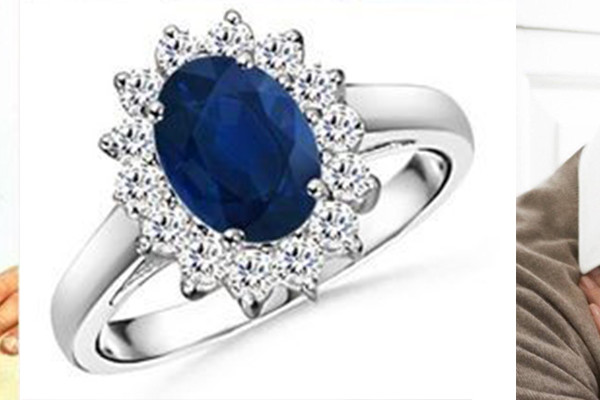
Sapphires represent strength and loyalty, offering distinctive blue hues and uniqueness in every stone. Popular among royalty like Kate Middleton, sapphires are generally more affordable while still providing excellent durability, though they require more maintenance to preserve their sparkle.
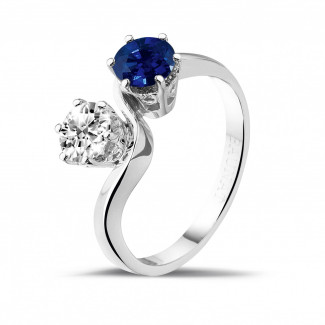
Can't decide? Consider a "toi et moi" ring that incorporates both gemstones, symbolizing the union of two unique personalities and giving you the best of both worlds—timeless diamond brilliance alongside vibrant sapphire allure.
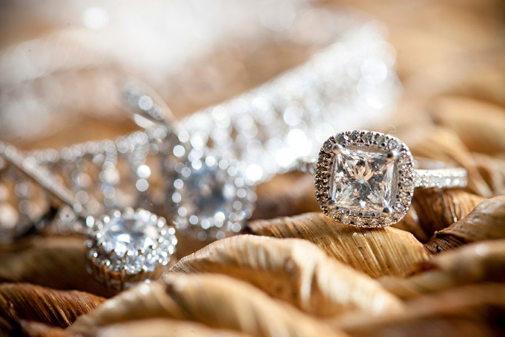
Most viewed diamond jewels
-
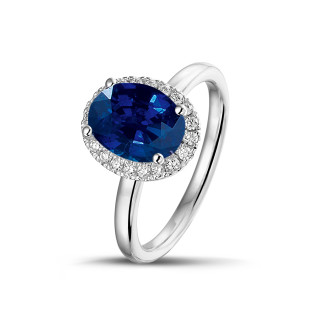
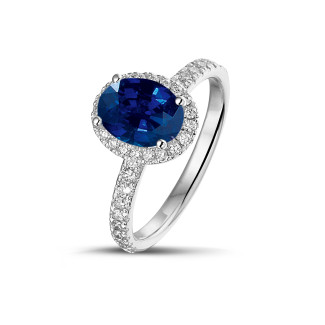
![Halo ring in white gold with an oval sapphire]() Halo ring in white gold with an oval sapphireFrom USD 8.880,00 (excl. VAT)
Halo ring in white gold with an oval sapphireFrom USD 8.880,00 (excl. VAT) -
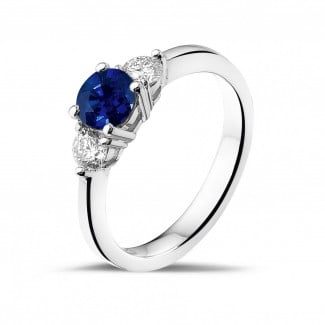
![Trilogy ring in white gold with a central sapphire and 2 round diamonds]() Trilogy ring in white gold with a central sapphire and 2 round diamondsFrom USD 4.820,00 (excl. VAT)
Trilogy ring in white gold with a central sapphire and 2 round diamondsFrom USD 4.820,00 (excl. VAT) -
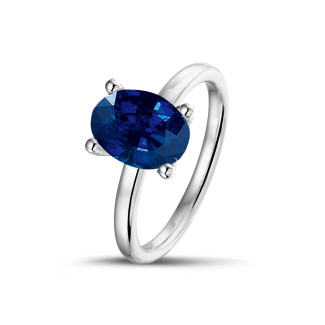
![Ring is white gold with oval sapphire]() Ring is white gold with oval sapphireFrom USD 6.670,00 (excl. VAT)
Ring is white gold with oval sapphireFrom USD 6.670,00 (excl. VAT) -
![Toi et Moi ring in white gold with round diamond and sapphire]() Toi et Moi ring in white gold with round diamond and sapphireFrom USD 5.340,00 (excl. VAT)
Toi et Moi ring in white gold with round diamond and sapphireFrom USD 5.340,00 (excl. VAT) -
![Halo solitaire ring in white gold with an oval sapphire and small diamonds]() Halo solitaire ring in white gold with an oval sapphire and small diamondsFrom USD 1.750,00 (excl. VAT)
Halo solitaire ring in white gold with an oval sapphire and small diamondsFrom USD 1.750,00 (excl. VAT)
.
Why consider sapphires vs diamonds?
Why diamonds and sapphires look different: composition, brilliance and size
Refractive index and brilliance
Diamond has a refractive index of about 2.42. Sapphire’s refractive index is roughly 1.76–1.77. A higher refractive index means the gem bends light more as it enters and exits, which helps create the bright return of white light. Diamonds also show higher dispersion, the separation of white light into spectral colours, which creates the familiar “fire.” Together, the higher refractive index and dispersion make diamonds return more sparkle and colourful flashes than sapphires cut to similar proportions.Density, specific gravity and how size reads
Sapphires are denser than diamonds. Corundum has a specific gravity near 4.00, while diamond’s is about 3.52. Practically, a one‑carat sapphire will occupy slightly less physical volume than a one‑carat diamond. If face‑up size matters, many buyers choose a slightly larger carat weight for sapphires or select a cut that spreads the stone’s diameter.Optical phenomena that add variety
Sapphires can show effects diamonds usually do not. Pleochroism makes a sapphire display different colours from different angles, which adds depth to the blue. Some sapphires show asterism, the star effect seen in star sapphires, or chatoyancy, the cat’s‑eye effect, both caused by aligned inclusions. Diamonds can show rare phenomena such as colour‑change or chameleon behaviour, but those are exceptions rather than the norm.How this affects buyer choices
If you want maximum brilliance and lively interplay of white light and spectral flashes, diamonds deliver that effect. If you prefer deep colour, optical character and occasional rare phenomena, sapphires offer variety diamonds rarely match. Knowing these technical differences helps you translate stone specifications into the visual result you expect in an engagement ring. 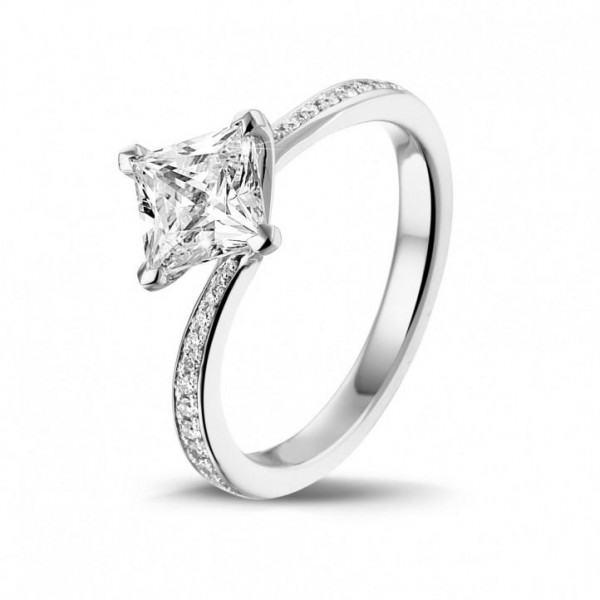
Diamonds: unsurpassed elegance
Diamonds are distinctively classified based on several criteria including colour, carat weight, clarity, and cut. For those whose style veers towards the classic and elegant, an engagement ring adorned with the flawless diamond could be the perfect pick.
Resale and long‑term value: what to expect
- Exceptionally high-durability (the highest for any natural stone found on the planet)
- The gemstones are not easily scratched
- Diamonds are considered to be more traditional for wedding proposals
- They refract more light than sapphires which makes them appear more brilliant and adds to their overall value
- Diamonds sparkle even when dirty or unpolished
Cons of a diamond engagement ring:
- Diamond engagement rings are often less affordable than those with sapphires
- Resizing diamond rings can be challenging for even the most experienced jewellers
- For those concerned about environmental repercussions, diamond mining is often unregulated and therefore there is little control over its impact on the environment
Sapphires: the blue symbol of strength
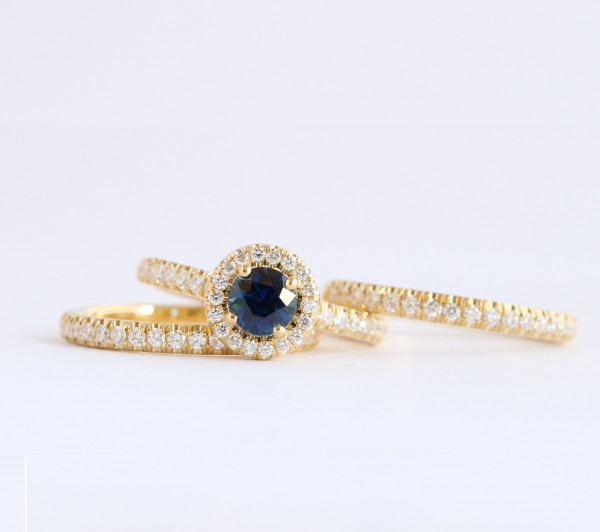
Famous personalities and royalty alike, including Lady Diana and Kate Middleton, have adorned sapphire rings, enhancing their popularity over the years. If your partner appreciates a more vintage style, she may find a sapphire ring the perfect addition to her collection.
Sapphires: practical care and setting trade-offs
Diamonds: preserving brilliance and certification’s role
Diamonds retain their sparkle well, yet everyday residues such as skin oils and lotions will dull their fire. Gentle cleaning with mild soap and soft water usually restores brightness. Choosing a high‑quality cut also improves daily performance. Certificates from recognised laboratories document the Four Cs, and that documentation is useful at purchase and later for appraisal or resale.- High-durability compared to other gemstones like emerald or ruby
- The value is often determined by its rich blue colour
- They also come in a variety of (less common) colours to match every skin tone
- Every sapphire is completely different which means an engagement ring is guaranteed to be unique, making them a more intimate choice than diamonds
- The cut of sapphire is less important than the cut of a diamond because it is harder to see inclusions of a sapphire with the naked eye
Cons of a sapphire engagement ring:
- It is more damage-prone than diamond
- They can more easily be scratched than diamonds
- The gemstone will lose its sparkle and dull if not properly maintained or left to get dirty
Sapphire vs diamond price comparison
Diamonds tend to be more expensive due to their rarity, high demand, and the cutting work involved to maximise their brilliance.
While high-quality sapphires can reach premium prices, they are often more affordable than diamonds of comparable size and quality. The origin of the sapphire (such as Kashmir or Ceylon) can also impact the price.
Sapphire vs Diamond: Price breakdown
Sapphires
- Low: entry‑level sapphires used in everyday jewellery, usually heated and with modest colour saturation. These are the most accessible option and commonly used as smaller accent stones.- Mid: good‑quality sapphires with even, attractive blue tones and limited obvious treatment. This bracket is popular for engagement rings.
- High: top‑quality sapphires with vivid saturation, good clarity and a fine cut, sometimes from sought‑after origins. - Rare: untreated stones or specialty varieties such as fine Kashmir or Padparadscha sapphires, which command strong premiums.
Diamonds
- Low: lower‑colour or lower‑clarity natural diamonds, or small melee stones.- Mid: well‑cut, near‑colourless natural diamonds with solid clarity grades. This is a common choice for solitaire engagement pieces.
- High: diamonds with outstanding colour, clarity and cut combinations, larger sizes or exceptional proportions.
- Rare: truly exceptional natural diamonds with extraordinary colour or clarity that place them at the top of market pricing.
Four‑Cs style price drivers: what moves the needle
Diamonds - Cut, Color, Clarity, Carat, and certification
- Cut: cut quality most affects appearance. A superior cut increases brightness, fire and scintillation and usually adds value. Well‑proportioned cuts with good polish and symmetry attract premiums.- Color: diamonds are graded by body colour; less body colour generally raises price for white diamonds. Small differences in grade can change value noticeably.
- Clarity: fewer inclusions raise price, especially in larger stones where inclusions are easier to spot.
- Carat: weight influences price non‑linearly. Larger, high‑quality natural diamonds are rarer and typically cost more per carat.
- Certification: a report from a reputable laboratory documents the Four Cs and supports resale and comparison
Sapphires- Colour saturation, Origin, Treatments, Clarity, Carat
- Colour saturation and hue: the chief price driver for blue sapphires. Stones with a pure, deep blue and strong saturation fetch higher prices than pale or unevenly coloured examples.- Origin: sapphires from historically prized locales can carry premiums because collectors and connoisseurs value their characteristic colours.
- Treatments: heat treatment is common and accepted when disclosed; unheated stones in excellent colour are rarer and thus more valuable.
- Clarity: sapphires tolerate some inclusions, but clean stones with strong colour command higher prices.
- Carat: larger sapphires are rarer and more valuable, though face‑up size effects differ because of density and common cuts.
Lab‑grown diamonds and budget shifts
Lab‑grown diamonds change the usual price dynamic. Chemically and optically similar to natural diamonds, lab‑grown stones typically trade at lower per‑carat prices than equivalent natural stones. That lets buyers choose a larger stone or a higher standard of cut or clarity for the same budget. When comparing options, note whether a diamond is natural or lab‑grown and look for a lab report that states origin.Practical note for buyers
These price bands are market snapshots, not guarantees. The best way to assess value is to compare actual stones with certificates and clear provenance information. For sapphires focus on colour saturation and treatment disclosure; for diamonds focus on cut and certification. If provenance or rarity matters, untreated sapphires from prized origins and top‑graded natural diamonds occupy the premium end of the market. Can’t choose after all? Combine both with BAUNAT
-
An Van Puyvelde
-
An Van Puyvelde - Order & Administration Manager
-
-
An supervises BAUNAT’s order processing and logistics, working closely with the internal order team to ensure a seamless customer experience. She plays a key role in coordinating production timelines and maintaining clear communication with clients throughout the entire process. With a strong focus on precision and reliability, An is dedicated to delivering each piece on time while keeping customers fully informed, contributing to BAUNAT’s high standard of service and customer satisfaction.
An supervises BAUNAT’s order processing and logistics, working closely with the internal order team to ensure a seamless customer experience. She plays a key role in coordinating production timelines and maintaining clear communication with clients throughout the entire process. With a strong focus on precision and reliability, An is dedicated to delivering each piece on time while keeping customers fully informed, contributing to BAUNAT’s high standard of service and customer satisfaction.