







Features:
-
Category:
-
Posted at:
-
Author:
- Dolce Dupont
-
Dolce Dupont – Diamond Jewellery Advisor, Antwerp
-


-
Reading time:11 minutes
In this article:
Alternative methods to resize your rings
Have you just received your diamond ring and realized it doesn't quite fit? Or maybe you've had a favorite ring for years, but your fingers have grown or shrunk over time. Whatever the reason may be, resizing can help ensure that your ring fits comfortably and securely on your finger.
Permanently resizing the ring is the safest and most effective option for optimal comfort. However, there are instances where resizing may not be ideal. If the ring holds sentimental value as an heirloom or if you experience fluctuations in finger size due to weight loss or temperature changes, you may hesitate to permanently alter its size. Additionally, if the ring fits well over your knuckles but tends to spin or move on your finger, it presents another challenge. In what follows we will elaborate on different resizing techniques without permanently adjusting the ring size.
5 Questions to Find Her Perfect Engagement Ring
Are you planning to propose? Finding the right engagement ring is a defining step. Every ring is handcrafted in Antwerp from the finest materials by skilled artisans. Discover what engagement ring fits her personality.
Most viewed diamond jewels
-
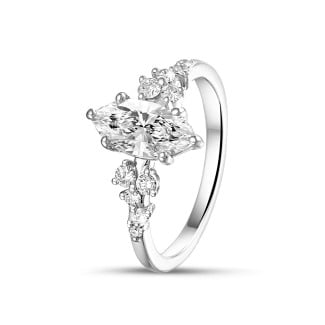
![1.00 carat solitaire cluster ring in white gold with marquise diamond]() BestsellerNew1.00 carat solitaire cluster ring in white gold with marquise diamondFrom USD 4.400,00 (excl. VAT)
BestsellerNew1.00 carat solitaire cluster ring in white gold with marquise diamondFrom USD 4.400,00 (excl. VAT) -
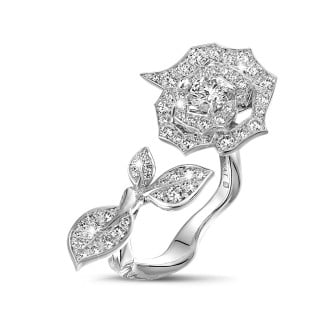
![0.95 carat diamond rose design ring in white gold]() NewPrincess Delphine0.95 carat diamond rose design ring in white goldFrom USD 16.000,00 (excl. VAT)
NewPrincess Delphine0.95 carat diamond rose design ring in white goldFrom USD 16.000,00 (excl. VAT) -
![1.00 carat solitaire ring with an asscher cut diamond in white gold]() Bestseller1.00 carat solitaire ring with an asscher cut diamond in white goldFrom USD 4.700,00 (excl. VAT)
Bestseller1.00 carat solitaire ring with an asscher cut diamond in white goldFrom USD 4.700,00 (excl. VAT) -
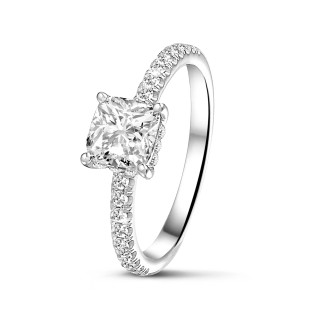
![1.00 carat solitaire ring with a cushion diamond and hidden halo in white gold]() BestsellerNew1.00 carat solitaire ring with a cushion diamond and hidden halo in white goldFrom USD 4.010,00 (excl. VAT)
BestsellerNew1.00 carat solitaire ring with a cushion diamond and hidden halo in white goldFrom USD 4.010,00 (excl. VAT) -
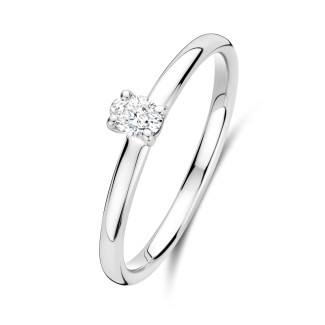
![0.15 carat solitaire ring with a oval cut diamond in white gold]() New0.15 carat solitaire ring with a oval cut diamond in white goldFrom USD 2.210,00 (excl. VAT)
New0.15 carat solitaire ring with a oval cut diamond in white goldFrom USD 2.210,00 (excl. VAT)

.
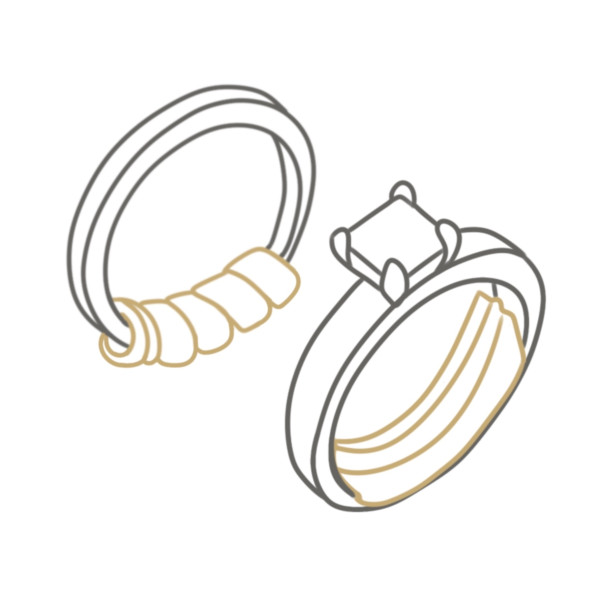
Plastic size adjusters
Fit diagnostics and safe at-home temporary fixes
How to tell your ring is the wrong size
- It spins freely on the finger or frequently needs straightening.- It slips off or leaves red marks and indentations.
- It will not pass comfortably over the knuckle, or conversely it passes the knuckle but then moves too loosely on the finger.
If you see any of these signs, measure at room temperature when fingers are neither swollen nor very cold, and compare with a ring that fits well on the same finger.
Safe step-by-step temporary fixes you can try at home
- Tape method (short-term): use painter’s tape or a non-permanent adhesive tape. Wrap a narrow strip around the inner shank where it contacts the skin, add two to four thin layers and test the fit. Aim to build up evenly without sharp edges. Check comfort and circulation after a few minutes and remove the tape if it bunches or irritates.- Thread or dental floss: wind a clean piece of waxed thread or dental floss around the inside of the band in thin, even turns until the fit feels secure. Tie or tuck the end so it cannot unwind. This is low-cost and easy to remove, but inspect frequently for wear.
- Use a second ring as a spacer: wear a slightly smaller plain band above or below the loose ring to hold it in place. This preserves the original ring and is useful for short outings.
Practical maintenance tips for plastic adjusters
- Check the adjuster regularly for looseness or movement, particularly after washing hands or exposure to water.- Avoid prolonged soaking or heavy cleaning while an adjuster is in place, as some adhesives and plastics degrade with solvents and heat.
- Replace cheap or worn adjusters promptly; a secure fit is safer than a degraded makeshift solution.
When to stop using at-home fixes
If a temporary solution causes discomfort, circulation issues, or frequent loosening, stop using it and consult a professional. Temporary fixes are useful for short-term needs, but repeated problems usually indicate a permanent, professional solution is more appropriate.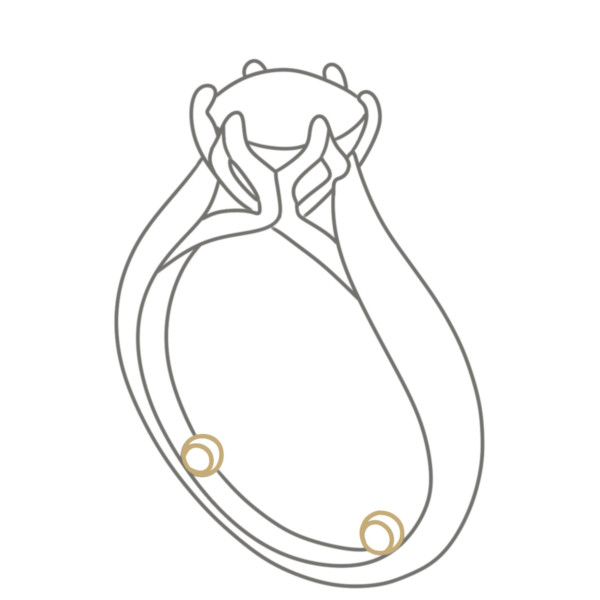
Sizing beads
Sizing beads are small, round balls made of precious metal that can be added to the inside of a ring to reduce the inner circumference. The process of adding sizing beads is straightforward: a jeweller solders two small metal beads onto the inside of the band. This method effectively keeps the ring in an upright position on the finger and facilitates wearing a smaller ring over larger knuckles. By adding sizing beads, the ring can be made half a size smaller without compromising on comfort.
One of the significant advantages of sizing beads is that they offer a semi-permanent solution that can be easily removed by a jeweller without any noticeable impact on the ring. This makes them particularly suitable for heirloom rings, as it preserves the integrity of the original piece.
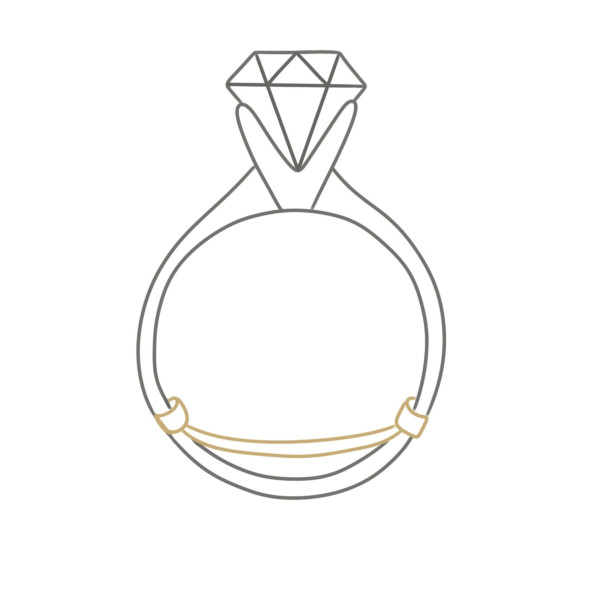
Removable spring
It is recommended to consult an experienced jeweller for this option, as it provides a more comfortable alternative to sizing beads and is also easier to insert.
By using a spring insert, you can adjust the size of your ring by up to 2-3 sizes, offering more flexibility compared to sizing beads.
When resizing isn't possible — what to do
Common non-resizable materials and styles
- Full eternity or continuously-set bands, where stones run around the entire circumference; altering the band would break the setting.
- Heavily engraved, patterned or wrap-around designs where changing the circumference would disrupt the motif
- Laser-welded seamless rings or one-piece machined designs that lack a workable joint.
Practical alternatives when resizing is not possible
- Remake or remodel: commissioning a new band or adapting the design preserves the look while achieving the correct size. This is often the best choice for irreplaceable or highly detailed pieces.
- Semi-permanent and temporary solutions: sizing beads, soldered bridges, removable springs or high-quality adjustable shanks can provide secure wear without permanently altering the original construction.
- Adjustable professional systems: some adjustable shank systems can be integrated by a jeweller for large-knuckle fits; they are designed to keep the look while solving fit problems.
A short note on assessment
Have a jeweller inspect the ring before deciding, because some pieces that seem unworkable may have bespoke solutions. If in doubt,contact BAUNAT so a diamond jewellery adviser can recommend a safe option for your ring.
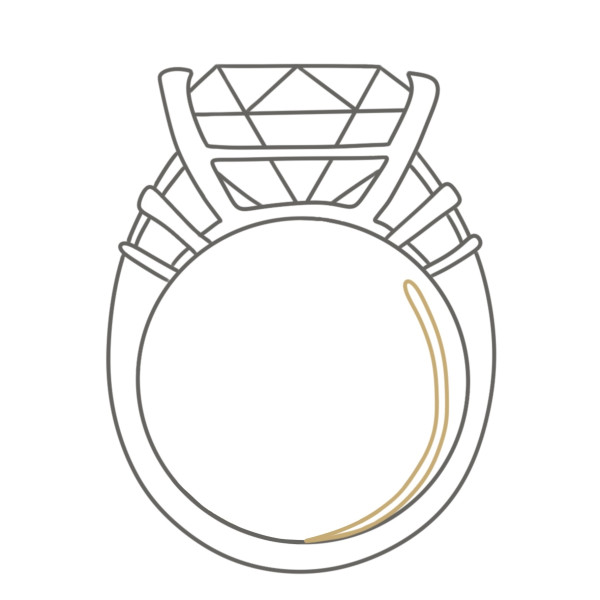
Soldered Spring
If you choose for this solution, please contact your professional Diamond Jewellery Adviser for support before the production process has started, since this solution needs to be incorporated in the design from the beginning.
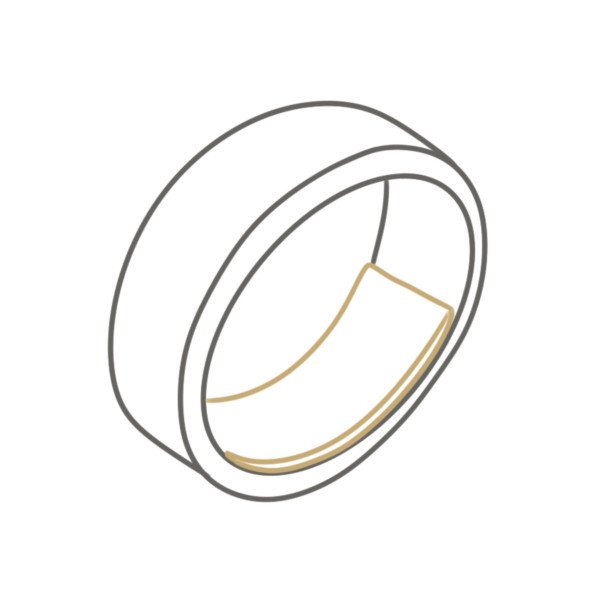
Soldered bridge
This solution is visually discrete and can decrease up to 6 sizes. The advantage of this method is that the thickness of the metal bar can be reduced gradually by a professional goldsmith so the ring can be adjusted intermittently in the long term. The same as the sizing beads, the bar can be completely removed without causing negative effects on the quality of the ring.
Professional resizing: what to expect
Typical step-by-step workflow
- Inspection and measurement: the jeweller checks for delicate settings, engraving or alloy issues that affect workability, and confirms the exact size change needed. This assessment determines the chosen method.
- Making smaller: to reduce size, a small section of the shank is removed. The two ends are brought together, soldered and blended so the join is smooth.
- Making larger: small increases can sometimes be done by stretching the band; larger increases require cutting the shank and inserting a matched strip of metal, which is soldered in place.
- Finishing: after soldering the joint is filed, any solder marks are removed, the band is polished to match the original finish, and settings or prongs are checked and tightened if necessary.
- Final quality check: the ring is cleaned and checked for correct size, evenness and secure settings before return.
Risks and trade-offs to weigh
- Structural weakening: every cut and solder removes metal and introduces stress, which can thin the shank. Repeated resizes increase this risk and may eventually mean the band needs replacing.
- Impact on settings and stones: heat and mechanical work can affect mounted stones or loosen prongs. A jeweller may need to re-tip prongs or re-set stones after work to ensure they are secure.
- Visible seams and finishes: skilled work reduces visible joins, but some finishes or patterns can still show a faint line where the repair was made, especially on highly polished or patterned bands.
- Design limitations: intricate engraving, channel-set stones, full eternity rings or certain alloys can make resizing impractical or risky.
When professional resizing is recommended
- For engagement rings or pieces with prong-set or pavé stones, where the security of the setting matters.
- For rings that repeatedly fit poorly, for example when you need a different size most of the time rather than only occasionally.
- For heirloom or high-value pieces where preserving structure and finish is important.
Practical aftercare and warnings
- After resizing, have prongs and settings checked periodically to spot any loosening early.
- Do not attempt cutting, soldering or similar permanent alterations at home; these need specialist tools and experience to avoid damaging the ring or stones.
A professional resize gives the cleanest, most durable result when done by an experienced goldsmith. Discuss your ring’s construction and long-term needs with your jewellery adviser to choose the best permanent option.
Contact your BAUNAT Diamond Jewellery Advisor for advice
-
Dolce Dupont
-
Dolce Dupont – Diamond Jewellery Advisor, Antwerp
-
-
Dolce is a Diamond Jewellery Advisor based in BAUNAT’s Antwerp showroom, where she guides clients through the intricate process of selecting high-quality natural diamond jewellery. With in-depth knowledge of diamond purchasing and evaluation, she advises on the key criteria that define a valuable and lasting investment. Dolce is highly experienced in bespoke jewellery, working closely with clients to translate their ideas into refined, tailor-made creations.
Dolce is a Diamond Jewellery Advisor based in BAUNAT’s Antwerp showroom, where she guides clients through the intricate process of selecting high-quality natural diamond jewellery. With in-depth knowledge of diamond purchasing and evaluation, she advises on the key criteria that define a valuable and lasting investment. Dolce is highly experienced in bespoke jewellery, working closely with clients to translate their ideas into refined, tailor-made creations.