







Features:
-
Category:
-
Posted at:
-
Author:
- An Van Puyvelde
-
An Van Puyvelde - Order & Administration Manager
-


-
Reading time:7 minutes
In this article:
BAUNAT's Guide to Flawless Engagement Rings
At BAUNAT, we believe in the exquisite beauty of natural diamonds. We often describe our diamonds as 'flawless', a term that might appear elusive to some. However, 'flawless' or 'loupe clean' (LC) has a particular significance when it comes to diamonds and the engagement rings they adorn.
Read summary
What makes a diamond "flawless" and is it worth the investment for your engagement ring?
BAUNAT explains that "flawless" has a specific meaning in the diamond world, referring to stones that show no inclusions when magnified ten times. These rare gems sit at the top of the clarity scale within the 4Cs (Carat, Color, Clarity, and Cut). While flawless diamonds, especially D-color ones, are considered investment-grade with stable value, they come with a significant price premium – often double the cost of an SI1 diamond.
For engagement rings, the choice between flawless and eye-clean diamonds (which have inclusions visible only under magnification) depends on your priorities. If you're seeking visual beauty alone, an eye-clean VS2 or SI1 diamond appears virtually identical to a flawless one. However, if you view your ring as both a symbol of love and an investment, a certified flawless diamond might be worth considering.
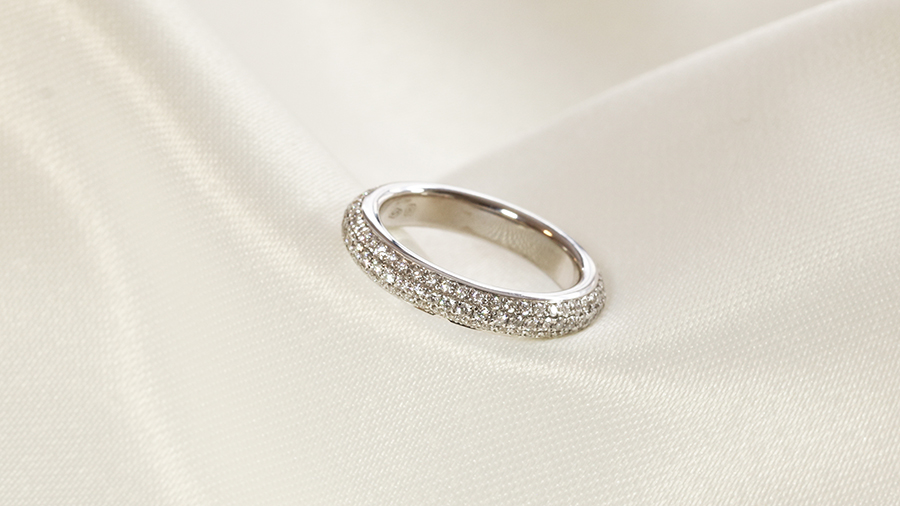
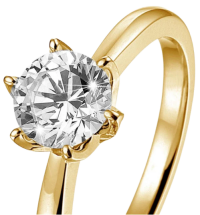
5 Questions to Find Her Perfect Engagement Ring
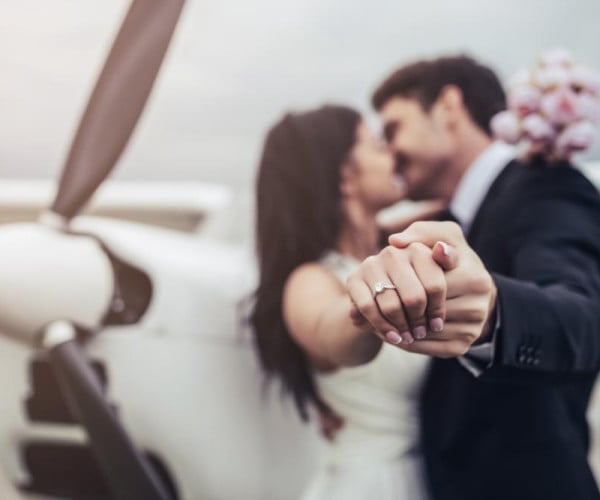
Are you planning to propose? Finding the right engagement ring is a defining step. Every ring is handcrafted in Antwerp from the finest materials by skilled artisans. Discover what engagement ring fits her personality.
Most viewed diamond jewels
-
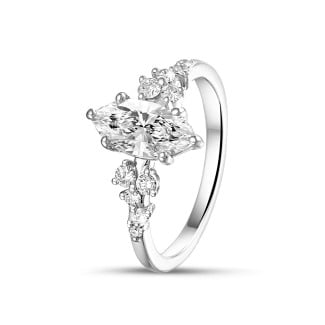
![1.00 carat solitaire cluster ring in white gold with marquise diamond]() BestsellerNew1.00 carat solitaire cluster ring in white gold with marquise diamondFrom USD 4.400,00 (excl. VAT)
BestsellerNew1.00 carat solitaire cluster ring in white gold with marquise diamondFrom USD 4.400,00 (excl. VAT) -
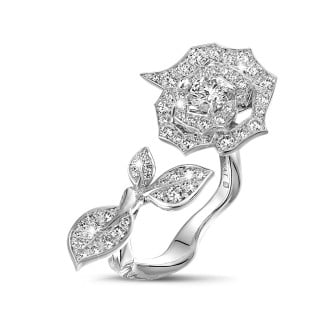
![0.95 carat diamond rose design ring in white gold]() NewPrincess Delphine0.95 carat diamond rose design ring in white goldFrom USD 16.000,00 (excl. VAT)
NewPrincess Delphine0.95 carat diamond rose design ring in white goldFrom USD 16.000,00 (excl. VAT) -
![1.00 carat solitaire ring with an asscher cut diamond in white gold]() Bestseller1.00 carat solitaire ring with an asscher cut diamond in white goldFrom USD 4.700,00 (excl. VAT)
Bestseller1.00 carat solitaire ring with an asscher cut diamond in white goldFrom USD 4.700,00 (excl. VAT) -
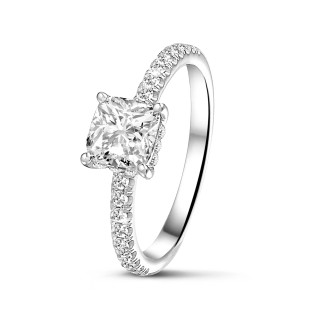
![1.00 carat solitaire ring with a cushion diamond and hidden halo in white gold]() BestsellerNew1.00 carat solitaire ring with a cushion diamond and hidden halo in white goldFrom USD 4.010,00 (excl. VAT)
BestsellerNew1.00 carat solitaire ring with a cushion diamond and hidden halo in white goldFrom USD 4.010,00 (excl. VAT) -
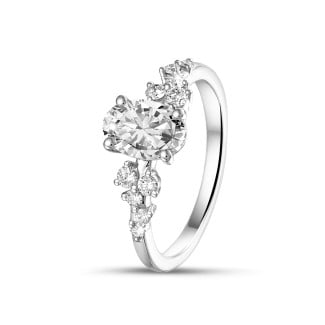
![1.00 carat solitaire cluster ring in white gold with oval diamond]() BestsellerNew1.00 carat solitaire cluster ring in white gold with oval diamondFrom USD 4.590,00 (excl. VAT)
BestsellerNew1.00 carat solitaire cluster ring in white gold with oval diamondFrom USD 4.590,00 (excl. VAT)

.
Deciphering 'Flawless' in the Diamond Sphere
Too Flawless or Not: The Engagement Ring Conundrum
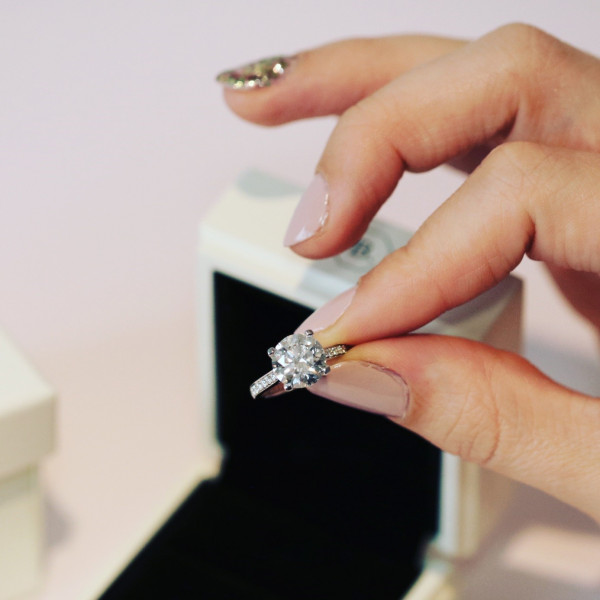
Conversely, a flawless diamond can cost twice as much, if not more, than an 'eye-clean' one. Therefore, the decision to choose a flawless diamond engagement ring is subjective. If it's solely about pleasing aesthetics, a flawless diamond might inflate the cost without adding visible value. However, if you're after the crème de la crème, viewing your engagement ring as an investment, a flawless diamond becomes an attractive choice.
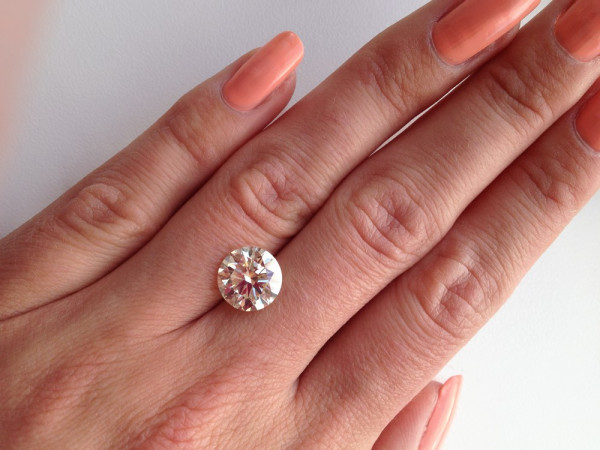
How big is a diamond? Millimetres and how it looks on the hand
0.28 ct round - diameter approximately 4.3–4.4 mm; reads as a delicate solitaire, ideal for a subtle, everyday look and smaller finger sizes.0.50 ct round - diameter approximately 5.0–5.25 mm; suits most wrists and is widely considered a comfortable everyday centre stone that balances presence with wearability.
1.00 ct round - diameter approximately 6.4–6.6 mm; the classic engagement-ring size that is readily visible from a distance while remaining practical for daily wear.
10.00 ct round - diameter approximately 14.0–14.3 mm; dramatically larger on the hand and best supported by a reinforced, bespoke setting and careful consideration of finger proportions.
Perceived size depends on more than carat weight: finger circumference, the ring’s setting profile, the presence of side stones and the diamond’s cut proportions all change how large a stone appears. For example, a thin band or halo setting can make a given millimetre diameter read larger on the finger, while a chunky shank can visually reduce perceived size. For very large stones (10 ct+), consult a specialist to discuss practical wearability and bespoke setting reinforcement.
Deciphering the Price Tag of a Flawless Diamond
When flawless matters: shape and grade thresholds
Shape affects how clarity and colour show, so priorities shift by cut. For round brilliants, especially at larger sizes, put colour and clarity high on your list to protect brilliance; for very large rounds, D–E colour and VVS1–FL clarity are commonly chosen for an exceptional, investment-grade look. For emerald and other step cuts, clarity is the main concern because step facets reveal inclusions more easily; for these shapes we suggest VS2 or better for larger stones to keep an eye-clean appearance, with VVS/FL preferred for milestone sizes.Cushion and oval cuts can hide some inclusions because of their faceting and shape; for these, an excellent cut and VVS–VS grades often balance visual impact and value. In short: rounds benefit from top colour and cut, step cuts need higher clarity, and fancy shapes demand a mixed approach. For very large stones, small grade differences create large price and visible shifts, so selecting per-shape thresholds helps target both appearance and long-term value.
-
An Van Puyvelde
-
An Van Puyvelde - Order & Administration Manager
-
-
An supervises BAUNAT’s order processing and logistics, working closely with the internal order team to ensure a seamless customer experience. She plays a key role in coordinating production timelines and maintaining clear communication with clients throughout the entire process. With a strong focus on precision and reliability, An is dedicated to delivering each piece on time while keeping customers fully informed, contributing to BAUNAT’s high standard of service and customer satisfaction.
An supervises BAUNAT’s order processing and logistics, working closely with the internal order team to ensure a seamless customer experience. She plays a key role in coordinating production timelines and maintaining clear communication with clients throughout the entire process. With a strong focus on precision and reliability, An is dedicated to delivering each piece on time while keeping customers fully informed, contributing to BAUNAT’s high standard of service and customer satisfaction.