







Features:
-
Category:
-
Posted at:
-
Author:
- Stephanie Hesters
-
BAUNAT Antwerp
-


-
Reading time:19 minutes
In this article:
The best way to get a stuck ring off your swollen finger
We’ve all experienced it: a ring that refuses to come off your finger. Whether due to swelling or simply being too tight, it can be uncomfortable and even painful. No amount of twisting or tugging seems to help. Fortunately, there are several effective methods to safely remove a stuck ring from a swollen finger. Keep reading to discover how to do it painlessly and without harm.
Read summary
How do you safely remove a stuck ring from a swollen finger?
When a ring gets stuck on your swollen finger, several simple techniques can help. First, try reducing swelling by elevating your hand and applying ice for 5-10 minutes or soaking in cold water. Lubricants like shampoo or butter can help the ring slide off more easily—just avoid caustic substances that might damage your jewelry. For stubborn cases, dental floss can be used as shown in instructional videos.
If these methods fail and your finger isn't discolored or numb, a jeweler can safely cut off the ring while preserving its integrity for future repair. However, seek immediate medical attention if you notice excessive swelling, discoloration, or numbness.
To prevent future problems, ensure proper sizing, remove rings before activities that cause swelling, and take them off nightly to monitor changes in finger size.

5 Questions to Find Her Perfect Engagement Ring
Are you planning to propose? Finding the right engagement ring is a defining step. Every ring is handcrafted in Antwerp from the finest materials by skilled artisans. Discover what engagement ring fits her personality.
Most viewed diamond jewels
-
![1.00 carat solitaire cluster ring in white gold with marquise diamond]() BestsellerNew1.00 carat solitaire cluster ring in white gold with marquise diamondFrom USD 4.400,00 (excl. VAT)
BestsellerNew1.00 carat solitaire cluster ring in white gold with marquise diamondFrom USD 4.400,00 (excl. VAT) -
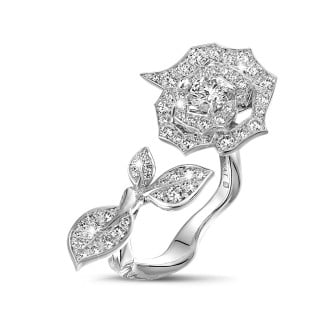
![0.95 carat diamond rose design ring in white gold]() NewPrincess Delphine0.95 carat diamond rose design ring in white goldFrom USD 16.000,00 (excl. VAT)
NewPrincess Delphine0.95 carat diamond rose design ring in white goldFrom USD 16.000,00 (excl. VAT) -
![1.00 carat solitaire ring with an asscher cut diamond in white gold]() Bestseller1.00 carat solitaire ring with an asscher cut diamond in white goldFrom USD 4.700,00 (excl. VAT)
Bestseller1.00 carat solitaire ring with an asscher cut diamond in white goldFrom USD 4.700,00 (excl. VAT) -
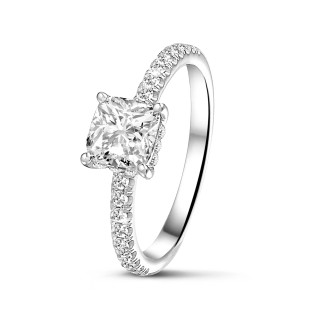
![1.00 carat solitaire ring with a cushion diamond and hidden halo in white gold]() BestsellerNew1.00 carat solitaire ring with a cushion diamond and hidden halo in white goldFrom USD 4.010,00 (excl. VAT)
BestsellerNew1.00 carat solitaire ring with a cushion diamond and hidden halo in white goldFrom USD 4.010,00 (excl. VAT) -
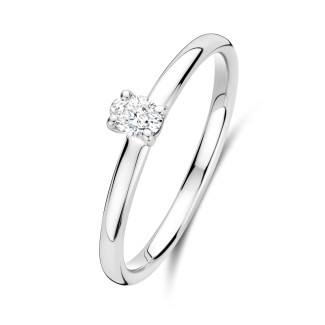
![0.15 carat solitaire ring with a oval cut diamond in white gold]() New0.15 carat solitaire ring with a oval cut diamond in white goldFrom USD 2.210,00 (excl. VAT)
New0.15 carat solitaire ring with a oval cut diamond in white goldFrom USD 2.210,00 (excl. VAT)

Our tips to remove a ring stuck on your finger

- Raise your hand in the air and apply an ice pack to your finger for 5-10 minutes. The cold will constrict blood vessels, helping to reduce swelling. Keeping your hand and arm elevated will further minimise swelling.
- Soak your hand in ice cold water. This will help to reduce swelling and make the ring easier to remove. Then, simultaneously, gently twist and pull the ring.
- Use shampoo, shower gel, butter or another lubricant to help the ring slide off your finger. Try not to use caustic lubricants, such as vinegar or detergent. These can damage your ring.
- Remove the ring using a thin piece of string, such as dental floss, as shown in this clip.
- Clean your finger and disinfect any possible nicks you might have suffered when removing the ring
- Regularly apply ice to any swollen parts of your finger and do so until the swelling has gone down
- Do not wear any rings on that finger until it has fully healed and all swelling has gone down
- Disproportionate swelling
- Discolouration (angry red, purple, green or blue)
- Numbness
- The swelling causing your ring to be stuck is caused by trauma, a wound or another medical condition
Asking a jeweller to cut the ring off your finger
When the ring material complicates removal (titanium, tungsten, cobalt)
What to expect:
- Ordinary jewellers' cutters may struggle with tungsten and similar alloys. Specialist cutting equipment or abrasive tools are often needed.
- Emergency services, dentists and hospital A&E departments sometimes have suitable tools and experience with difficult cases and can advise on the safest next step.
Practical advice:
- If home methods fail and you think the ring is an industrial metal, seek professional help without delay. Do not try to saw or file the ring yourself.
- Rings are commonly repairable after professional cutting; the priority in an emergency is safe removal, with repair or replacement discussed afterwards.
- The ring still fits properly in its original position at the base of your finger
- Your finger feels like normal and looks normal too: there is no pain, numbness or discolouration
- Your finger isn't, or is only slightly, swollen by your attempts to remove the ring. Any swelling that there is, reduces quickly
- Your ring is not stuck due to a medical condition
“Never bide your time in going to the jeweller to have your ring cut off if it is causing you pain in its original position.”
Causes of a ring stuck on a finger

- You have been wearing your ring for a long time and your fingers have grown (e.g. by physically growing up or during pregnancy*).
- You wore a ring that was initially too small, so you'll need to have it resized (more details on that later)
- Your ring usually fits you properly but the finger you wore it on underwent a trauma or injury that causes it to swell.
- A medical condition such as arthritis or arthrosis causes joint inflammation, which in turn causes your knuckles to swell.
- A medical condition, reaction to a diet or weather condition causes oedema, causing your fingers to swell.
- High temperatures and humidity can cause blood vessels to dilate, resulting in swelling of the fingers.
It is worth bearing in mind that you can avoid this by taking off your rings when pregnant. As your fingers can begin to swell from the middle of the second trimester, you may want to remove your rings then to pre-empt this.
Emergency triage: what to do now
Immediate steps while you arrange help:
- Keep the hand elevated above the level of the heart to reduce swelling. Hold it on a cushion or over your chest while travelling.
- Avoid actions that increase pain, such as forceful twisting or repeated forced attempts to pull the ring off.
- Keep any lubricants or materials you used so you can tell the clinician what you tried.
Who can help and what they can offer:
- Emergency department (A&E): has ring cutters and medical assessment; they focus on circulation and tissue health.
- Dentist: in some situations dentists can assist with cutting because they often have rotary tools and experience working in tight spaces.
- Fire and rescue services: have specialised cutting equipment and may be called for very hard or unusual materials.
- Professional jeweller: can cut and later restore or re-size jewellery, but may not be able to manage associated medical issues.
When to escalate quickly:
- If numbness, colour change or severe pain develops, seek emergency care immediately.
- If safe home methods (compress-and-elevate, lubrication, and a short string-floss attempt) have not worked after a few careful tries over about 10–20 minutes, arrange professional help rather than continuing to force the ring.
How to prevent rings from getting stuck?
- Begin by having your ring size precisely measured by a skilled jeweller, as BAUNAT would recommend for an elegant fit.
- Make it a habit to take off your ring each night before bed to keep an eye on any changes in your finger size.
- Always remove your ring during activities that might cause your hands to swell, like working out, swimming, or soaking up the sun.
- If your ring feels stuck due to swelling from heat, humidity, or water retention, try lifting your hand above your head to gently ease it off.
- Lastly, stay on top of your weight and any health issues while keeping your hands moving.
When you should have your ring resized so you can keep wearing it

However, be cautious with eternity rings, as they are set all the way around with closely placed diamonds, making resizing impossible. If you're opting for an eternity ring, ensure you've selected the correct size from the start. Our jewellers will use specialised tools like a metal finger-gauge ring-sizer or a mandrel to measure your size accurately.
Frequently asked Questions
Is it okay to leave a ring on a swollen finger?
No, it is not advisable to leave a ring on a swollen finger, especially if the swelling is due to a traumatic injury such as a fracture or any injury to the arm or hand. In such cases, the ring can act like a tourniquet, leading to serious side effects such as loss of sensation and blood flow, potential tendon damage, and even permanent tissue damage that might necessitate amputation of the digit. Therefore, if your finger is swollen because of an injury, it is best to seek a medical professional's assessment before attempting to remove the ring. Attempting to remove a ring in such situations without proper assessment could potentially cause more harm, especially if there is a displaced fracture or other injuries that should not be disturbed.
How do you clean your diamond ring?
When you wear your diamond ring, such as your engagement ring or wedding ring, on a daily basis, it comes into contact with various external factors. Exposure to for example, dust and oil-rich products means that the unique appearance of your diamond ring will fade. It is therefore very important to regularly maintain your jewel. How do I do that without damaging my ring?
String or dental-floss method - step-by-step
The dental-floss or thin-string method is a reliable, non-invasive way to remove a stuck ring when swelling is mild to moderate and circulation looks normal. Stop at once and get help if the finger becomes numb, pale or blue, or if pain increases sharply.
You will need:
- Waxed dental floss or a thin, smooth string
- A lubricant close by (soap, hand cream or cooking oil)
- A thin, blunt point (a rounded toothpick or the tip of a butter knife) to tuck the floss under the ring
Step-by-step procedure:
1) Check for red flags. If the finger is numb, pale or dark, or pain is severe, do not try home methods. Seek emergency help.
2) Reduce swelling first. Elevate the hand above the heart and apply cold for several minutes. Use a lubricant on the finger and the ring to ease movement.
3) Anchor the floss. Thread one end of the floss under the inner edge of the ring. If you cannot slide it under by hand, use the thin blunt point to lift the ring edge just enough to tuck the floss beneath.
4) Secure the free end. Hold the short end under the ring on the far side so it runs along the finger toward the fingertip.
5) Wrap tightly. Wind the long end of the floss in small, overlapping turns from the base of the finger toward the knuckle. Keep the turns close together, about 1–2 mm spacing, so the finger is gently compressed. Stop wrapping when you reach just past the knuckle or when wrapping becomes uncomfortable. Do not wrap so tightly that circulation is cut off.
6) Slide the ring off. With the short anchored end still under the ring, press the ring toward the knuckle with one hand. With the other hand, begin to unwind the long end of the floss nearest the ring, turn by turn. As you unwind, the compressed tissue will remain compacted and the ring should move forward over the knuckle.
7) Proceed slowly and calmly. If the ring does not budge after a few careful minutes, pause. Reapply lubricant, rest the finger elevated, and try once more. Avoid forcing the ring; repeated force risks damage and increased swelling.
Troubleshooting and safety notes:
- Stop immediately if numbness, increasing pain, or discoloration occurs. These signs point to impaired circulation and need prompt professional assessment.
- If wrapping becomes very painful or the finger looks swollen beyond the ring, do not continue. Seek urgent help from a jeweller, emergency department or rescue service.
- Do not use floss as a permanent tourniquet or leave it in place beyond the removal attempt.
When performed carefully, the wrap-and-unwind method often allows the ring to slide off without cutting, preserving the jewel. If it fails, professional removal is the next safe step.
How do you clean your diamond ring at home yourself?
A certain amount of caution is advised when cleaning your diamond ring. The idea that toothpaste is a good cleaning agent for diamonds is a myth and it can cause permanent damage. Instead, proceed as follows:
- Add a small splash of ammonia to a bowl of lukewarm water.
- Immerse your diamond ring for 10 to 20 minutes.
- Brush the diamond with a soft toothbrush. However, avoid contact with the precious metal in order not to scratch it.
- Dry the ring with a cloth for precious stones or another woven cloth.
In this two-minute video, discover two ways to clean and protect your diamond ring. Have your ring professionally checked and cleaned once a year.
How do you avoid scratches and damage?
The diamond is known as the hardest material on earth. However, this does not mean that you cannot damage your diamond ring. To protect your diamond ring from damage, you should follow these tips:
- Do not wear your diamond ring during exercise or swimming.
- Store your ring when you go to the beach..
- Remove your ring when cleaning.
- Store all your diamond jewellery separately in a soft cloth or bag.
For additional maintenance tips, contact the experts at BAUNAT via telephone, email or chat.
How to clean white gold
White gold is rhodium-plated for added protection, and to achieve that distinctive white sheen. That layer of rhodium is vulnerable, so you have to take care with rough surfaces, alcohol and other corrosive cleaning agents. To clean white gold, soak the jewellery in warm water with mild dishwashing liquid without ammonia and phosphates. Scrub gently with a soft toothbrush, and rinse in clean warm water. Dry your jewellery with a soft towel. If your white gold jewellery is set with diamonds or gemstones, take special care with the brush so as not to damage the stone.
How can I maintain and protect my gold jewellery set with diamonds?
- How can I protect my gold and diamonds?
- How can I clean my jewellery myself?
- What are my other options?
Your timeless gold jewellery set with diamonds adds the finishing touch to every outfit and radiates pure luxury. As long as they sparkle, they retain their special and classy appearance. But what if my jewellery has become a bit dull and lacklustre? What if they are starting to lose their original shine? With the following tips from BAUNAT, your jewels will remain as new!
How can I protect my gold and diamonds?
The protection of your jewels starts with how you store them. You may not wear your white gold earrings with diamonds daily, but where do you store them when you are not wearing them? It is best to keep your diamond jewellery separate. As diamonds are the hardest gemstones in the world, a diamond can only be damaged by another diamond. To ensure they stay scratch-free, you should keep them in their original box, a soft pouch or an especially designed jewellery box. This way you also automatically protect your precious jewellery with rubies, sapphires, emeralds or other gemstones.
When they are not stored away, you should wear them with care. It is best to set your jewellery aside when swimming, showering, sleeping, gardening or working out. Also be careful to touch your diamond as little as possible. The oils and dirt on your skin can transfer onto your diamond and cause it to become dull.
How can I clean my jewellery myself?
You can easily clean your jewellery without running the risk of damaging it. It is perhaps easier than you think: gold, platinum, diamonds and gemstones can be cleaned with mild soapy water or ammoniac.
- How can I clean my gold and diamond jewellery with mild soapy water?
Dip your jewel in a bowl of lukewarm water, mixed with detergent and kitchen salt or soda. Polish it with a soft toothbrush and rinse with running lukewarm water. Pat the jewel dry with a soft, fibre free cloth. Do not use paper towels, as they could scratch your jewellery.
- How do I use ammoniac to clean my jewellery?
Place your jewel in a bowl containing 3 parts lukewarm water and 1 part ammoniac. Leave to soak for half an hour and polish your jewel with a soft toothbrush afterwards. Rinse with clear water and let dry.
But especially with white gold jewellery you need to be careful. White gold is made by mixing gold with other materials to form an alloy. On top of that, a rhodium layer is applied to give your white golden ring with a brilliant its sparkle. If you rub too hard, that rhodium layer could be damaged.
What are my other options?
What if I’d rather not clean my gold and diamonds myself or if I don’t have the time for it? You can always choose to have your jewels cleaned professionally. Jewellers can use an ultrasonic cleaner to give your jewels that perfect cleanse. This little machine removes impurities from the smallest nooks and crannies using vibrations. They are ideal for cleaning intricate jewellery, as it removes dirt from places a toothbrush cannot reach.
Where can I have my jewellery cleaned professionally? Which other maintenance tips can help me clean my jewellery? Ask the diamond experts from BAUNAT for advice on how to keep your jewellery shining as new.
-
Stephanie Hesters
-
BAUNAT Antwerp
-
-
As the Head of Diamond Buying at BAUNAT, Stephanie has an extensive knowledge of the diamond and the evolution of diamond prices. Thanks to her broad product knowledge gained throughout her years at BAUNAT and the Diamond Foundation Course by De Beers, Stephanie advises our customers interested in the investment side of diamonds to optimize every investment. To support her skills she has a bachelor’s degree in Business Management together with her master’s in Communication.
About Stephanie Hesters (also known as Stephanie Lasters)
Stephanie Hesters, sometimes listed online as Stephanie Lasters, is Head of Diamond Buying at BAUNAT. She manages diamond sourcing and valuation, advises clients on market trends and pricing, and helps those looking for investment-grade stones. She completed the Diamond Foundation Course by De Beers and holds a bachelor’s degree in Business Management and a master’s in Communication.
Selected projects & collaborations
• Eternal Bloom Collection with Princess Delphine of Saxe-Coburg (2026), curator and project lead - guided creative direction and diamond selection for an exclusive collection that blends classical motifs with contemporary craftsmanship.
• Investment Diamonds Advisory Series (2024), author and presenter - developed client-facing guides and presentations on diamond valuation and market dynamics for private buyers and collectors.
• BAUNAT Editorial Features and Product Launches (2022–2025), contributor - worked with design and marketing teams to shape product narratives and ensure technical accuracy in launch materials and editorial content.
As the Head of Diamond Buying at BAUNAT, Stephanie has an extensive knowledge of the diamond and the evolution of diamond prices. Thanks to her broad product knowledge gained throughout her years at BAUNAT and the Diamond Foundation Course by De Beers, Stephanie advises our customers interested in the investment side of diamonds to optimize every investment. To support her skills she has a bachelor’s degree in Business Management together with her master’s in Communication.
About Stephanie Hesters (also known as Stephanie Lasters)
Stephanie Hesters, sometimes listed online as Stephanie Lasters, is Head of Diamond Buying at BAUNAT. She manages diamond sourcing and valuation, advises clients on market trends and pricing, and helps those looking for investment-grade stones. She completed the Diamond Foundation Course by De Beers and holds a bachelor’s degree in Business Management and a master’s in Communication.
Selected projects & collaborations
• Eternal Bloom Collection with Princess Delphine of Saxe-Coburg (2026), curator and project lead - guided creative direction and diamond selection for an exclusive collection that blends classical motifs with contemporary craftsmanship.
• Investment Diamonds Advisory Series (2024), author and presenter - developed client-facing guides and presentations on diamond valuation and market dynamics for private buyers and collectors.
• BAUNAT Editorial Features and Product Launches (2022–2025), contributor - worked with design and marketing teams to shape product narratives and ensure technical accuracy in launch materials and editorial content.