







Features:
-
Category:
-
Posted at:
-
Author:
- Fabienne Rauw
-
BAUNAT Antwerp
-


-
Reading time:16 minutes
In this article:
- How to wear engagement and wedding rings during the ceremony
- Where Does the Engagement Ring Finger Tradition Come From?
- Quick country notes: how customs differ in practice
- What is the Traditional Engagement Finger for Females Across Different Cultures?
- Which Finger Does a Man Wear an Engagement Ring?
- What Happens to the Engagement Ring Once you Start Wearing a Wedding Ring?
- Practical options & care for active lifestyles
- Why Choose an Engagement Ring from BAUNAT?
Which Finger Does The Engagement Ring Go On?
There are a variety of different traditions associated with wearing engagement rings, and often these traditions depend on culture, country, religion, and individual preference. But, have you ever wondered what the significance of which finger you wear your ring on is? Continue reading to learn more.
To find the perfect engagement ring for you, browse the full BAUNAT engagement ring catalogue.
Read summary
Which Finger Should an Engagement Ring Be Worn On?
Ever wondered why engagement rings are traditionally worn on specific fingers? The custom of wearing engagement rings on the fourth finger of the left hand originated in Ancient Rome, where people believed this finger contained the "Vena Amoris" or "vein of love" that connected directly to the heart.
However, traditions vary widely across cultures. In Christianity, the practice depends on location, though the left hand is most common. Jewish tradition prioritizes wedding rings over engagement rings. In Islamic countries, practices differ regionally—Jordan favors the right hand while Iran uses the left.
For men wearing engagement rings, the fourth finger of the left hand is typical. After marriage, many people move their engagement ring to position their wedding band closer to their heart.
Whatever your preference, BAUNAT offers handcrafted engagement rings made with premium materials to suit various cultural traditions.

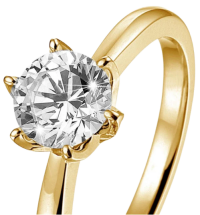
5 Questions to Find Her Perfect Engagement Ring
Are you planning to propose? Finding the right engagement ring is a defining step. Every ring is handcrafted in Antwerp from the finest materials by skilled artisans. Discover what engagement ring fits her personality.
Most viewed diamond jewels
-
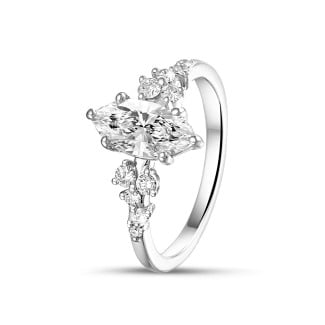
![1.00 carat solitaire cluster ring in white gold with marquise diamond]() BestsellerNew1.00 carat solitaire cluster ring in white gold with marquise diamondFrom USD 4.400,00 (excl. VAT)
BestsellerNew1.00 carat solitaire cluster ring in white gold with marquise diamondFrom USD 4.400,00 (excl. VAT) -
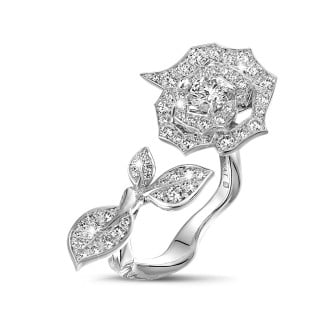
![0.95 carat diamond rose design ring in white gold]() NewPrincess Delphine0.95 carat diamond rose design ring in white goldFrom USD 16.000,00 (excl. VAT)
NewPrincess Delphine0.95 carat diamond rose design ring in white goldFrom USD 16.000,00 (excl. VAT) -
![1.00 carat solitaire ring with an asscher cut diamond in white gold]() Bestseller1.00 carat solitaire ring with an asscher cut diamond in white goldFrom USD 4.700,00 (excl. VAT)
Bestseller1.00 carat solitaire ring with an asscher cut diamond in white goldFrom USD 4.700,00 (excl. VAT) -
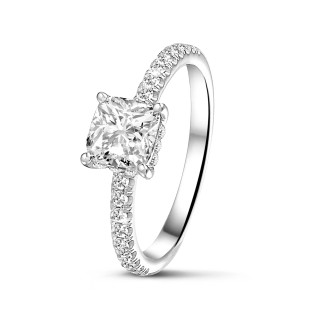
![1.00 carat solitaire ring with a cushion diamond and hidden halo in white gold]() BestsellerNew1.00 carat solitaire ring with a cushion diamond and hidden halo in white goldFrom USD 4.010,00 (excl. VAT)
BestsellerNew1.00 carat solitaire ring with a cushion diamond and hidden halo in white goldFrom USD 4.010,00 (excl. VAT) -
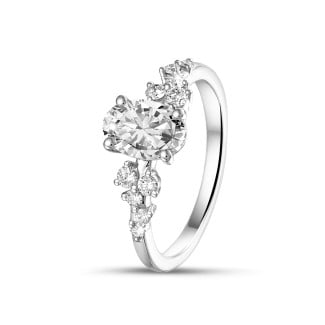
![1.00 carat solitaire cluster ring in white gold with oval diamond]() BestsellerNew1.00 carat solitaire cluster ring in white gold with oval diamondFrom USD 4.590,00 (excl. VAT)
BestsellerNew1.00 carat solitaire cluster ring in white gold with oval diamondFrom USD 4.590,00 (excl. VAT)

How to wear engagement and wedding rings during the ceremony
Traditional method (wedding band closest to the heart)
1. Before the ceremony: the bride often removes her engagement ring or moves it to her right hand so the left ring finger is free. Many hand the engagement ring to a trusted attendant or keep it in a small box until the exchange.
2. During the ceremony: the officiant or partner places the wedding band on the left ring finger first, positioned so it sits nearest the palm and therefore closest to the heart.
3. After the ceremony: the engagement ring can be moved back onto the left hand and stacked above the wedding band, or it can remain on the right hand if preferred. Stacking with the wedding band nearest the palm preserves the symbolic order.
Chronological method (engagement ring first)
1. Before the ceremony: the engagement ring stays on the left ring finger as a sign of the promise already made.
2. During the ceremony: the wedding band is added in the order the rings were received. If sizes allow, the band can be slipped on over the engagement ring; otherwise the engagement ring may be removed briefly so the band sits closest to the palm.
3. After the ceremony: the rings are worn together in the order they were given, often with the engagement ring visible above the wedding band.
Practical alternatives and brief examples
- Move-and-return: Many move the engagement ring to the right hand for the vows, have the band placed first, then move the engagement ring back on top. This keeps the traditional symbolism while making both rings easy to handle.- Keep separate: Some prefer to wear the wedding band on the left and leave the engagement ring on the right permanently, for example when the engagement ring has a delicate setting like a diamond solitaire.- Permanent order change: Couples who make the wedding band their everyday symbol sometimes choose to keep the band closest to the palm and the engagement ring above it.
Ceremony checklist: What to do with the engagement ring - before, during and after the vows
Before the ceremony
- Confirm fit: Try the engagement ring on the morning of the wedding when your hands are at their normal temperature. If it feels tight or loose, note this so a jeweller can advise a temporary guard or other day‑of solution.
- Decide who will manage the ring: Assign a trusted attendant (maid of honour, best man or ring‑bearer) to hold the ring if you do not want it worn down the aisle. If you plan to wear it, decide in advance whether it will stay on the left or be moved to the right for the vows.
- Test stacking: If the wedding band will sit next to the engagement ring during the ceremony, practise sliding the band over the engagement ring or removing the engagement ring so you know whether a brief removal is necessary. Note any tight spots or snag risks.
During the ceremony
- Follow your chosen method: For the wedding band nearest the heart, move the engagement ring to the right hand or hand it to the attendant before the exchange. For chronological order, leave the engagement ring on and add the band afterwards.
- Coordinate timing: Ensure the person responsible for the engagement ring is ready when the officiant asks for the rings. If a ring‑bearer carries them, check the order and that rings are secure in their cushion or box.
- Handle delicate settings with care: For solitaire or low‑prong designs, avoid forcing a tight band over the setting; briefly removing the engagement ring is usually safer than risking damage.
After the ceremony
- Restore your preferred order: Move the engagement ring back onto the left hand and stack it if that was the plan, or keep it on the right if you prefer. Check that the wedding band sits comfortably nearest the palm.
- Quick checks: Verify fit and rotation, inspect prongs or settings for any new looseness, and test whether the rings sit flush without rubbing.
- When to consult a jeweller: If the engagement ring feels loose, spins, or you cannot stack without pressure, arrange a professional check. A jeweller can fit a temporary ring guard for the day or advise on a proper resize.
Which method to choose
Choose the traditional method if placing the wedding band nearest the heart matters to you. Choose the chronological method if you prefer the engagement ring to stay visible in its original order. Consider ring fit, comfort and any fragile settings when deciding; some designs need professional resizing or ring guards to stack neatly. If you are still looking for the perfect match, you can explore our full collection of diamond rings to see which styles stack best together.Practical note
If you plan to move or stack rings after the ceremony, keep in mind the common practice of positioning the engagement ring above the band so the wedding band sits nearest the palm. If you need help determining your size for stacking, consult our guide on how to measure your ring size.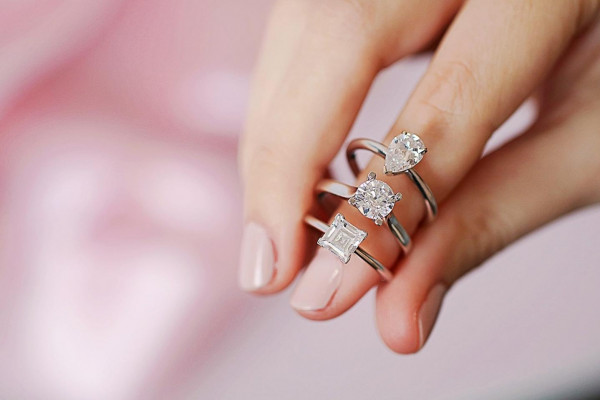
Where Does the Engagement Ring Finger Tradition Come From?
Quick country notes: how customs differ in practice
- United States: Left hand is most common for engagement and wedding rings.
- United Kingdom: Left hand generally for engagement rings; wedding band traditions can vary by couple.
- Canada: Left‑hand engagement rings are the norm.
- France: Left hand is common for engagement rings, though some wear wedding bands on the right.
- Belgium and Netherlands: Left‑hand engagement ring practice is widespread.
- Russia and Poland: Right hand is traditional for engagement and wedding rings in many regions.
- Spain and Portugal: Right hand is the common choice for engagement and wedding rings.
- Germany: Practices vary regionally; some prefer the right hand, others the left.
- Norway and Denmark: Traditionally right, though modern practice varies by preference.
- Italy: Customs differ by region; both hands are used depending on local tradition.
- India: Varies by community and region; both left and right are observed.
- Latin America: Many countries favour the right hand, but there are exceptions and local variations.
These brief notes offer a quick reference for the most‑searched countries while the paragraph below provides deeper etymology and anatomical context.
Below is a curated list of common practices by country or region to reflect the variations people most often ask about.
Left-hand (common examples): United States, United Kingdom, Canada, Ireland, Australia, New Zealand, France, Belgium, Netherlands.
Right-hand (common examples): Russia, Poland, Greece, Spain, Portugal, Germany (some regions), Norway (traditionally), Denmark (varies), Finland (varies), India (varies by community).
Mixed or regional customs: Italy (many wear on the left, but practices vary by region), Switzerland (left in some cantons, right in others), Czech Republic (often right for weddings), Latin America (many countries prefer the right hand but there are exceptions), Middle East (practices differ: Jordan commonly right, Iran commonly left).
These examples reflect frequently observed customs; individual families and regions may follow different local traditions.
A note on etymology and anatomy
The idea that a vein ran from the fourth finger directly to the heart comes from ancient beliefs about the "Vena Amoris." Anatomically the ring finger is also called the digitus annularis or the fourth digit. The term "ring finger" most likely comes from its traditional use for wearing rings, a practice that gained symbolic meaning long before modern anatomy explained circulation.
What is the Traditional Engagement Finger for Females Across Different Cultures?
- Christianity - the hand you choose for your engagement and wedding ring as a Christian depends on where you live. Most commonly, the engagement ring is worn on the left hand and the wedding ring on the right.
- Judaism - According to Jewish tradition, wedding rings are essential, while engagement rings are not. Today, more and more Jewish women choose to wear engagement rings.
- Islam - In Islam, the finger a woman wears an engagement ring on depends on the country. For example, Muslims wear the wedding ring on the right in Jordan but on the left in Iran.
Learn more about the many traditions associated with wearing engagement and wedding rings in our guide: What Hand Do You Wear Your Engagement and Wedding Ring On, Right or Left?.
Which Finger Does a Man Wear an Engagement Ring?
Where men commonly wear engagement rings (quick country notes)
- Chile: Men frequently wear engagement rings, often on the right hand as a visible sign of commitment.
- Sweden: Wearing an engagement or commitment ring is increasingly common for men; many choose the right hand, though personal preference varies.
- Switzerland: In some cantons men wear engagement or wedding rings on the right hand, while in others the left is used.
- Mexico: A rising trend is for men to wear engagement bands on the left fourth finger, matching local female practice in many areas.
- United Kingdom: Men who choose engagement rings most often wear them on the left ring finger, following traditional Western custom.
Modern trends and practical notes for men
Wearing an engagement ring is now a personal choice rather than a fixed rule. Greater visibility in media and wider social acceptance have normalised men's engagement bands in a range of styles, from slim polished bands to wider, textured profiles. When choosing a finger, consider band width and profile: wider bands feel more stable and may need a slightly larger size for knuckle clearance, while narrow bands are easier to slide on and off. If you plan to stack with a wedding band, match profiles so the rings sit evenly; for example, pair a flat wedding band with a flatter engagement ring to avoid gaps. Practical styling tip: choose a metal and finish that suits daily activities - brushed finishes show fewer scratches than high polish for active wearers.
For same-sex couples, there are no fixed rules on which finger an engagement or wedding ring should be worn on. In some gay couples, both men will use the same engagement ring when exchange wedding vows on their big day.
What Happens to the Engagement Ring Once you Start Wearing a Wedding Ring?
Practical options & care for active lifestyles
Wear it on a chain: Thread the ring on a fine chain and wear it as a necklace to avoid knocks and abrasion while keeping it close. This prevents bending prongs or scratching metal, though the ring will wear differently when worn as a pendant.
Remove for heavy work and sleep: Take rings off for tasks such as construction, gardening, weightlifting or contact sports, and consider removing them before sleep if you move around a lot. Store rings in a soft, padded box or a fabric-lined compartment rather than loose in a drawer.
When to choose a necklace vs other options
- Tradesperson or athlete: wear a necklace during work hours, and the rings at home or for special occasions.
- New parent or caregiver: remove rings for close newborn care and consider a chain while handling active duties.
- Daily office work: rings can usually be worn as normal, but check prongs and settings periodically.
Quick care checklist
- Remove rings for heavy manual work and exposure to harsh chemicals.
- Store rings separately in a padded compartment.
- Have prongs and settings checked by a professional jeweler regularly. At BAUNAT, we emphasize the importance of jewellery maintenance to ensure your diamonds remain secure.
- Consider insurance for valuable pieces to cover loss or damage.
These steps help preserve the ring’s appearance while letting you wear it in a way that fits your routine.
Resizing, stacking and fit: What to check when you change hands or stack bands
Switching a ring between hands can change how it fits because finger circumference varies between left and right and even during the day. Before you swap hands or plan to stack, consider these practical points.Why fit changes matter
- Finger size differences: One hand is often slightly larger or smaller; a ring that is snug on the left may be loose on the right.
- Comfort and rotation: A loose ring can spin and expose settings to knocks, while an overly tight stack may stress prongs or metal.
When to resize versus temporary solutions
- Temporary fixes for the wedding day: If the swap is one‑off, ask a jeweller about a removable ring guard or a discreet spacer to stabilise the fit without altering the ring.
- Permanent resizing: Consider a permanent resize if you switch hands regularly or wear bands stacked daily. Tell your jeweller how you plan to wear the ring so they can advise the safest resize that preserves the setting.
Stacking tolerances by band profile
- Flat bands: Sit closely and usually need less width change to stack neatly.
- Domed bands: May sit higher and create a small gap; this can make the stack feel tighter across the knuckle.
- Thin bands and pavé: Thin bands slide easily but pavé or shared‑prong edges can catch; have your jeweller inspect likely contact points.
What to tell your jeweller (quick checklist)
- Current ring width in millimetres, metal type and any stones or pavé.
- Whether you plan to wear the engagement ring above or below the wedding band and how often you will swap hands.
- Any symptoms: spinning, catching, pressure when knuckles flex.
Practical day‑of advice
If the ring spins or feels loose after switching hands, use a temporary guard for the ceremony and schedule a professional check afterwards. If stacking creates pressure or bands do not sit flush, a jeweller can suggest slight reshaping, a slim spacer, or a permanent resize to keep comfort and appearance.
Why Choose an Engagement Ring from BAUNAT?
Are you looking to buy an engagement ring? Check out the engagement ring catalogue on the Jeweller BAUNAT website to find your perfect ring. If you have any questions, please feel free to contact our team of experts.
Interested in finding out more before you choose the engagement ring of your dreams? Read other relevant articles from BAUNAT.
-
Fabienne Rauw
-
BAUNAT Antwerp
-
-
Fabienne, manager of the German market is able to guide every client with finding the right jewel. She takes care of most of the German orders, but also takes other task on her plate. Thanks to her six years of experience at BAUNAT she acquainted well with the product and the marketing around it. Her degree in PR ensures that BAUNAT is well presented across all media channels. For anyone looking into a new investment opportunity, Fabienne is the perfect guide in this process. No question will be left unanswered, and she will help you every step of the way.
Selected Bespoke Projects
• Eternal Bloom bespoke engagement concept - Role: project lead for client briefing and prototype coordination. Fabienne translated personal design references into a 3D-printed prototype, supervised stone selection and ensured the finished piece matched the client’s vision and comfort preferences.
• Personalized anniversary necklace - Role: design coordinator and quality overseer. She managed the custom design process from the initial sketch to final polishing, liaising between client and workshop to preserve proportions and finish.
• Reimagined heirloom ring restoration and redesign - Role: client consultant and technical coordinator. Fabienne guided the client through options to modernize setting details while keeping sentimental elements, delivering a wearable result that respected the original piece.
Her hands-on involvement in bespoke commissions ensures each custom order has a clear brief, careful prototype review and close follow-up with the workshop, so clients receive a tailored jewel that meets both aesthetic and practical expectations.
Professional enquiries
For speaking engagements, press requests or research collaborations, please send your message to BAUNAT’s communications team with the subject line: "Fabienne Rauw - Professional Enquiry." Include a brief description of the request and any relevant dates or documents. The communications team will route enquiries to Fabienne and provide guidance on next steps.
Fabienne, manager of the German market is able to guide every client with finding the right jewel. She takes care of most of the German orders, but also takes other task on her plate. Thanks to her six years of experience at BAUNAT she acquainted well with the product and the marketing around it. Her degree in PR ensures that BAUNAT is well presented across all media channels. For anyone looking into a new investment opportunity, Fabienne is the perfect guide in this process. No question will be left unanswered, and she will help you every step of the way.
Selected Bespoke Projects
• Eternal Bloom bespoke engagement concept - Role: project lead for client briefing and prototype coordination. Fabienne translated personal design references into a 3D-printed prototype, supervised stone selection and ensured the finished piece matched the client’s vision and comfort preferences.
• Personalized anniversary necklace - Role: design coordinator and quality overseer. She managed the custom design process from the initial sketch to final polishing, liaising between client and workshop to preserve proportions and finish.
• Reimagined heirloom ring restoration and redesign - Role: client consultant and technical coordinator. Fabienne guided the client through options to modernize setting details while keeping sentimental elements, delivering a wearable result that respected the original piece.
Her hands-on involvement in bespoke commissions ensures each custom order has a clear brief, careful prototype review and close follow-up with the workshop, so clients receive a tailored jewel that meets both aesthetic and practical expectations.
Professional enquiries
For speaking engagements, press requests or research collaborations, please send your message to BAUNAT’s communications team with the subject line: "Fabienne Rauw - Professional Enquiry." Include a brief description of the request and any relevant dates or documents. The communications team will route enquiries to Fabienne and provide guidance on next steps.