







Features:
-
Category:
-
Posted at:
-
Author:
- Fabienne Rauw
-
BAUNAT Antwerp
-


-
Reading time:14 minutes
In this article:
- What is 3D-Printing?
- Timing, ordering and assurance
- The Role of 3D-Printing in Diamond Ring Design
- Design for fit: tolerances, wall thickness and prototyping
- Order a 3D-printed replica to test fit and lookOrder a 3D-printed replica to test fit and look
- From CAD to ring: how the sample differs from the final
- Frequently asked Questions
- Order a 3D-printed replica to test fit and look
- From CAD to ring: how the sample differs from the final
Shaping Splendor: Designing Your Custom-Made Diamond Ring with 3D Printing
BAUNAT, a trusted industry expert in the diamond market, is constantly exploring innovative technologies to design your dream diamond ring. One such striking innovation is 3D-printing; an efficient and quality-oriented approach that opens up limitless possibilities for designing a customized diamond ring to suit your unique personality.
Read summary
How Is 3D Printing Revolutionizing Custom Diamond Ring Design?
3D printing technology is transforming how custom diamond rings are created at BAUNAT. This innovative process converts digital designs into three-dimensional objects by building them layer by layer, offering unprecedented precision and personalization options.
When designing your custom diamond ring, you can make every decision—from diamond shape and carat weight to metal type and setting style. BAUNAT's 3D printing technology enables you to visualize your creation before production begins, eliminating surprises and ensuring your vision comes to life exactly as imagined.
This approach not only creates a unique piece that reflects your personality but also represents a smart investment as diamond prices evolve. By combining cutting-edge technology with expert craftsmanship, BAUNAT helps you create a one-of-a-kind diamond ring that carries both personal significance and lasting value.
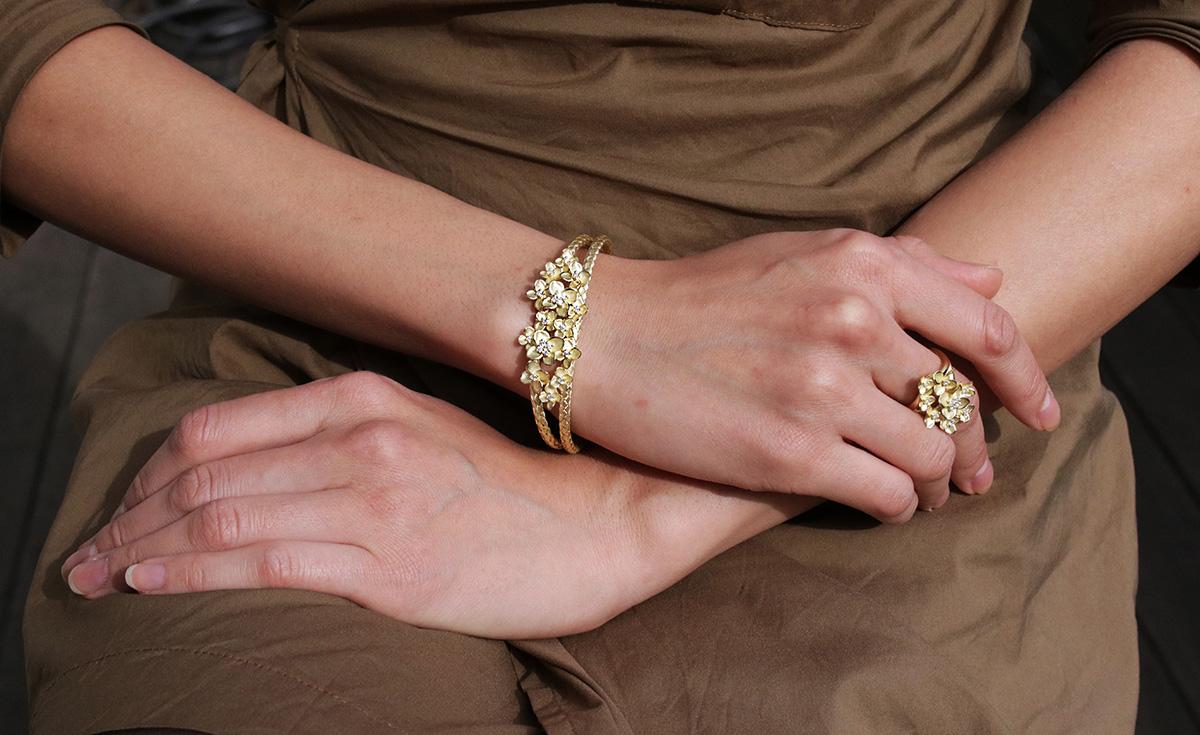
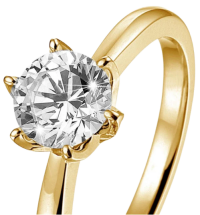
5 Questions to Find Her Perfect Engagement Ring
Are you planning to propose? Finding the right engagement ring is a defining step. Every ring is handcrafted in Antwerp from the finest materials by skilled artisans. Discover what engagement ring fits her personality.
Most viewed diamond jewels
-
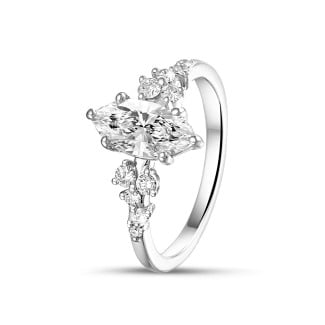
![1.00 carat solitaire cluster ring in white gold with marquise diamond]() BestsellerNew1.00 carat solitaire cluster ring in white gold with marquise diamondFrom USD 4.400,00 (excl. VAT)
BestsellerNew1.00 carat solitaire cluster ring in white gold with marquise diamondFrom USD 4.400,00 (excl. VAT) -
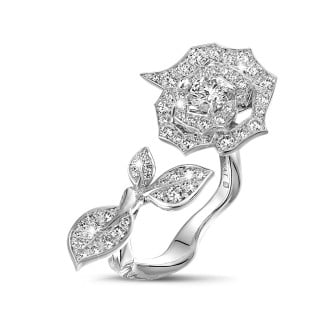
![0.95 carat diamond rose design ring in white gold]() NewPrincess Delphine0.95 carat diamond rose design ring in white goldFrom USD 16.000,00 (excl. VAT)
NewPrincess Delphine0.95 carat diamond rose design ring in white goldFrom USD 16.000,00 (excl. VAT) -
![1.00 carat solitaire ring with an asscher cut diamond in white gold]() Bestseller1.00 carat solitaire ring with an asscher cut diamond in white goldFrom USD 4.700,00 (excl. VAT)
Bestseller1.00 carat solitaire ring with an asscher cut diamond in white goldFrom USD 4.700,00 (excl. VAT) -
![1.00 carat solitaire ring with a cushion diamond and hidden halo in white gold]() BestsellerNew1.00 carat solitaire ring with a cushion diamond and hidden halo in white goldFrom USD 4.010,00 (excl. VAT)
BestsellerNew1.00 carat solitaire ring with a cushion diamond and hidden halo in white goldFrom USD 4.010,00 (excl. VAT) -
![0.15 carat solitaire ring with a oval cut diamond in white gold]() New0.15 carat solitaire ring with a oval cut diamond in white goldFrom USD 2.210,00 (excl. VAT)
New0.15 carat solitaire ring with a oval cut diamond in white goldFrom USD 2.210,00 (excl. VAT)

What is 3D-Printing?
How design choices affect the diamond and final appearance
Different setting styles interact with printed designs in distinct ways. Prong settings benefit from precise tip geometry so prongs can be finished and tapered evenly; bezel settings need carefully modelled seat shoulders so the metal wraps the stone without hiding its brilliance. BAUNAT does not recommend tension settings for diamonds, as those depend on specific engineering outside our standard setting practice.
At the file level, small modelling choices influence sparkle and durability. Slightly tapered internal surfaces near the stone and polished reflective areas in the gallery can improve light return to the diamond, while overly enclosed cavities may reduce brilliance. Designers should model adequate seat clearances for each diamond shape so the stone sits secure without excessive metal covering the girdle or crown.
When combining diamond selection with 3D-printed ring designs, consider how size and cut affect visual balance. Larger stones and those with deeper pavilion proportions need proportionally scaled settings to keep harmony between the diamond and the ring. A resin prototype or CAD render shows how light interacts with both the stone and the surrounding metal, helping to refine the final look before casting.
Timing, ordering and assurance
- Submit brief and preferences, including desir https://www.baunatjewellery.cn/en/buying-a-ring-that-is-printed
ed diamond specifications and metal choice.
- Approve the 3D digital preview and request a physical sample if needed.
- Approve the final model, after which we proceed to casting and finishing.
Lead times depend on design complexity and whether a physical prototype is requested; we provide a specific schedule when you request a quote. If you choose a sample, we will state the sample timing separately so you can plan accordingly.
Assurance and certification
All diamonds supplied by BAUNAT are accompanied by independent certification where applicable, and our team will share the relevant certificate details with you during the approval phase. We carry out quality checks at CAD approval, after prototyping and again post-setting to ensure the finished ring matches the approved design. If any adjustment is required following your sample inspection, we will document the change and update the CAD before final production.
The Role of 3D-Printing in Diamond Ring Design
From choosing the diamond shape, carats, to deciding whether to go for colourless or coloured diamonds and the type of precious metal, your options are numerous. Nothing is impossible when crafting your cherished piece; thanks to 3D printing, you can visualize the final outcome before it comes to life.
As we observe the diamond prices evolution, investing in a unique, personalized ring becomes a wise choice. If you're seeking an elegant diamond ring, consider exploring our extensive collection. We also provide a tailored approach to fit your distinct requirements. Should you have any queries about a specific model or need help navigating the diamond market, our personalized service is always available. We invite you to connect with us.
Industry Expert BAUNAT about Diamond Market believes in staying ahead of trends and innovations while providing quality and efficient solutions to our valued consumers. We invite you to take into account these latest insights when choosing your dream diamond ring.
Design for fit: tolerances, wall thickness and prototyping
Wall and shank thickness must balance elegance with structural strength. For fine details such as gallery work, setting shoulders and pavé rows, aim for consistent cross-sections rather than abrupt thin points; BAUNAT accounts for standard casting behaviour when converting files so delicate features remain defined in metal. Areas that bear stress, such as the shank beneath the setting, benefit from slightly increased cross-section to improve longevity and setting security.
Seat depth and cavity geometry are important for stone retention. Prong, bezel and channel settings each require a specific seat profile so the stone sits flush and secure. When you share a CAD or size specification, include the inner diameter or the accepted finger size standard so the ring can be checked against intended fit and expected conversion tolerances.
Prototyping with a resin mock-up is a practical way to validate fit and proportion. A cured resin print gives a realistic sense of weight, balance and how the setting reads on the finger; it also allows a test try-on to confirm comfort before casting in metal. Any adjustments found on the prototype are integrated into the final file so the cast ring reflects the validated shape.
Throughout the process BAUNAT applies dimensional checks and visual inspections at prototype and post-cast stages. This ensures tolerances for fit, seat geometry and finish are respected, and that the final ring meets the functional and aesthetic expectations set during design.
Order a 3D-printed replica to test fit and lookOrder a 3D-printed replica to test fit and look
- How to order: send your design request or select a proposed design, approve the digital preview, then request a prototype. Our team confirms the sample type and cost before printing.
- Materials and realism: plastic samples represent scale and proportions and are ideal for fit and overall shape; wax replicas show curves and settings more faithfully, though neither reproduces the final metal polish or plating.
- Pricing and turnaround: replica cost and production depend on size and complexity; our team provides a precise quote on request. We confirm expected timing when you place the sample order.
- What to check on arrival: verify finger fit, comfort at the knuckle and under the stone, inspect profile and shoulder proportions, and note any adjustments you want for prong height or band thickness.
If a physical prototype is not suitable, we provide high-resolution digital previews and in-person viewings by appointment in Antwerp. These alternatives let you validate proportions and placement before sign-off. Contact us to request a prototype or to arrange a viewing.
From CAD to ring: how the sample differs from the final
- CAD modelling: we refine shape, setting and measurements in the digital file. This is the stage to confirm exact ring size, stone position and band profile.
- Prototype print: for validation we produce a plastic or wax print from the CAD file. Plastic prints are fast and good for checking fit and overall proportions. Wax prints can be used directly in the casting process.
- Adjustment and approval: after you review the prototype we record any changes and update the CAD file. Minor tweaks to prong height, band thickness or shoulder profile are common.
- Casting and finishing: once the CAD is final we produce a wax model for casting into the chosen precious metal, followed by polishing and stone setting to achieve the final finish.
How to interpret the sample
- Scale and proportions match the final product, so how the ring sits and its relative size on your finger are dependable.
- Surface finish differs: printed samples have a matte or slightly textured look; the final piece will have a polished surface and the reflections of the metal.
- Colour and weight: plastics do not reproduce the weight or the exact colour of the metal, so weight perception may change in the finished ring.
CAD → sample print → adjustment → wax model → casting → polishing
This workflow makes sure you see and feel a true representation of form before casting, while keeping room to refine details until you are satisfied.
Frequently asked Questions
The Role of 3D-Printing in Diamond Ring Design
At BAUNAT, we encourage you to embrace smart investment decisions and choose a tailor-made diamond ring. With such an approach, you can carry a unique piece of jewellery that reflects your distinct personality. Share your ideas with us, and together we will co-create the diamond ring of your dreams.
From choosing the diamond shape, carats, to deciding whether to go for colourless or coloured diamonds and the type of precious metal, your options are numerous. Nothing is impossible when crafting your cherished piece; thanks to 3D printing, you can visualize the final outcome before it comes to life.
As we observe the diamond prices evolution, investing in a unique, personalized ring becomes a wise choice. If you're seeking an elegant diamond ring, consider exploring our extensive collection. We also provide a tailored approach to fit your distinct requirements. Should you have any queries about a specific model or need help navigating the diamond market, our personalized service is always available. We invite you to connect with us.
Order a 3D-printed replica to test fit and look
- How to order: send your design request or select a proposed design, approve the digital preview, then request a prototype. Our team confirms the sample type and cost before printing.
- Materials and realism: plastic samples represent scale and proportions and are ideal for fit and overall shape; wax replicas show curves and settings more faithfully, though neither reproduces the final metal polish or plating.
- Pricing and turnaround: replica cost and production depend on size and complexity; our team provides a precise quote on request. We confirm expected timing when you place the sample order.
- What to check on arrival: verify finger fit, comfort at the knuckle and under the stone, inspect profile and shoulder proportions, and note any adjustments you want for prong height or band thickness.
From CAD to ring: how the sample differs from the final
- CAD modelling: we refine shape, setting and measurements in the digital file. This is the stage to confirm exact ring size, stone position and band profile.
- Prototype print: for validation we produce a plastic or wax print from the CAD file. Plastic prints are fast and good for checking fit and overall proportions. Wax prints can be used directly in the casting process.
- Adjustment and approval: after you review the prototype we record any changes and update the CAD file. Minor tweaks to prong height, band thickness or shoulder profile are common.
- Casting and finishing: once the CAD is final we produce a wax model for casting into the chosen precious metal, followed by polishing and stone setting to achieve the final finish.
How to interpret the sample
- Scale and proportions match the final product, so how the ring sits and its relative size on your finger are dependable.
- Surface finish differs: printed samples have a matte or slightly textured look; the final piece will have a polished surface and the reflections of the metal.
- Colour and weight: plastics do not reproduce the weight or the exact colour of the metal, so weight perception may change in the finished ring.
This workflow makes sure you see and feel a true representation of form before casting, while keeping room to refine details until you are satisfied.
-
Fabienne Rauw
-
BAUNAT Antwerp
-
-
Fabienne, manager of the German market is able to guide every client with finding the right jewel. She takes care of most of the German orders, but also takes other task on her plate. Thanks to her six years of experience at BAUNAT she acquainted well with the product and the marketing around it. Her degree in PR ensures that BAUNAT is well presented across all media channels. For anyone looking into a new investment opportunity, Fabienne is the perfect guide in this process. No question will be left unanswered, and she will help you every step of the way.
Selected Bespoke Projects
• Eternal Bloom bespoke engagement concept - Role: project lead for client briefing and prototype coordination. Fabienne translated personal design references into a 3D-printed prototype, supervised stone selection and ensured the finished piece matched the client’s vision and comfort preferences.
• Personalized anniversary necklace - Role: design coordinator and quality overseer. She managed the custom design process from the initial sketch to final polishing, liaising between client and workshop to preserve proportions and finish.
• Reimagined heirloom ring restoration and redesign - Role: client consultant and technical coordinator. Fabienne guided the client through options to modernize setting details while keeping sentimental elements, delivering a wearable result that respected the original piece.
Her hands-on involvement in bespoke commissions ensures each custom order has a clear brief, careful prototype review and close follow-up with the workshop, so clients receive a tailored jewel that meets both aesthetic and practical expectations.
Professional enquiries
For speaking engagements, press requests or research collaborations, please send your message to BAUNAT’s communications team with the subject line: "Fabienne Rauw - Professional Enquiry." Include a brief description of the request and any relevant dates or documents. The communications team will route enquiries to Fabienne and provide guidance on next steps.
Fabienne, manager of the German market is able to guide every client with finding the right jewel. She takes care of most of the German orders, but also takes other task on her plate. Thanks to her six years of experience at BAUNAT she acquainted well with the product and the marketing around it. Her degree in PR ensures that BAUNAT is well presented across all media channels. For anyone looking into a new investment opportunity, Fabienne is the perfect guide in this process. No question will be left unanswered, and she will help you every step of the way.
Selected Bespoke Projects
• Eternal Bloom bespoke engagement concept - Role: project lead for client briefing and prototype coordination. Fabienne translated personal design references into a 3D-printed prototype, supervised stone selection and ensured the finished piece matched the client’s vision and comfort preferences.
• Personalized anniversary necklace - Role: design coordinator and quality overseer. She managed the custom design process from the initial sketch to final polishing, liaising between client and workshop to preserve proportions and finish.
• Reimagined heirloom ring restoration and redesign - Role: client consultant and technical coordinator. Fabienne guided the client through options to modernize setting details while keeping sentimental elements, delivering a wearable result that respected the original piece.
Her hands-on involvement in bespoke commissions ensures each custom order has a clear brief, careful prototype review and close follow-up with the workshop, so clients receive a tailored jewel that meets both aesthetic and practical expectations.
Professional enquiries
For speaking engagements, press requests or research collaborations, please send your message to BAUNAT’s communications team with the subject line: "Fabienne Rauw - Professional Enquiry." Include a brief description of the request and any relevant dates or documents. The communications team will route enquiries to Fabienne and provide guidance on next steps.