







Features:
-
Category:
-
Posted at:
-
Author:
- Fabienne Rauw
-
BAUNAT Antwerp
-


-
Reading time:12 minutes
In this article:
- Understanding the symbolism of engagement rings vs wedding rings
- Engagement rings
- Wedding rings
- Engagement and wedding ring difference
- Is it true, should the engagement ring be more expensive?
- How much should you spend? Budgeting & practical cost examples
- How are they worn together?
- How to pair your engagement ring and wedding band: contouring, enhancers and sample pairings
Engagement ring vs. wedding ring: how are they different?
Understanding the symbolism of engagement rings vs wedding rings
One enduring difference in the 'engagement vs wedding ring' dialogue lies in when they are exchanged. Engagement rings mark the promise of commitment while wedding rings seal the commitment during the matrimonial ceremony. Depending on the cultural context, either or both parties might receive these tokens of love.
Read summary
How do engagement rings and wedding rings differ in their symbolism and presentation?
Engagement rings and wedding rings serve distinct purposes in the journey to marriage. Engagement rings, traditionally presented during a proposal, symbolize the promise of commitment and often feature a prominent diamond centerpiece. The tradition dates back to 1477 when Archduke Maximilian of Austria gave the first recorded diamond engagement ring to Mary of Burgundy.
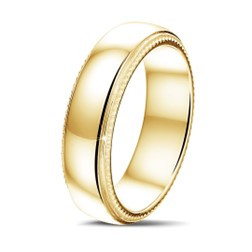
Wedding rings, exchanged during the marriage ceremony, represent the formalization of the union. These bands typically have simpler designs compared to engagement rings and are worn by both partners, following a tradition that originated in ancient Egypt.
While cultural practices vary globally, engagement rings generally cost more due to their elaborate designs, larger gemstones, and the cultural expectation of making a significant investment. When worn together, both rings traditionally grace the left hand's ring finger, believed by ancient cultures to contain the "vena amoris" connecting directly to the heart.
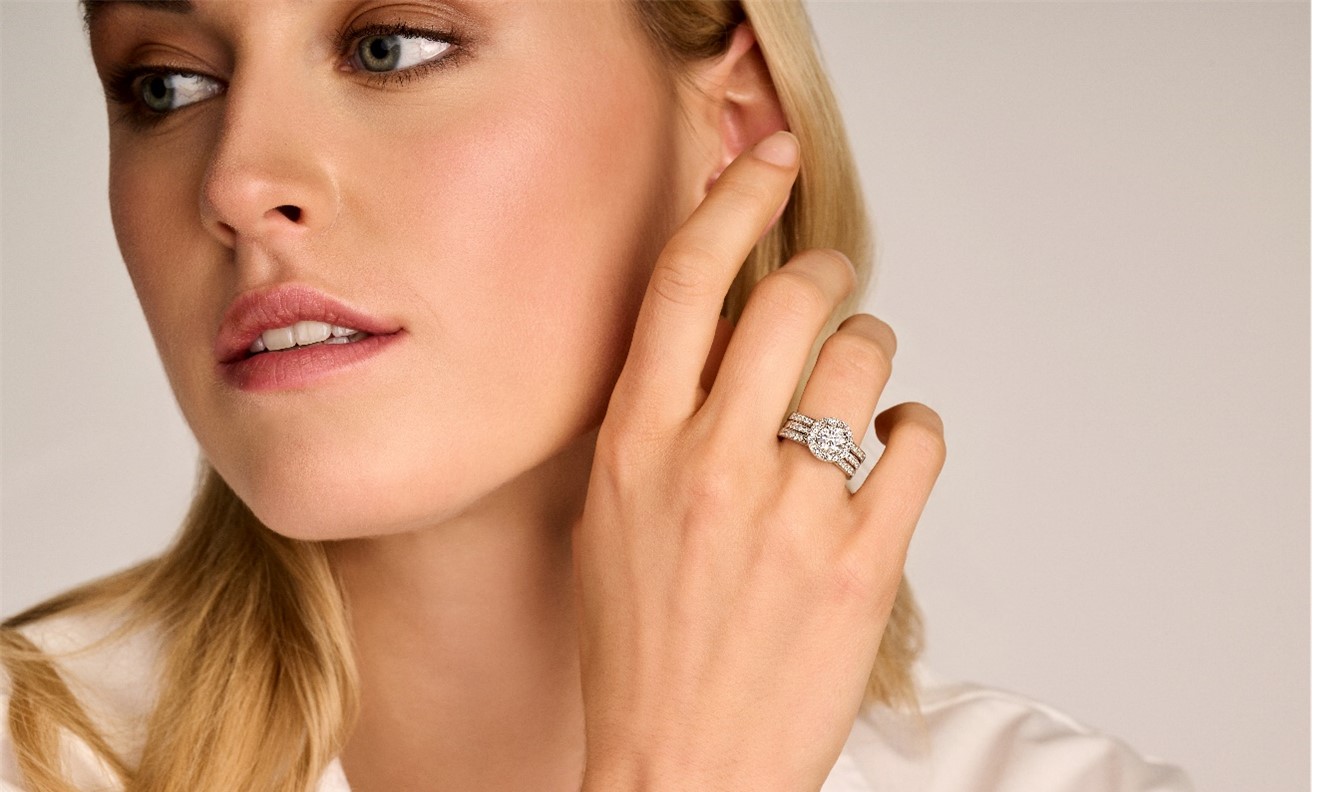
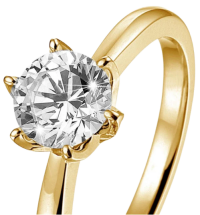
5 Questions to Find Her Perfect Engagement Ring
Are you planning to propose? Finding the right engagement ring is a defining step. Every ring is handcrafted in Antwerp from the finest materials by skilled artisans. Discover what engagement ring fits her personality.
Most viewed diamond jewels
-
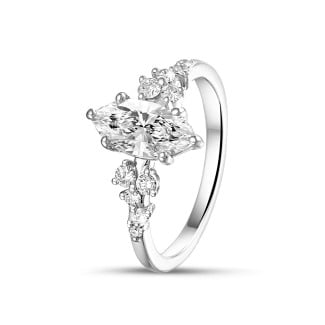
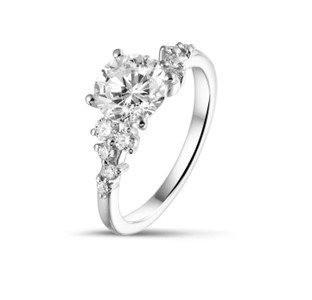
![1.00 carat solitaire cluster ring in white gold with marquise diamond]() BestsellerNew1.00 carat solitaire cluster ring in white gold with marquise diamondFrom USD 4.400,00 (excl. VAT)
BestsellerNew1.00 carat solitaire cluster ring in white gold with marquise diamondFrom USD 4.400,00 (excl. VAT) -
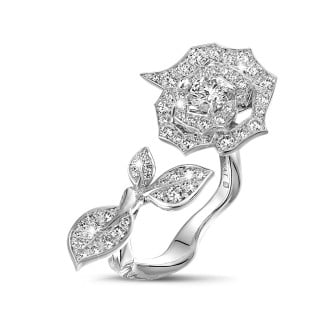
![0.95 carat diamond rose design ring in white gold]() NewPrincess Delphine0.95 carat diamond rose design ring in white goldFrom USD 16.000,00 (excl. VAT)
NewPrincess Delphine0.95 carat diamond rose design ring in white goldFrom USD 16.000,00 (excl. VAT) -
![1.00 carat solitaire ring with an asscher cut diamond in white gold]() Bestseller1.00 carat solitaire ring with an asscher cut diamond in white goldFrom USD 4.700,00 (excl. VAT)
Bestseller1.00 carat solitaire ring with an asscher cut diamond in white goldFrom USD 4.700,00 (excl. VAT) -
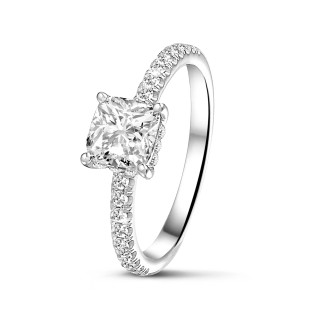
![1.00 carat solitaire ring with a cushion diamond and hidden halo in white gold]() BestsellerNew1.00 carat solitaire ring with a cushion diamond and hidden halo in white goldFrom USD 4.010,00 (excl. VAT)
BestsellerNew1.00 carat solitaire ring with a cushion diamond and hidden halo in white goldFrom USD 4.010,00 (excl. VAT) -
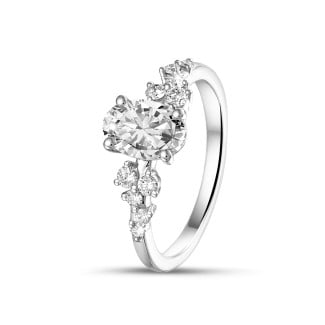
![1.00 carat solitaire cluster ring in white gold with oval diamond]() BestsellerNew1.00 carat solitaire cluster ring in white gold with oval diamondFrom USD 4.590,00 (excl. VAT)
BestsellerNew1.00 carat solitaire cluster ring in white gold with oval diamondFrom USD 4.590,00 (excl. VAT)

..
Engagement rings
Wedding rings
Engagement and wedding ring difference
In some countries, like Sweden, both the man and the woman wear engagement rings and only the woman receives a wedding ring at the ceremony. In others, like the US and UK, it’s the other way around. Here are the most important differences between engagement vs wedding rings:
- Design and materials: engagement rings often feature intricate designs and high-quality centre stones, particularly diamonds. The carat weight, cut, clarity, and colour of the diamond significantly affect the price. Wedding bands, on the other hand, tend to have simpler designs and may use fewer or smaller gemstones, resulting in lower costs.
- Symbolic value: the engagement ring is often seen as a statement piece meant to impress, which can justify a higher price. It symbolises the commitment to the relationship and the seriousness of the proposal. The wedding band, while equally important, is a symbol of the vows exchanged and is typically more understated.
- Cultural expectations: in many cultures, there is an expectation for the engagement ring to be a substantial investment. This expectation can drive up the price of engagement rings compared to wedding bands. The tradition of spending a significant portion of one's salary on an engagement ring also contributes to this disparity.
- Market trends: the jewellery market influences the pricing of both engagement rings and wedding bands. Engagement rings often follow fashion trends, with certain styles or gemstones becoming highly sought after, driving up prices. Wedding bands usually follow more stable pricing patterns due to their simpler designs.
Is it true, should the engagement ring be more expensive?
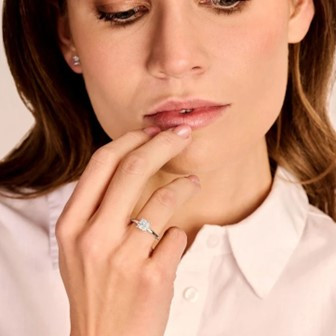
In an average engagement ring, the diamonds make up a large part of the total price. The larger the diamonds and the better their quality, the more expensive the ring. The wedding ring usually costs less than the engagement ring with one or more diamonds.
How much should you spend? Budgeting & practical cost examples
Ring costs vary depending on design, metal and whether the centre stone is mined or lab-grown, so treat the figures below as illustrative market examples rather than guarantees.Market example averages (illustrative): in many markets an engagement ring often costs several times more than a simple women’s wedding band, while a groom’s band is commonly lower still. For example, if an illustrative engagement ring is shown as $5,000, a typical women’s wedding band in the same market might sit around $1,200 and a groom’s band around $600. These numbers clarify allocation, not fixed prices.
Two practical allocation frameworks
1) Conservative split (75/25): allocate about 75% of your combined jewellery budget to the engagement ring and 25% to the wedding band. Example: with a $5,000 engagement ring, the band would be roughly $1,250 under this rule. This suits an engagement ring with a significant centre stone and a simple band.2) Balanced split (60/40 or start-small approach): allocate 60% to the engagement ring and 40% to the band, or choose a modest band now and upgrade later. Example: with a $5,000 engagement ring, a 60/40 approach suggests a band around $2,000. Alternatively, pick a streamlined half-eternity or plain polished band now and add a more ornate anniversary band later.
Lab-grown versus mined diamonds
Lab-grown diamonds generally offer savings at the same visual size and grade, which can free budget to increase centre stone size or invest more in the wedding band. If you choose lab-grown, you can use the savings for a full- or half-eternity band, or to select a higher metal purity such as 18Kt and above for longevity.Product tradeoffs and resizing considerations
Half-eternity bands place stones on the visible top and are usually more cost-effective and easier to resize than full-eternity bands. Full-eternity bands give uninterrupted sparkle but can limit future resizing. For metal, favour 18Kt and higher for durability and consistent colour; this also preserves aesthetic value. Note that elaborate pavé or micro-settings increase labour and therefore price.Next steps
Decide your maximum combined budget, test a few splits in-store with real examples, and consider whether lab-grown stones could free budget for an upgraded band. Try actual combinations together before committing so fit, comfort and visual balance drive the final choice.
How are they worn together?
Traditionally both rings are worn on the left hand, and many women choose to wear the engagement ring and wedding band on the same finger. When combining them, fit and durability should guide your choice as much as appearance.Band width and profile recommendations
Match band width to the engagement ring’s shoulder width. As a rule of thumb, engagement rings with delicate shoulders pair best with wedding bands in a similar narrow range to keep proportions balanced, while rings with broader shoulders suit bands of similar width. Narrow bands can disappear beside a large centre stone; conversely, an overly wide band can overwhelm a slim engagement ring.Durability and everyday wear: settings to consider
Bezel and low-set settings tuck the diamond closer to the finger and offer greater protection for daily wear, making them practical for active lifestyles. Prong and high-set settings show more of the stone but expose it to knocks; inspect prongs regularly to ensure stones remain secure. For rings worn daily, consider lower profiles or protective galleries to reduce the chance of catching.Metal mixing and long-term colour consistency
Mixing metals can look stylish, but different metals age and scratch differently. If you prefer a uniform look over time, keep wedding and engagement rings within the same metal family or choose metals with similar hardness. For a long-lasting finish favour 18Kt and higher where appropriate.Simple cost example (illustrative)
As an illustration: if an engagement ring is shown at $5,000, a coordinating women’s wedding band might typically be in the $1,000–$1,500 range depending on whether it is plain, pavé or a half-eternity. This is to show how design choices affect spend rather than a price promise.Care and inspection guidance
Have prongs and settings checked by a professional periodically to catch wear early. Clean rings with a soft brush and mild cleaner to maintain sparkle and to reveal any loose stones or worn settings. If the combination feels uncomfortable or gaps appear, a jeweller can offer contouring or reshaping to improve fit without compromising the integrity of the rings.
How to pair your engagement ring and wedding band: contouring, enhancers and sample pairings
Fit and comfort matter as much as matching metal tones. A set that sits flush and feels comfortable will be worn every day, so start by checking how the rings meet on the finger.Quick rules: straight bands suit low-set, flat-profile centres; curved or U-shaped bands fit higher or cathedral settings; check clearance for prongs and halo details; match metal family for consistent colour, or deliberately contrast for a modern effect.
Contoured, straight and U-shaped bands explained
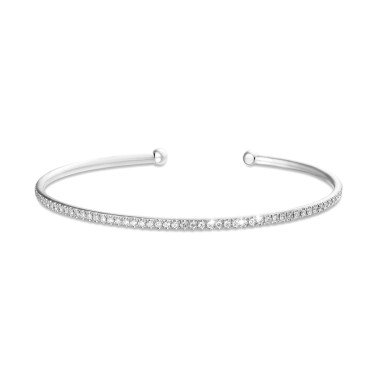
A straight band is flat across its profile and pairs cleanly with a low-set solitaire or three-stone ring. Choose straight when the engagement ring has a modest crown height and no extended halo. A contoured or curved band is milled to follow the engagement ring’s shoulders, creating a near-flush join that reduces gaps and spinning. Contoured bands work well for halo and cathedral settings where the engagement ring’s silhouette is pronounced. U-shaped bands curve more deeply around an east–west or unusually set centre stone, creating room for sideways or high-profile designs. When unsure, try the rings together to check how they nest and whether the engagement ring’s prongs catch on the wedding band.Enhancers and jackets: what they do and when to choose them
Enhancers, sometimes called jackets, are complementary rings designed to embrace an engagement ring. They can add visual weight, frame a centre stone, or make a solitaire read like a halo without altering the original ring. Pros: instant impact, reversible styling and the option to add pavé or decorative elements. Cons: they can add bulk, change finger fit, and sometimes need soldering if rotation becomes a problem. Soldering gives a permanent, seamless look and prevents rotation, but it removes the option of wearing rings separately. Consider an enhancer for ceremonies or photos, and a contoured band for daily, low-profile wear.Practical pairing examples
1) Low-set solitaire (round or oval) → straight thin band or half-eternity. A slim straight band mirrors the solitaire’s low profile and keeps height modest, ideal for everyday wear. Half-eternity adds sparkle without overwhelming the centre stone.2) Cathedral-set halo → contoured band or curved half-eternity. The raised gallery of a cathedral or halo needs a band that follows its curve; a contoured band fills the void and preserves the halo’s silhouette.
3) Three-stone with tapered pavé shoulders → tapered straight or contoured band. Match the taper and shoulder width so the wedding band lines up with the engagement ring’s graduated pavé and avoids visible gaps.
4) East–west or bezel-set centre stone → U-shaped or deep-curved band. These settings sit differently on the finger; a U-shaped band provides clearance and prevents the band from riding up.
5) Solitaire with tall prongs or cathedral setting → contoured band or custom-fitted enhancer. Tall crowns often leave a visible gap with plain bands; a contoured band or tailor-made enhancer removes that gap while keeping the profile elegant.
Quick checklist for trying sets on
Measure the engagement ring’s height from finger to stone top, test for gaps when rings are pressed together, try the combination while doing everyday tasks to simulate real life, and check comfort when typing or holding items. If there is rubbing, catching, or spacing, test a contoured or narrower band, or ask a jeweller about minor reshaping.Professional reassurance
If the look is right but the fit is not, a trusted jeweller can advise on contouring, soldering or custom finishing so your set sits comfortably and looks unified for years to come.
-
Fabienne Rauw
-
BAUNAT Antwerp
-
-
Fabienne, manager of the German market is able to guide every client with finding the right jewel. She takes care of most of the German orders, but also takes other task on her plate. Thanks to her six years of experience at BAUNAT she acquainted well with the product and the marketing around it. Her degree in PR ensures that BAUNAT is well presented across all media channels. For anyone looking into a new investment opportunity, Fabienne is the perfect guide in this process. No question will be left unanswered, and she will help you every step of the way.
Selected Bespoke Projects
• Eternal Bloom bespoke engagement concept - Role: project lead for client briefing and prototype coordination. Fabienne translated personal design references into a 3D-printed prototype, supervised stone selection and ensured the finished piece matched the client’s vision and comfort preferences.
• Personalized anniversary necklace - Role: design coordinator and quality overseer. She managed the custom design process from the initial sketch to final polishing, liaising between client and workshop to preserve proportions and finish.
• Reimagined heirloom ring restoration and redesign - Role: client consultant and technical coordinator. Fabienne guided the client through options to modernize setting details while keeping sentimental elements, delivering a wearable result that respected the original piece.
Her hands-on involvement in bespoke commissions ensures each custom order has a clear brief, careful prototype review and close follow-up with the workshop, so clients receive a tailored jewel that meets both aesthetic and practical expectations.
Professional enquiries
For speaking engagements, press requests or research collaborations, please send your message to BAUNAT’s communications team with the subject line: "Fabienne Rauw - Professional Enquiry." Include a brief description of the request and any relevant dates or documents. The communications team will route enquiries to Fabienne and provide guidance on next steps.
Fabienne, manager of the German market is able to guide every client with finding the right jewel. She takes care of most of the German orders, but also takes other task on her plate. Thanks to her six years of experience at BAUNAT she acquainted well with the product and the marketing around it. Her degree in PR ensures that BAUNAT is well presented across all media channels. For anyone looking into a new investment opportunity, Fabienne is the perfect guide in this process. No question will be left unanswered, and she will help you every step of the way.
Selected Bespoke Projects
• Eternal Bloom bespoke engagement concept - Role: project lead for client briefing and prototype coordination. Fabienne translated personal design references into a 3D-printed prototype, supervised stone selection and ensured the finished piece matched the client’s vision and comfort preferences.
• Personalized anniversary necklace - Role: design coordinator and quality overseer. She managed the custom design process from the initial sketch to final polishing, liaising between client and workshop to preserve proportions and finish.
• Reimagined heirloom ring restoration and redesign - Role: client consultant and technical coordinator. Fabienne guided the client through options to modernize setting details while keeping sentimental elements, delivering a wearable result that respected the original piece.
Her hands-on involvement in bespoke commissions ensures each custom order has a clear brief, careful prototype review and close follow-up with the workshop, so clients receive a tailored jewel that meets both aesthetic and practical expectations.
Professional enquiries
For speaking engagements, press requests or research collaborations, please send your message to BAUNAT’s communications team with the subject line: "Fabienne Rauw - Professional Enquiry." Include a brief description of the request and any relevant dates or documents. The communications team will route enquiries to Fabienne and provide guidance on next steps.