







Features:
-
Category:
-
Posted at:
-
Author:
- Fabienne Rauw
-
BAUNAT Antwerp
-


-
Reading time:12 minutes
In this article:
How do you determine the correct size of a diamond ring?
It is very risky to guess the correct ring size of your girlfriend. Most women don’t even know their own size, so how can you know? You’re about to surprise her with a diamond ring, or you are planning a marriage proposal, but you don’t know her ring size yet. No need to panic just yet, we will be glad to help you!
Read summary
How can you determine the perfect ring size when planning a surprise proposal?
Finding the right ring size is crucial when purchasing a diamond ring, especially for a surprise proposal. While many women don't know their exact size, there are reliable ways to get it right. The most accurate method is using a plastic ring sizer, which can be ordered from BAUNAT or other jewelers. If you're planning a surprise, secretly borrow one of her existing rings and use it as a reference.
For those measuring their own ring size, timing matters. Take measurements between lunch and dinner when finger size is most stable. Avoid measuring after exposure to hot or cold temperatures, as this affects finger size. If you have larger knuckles, choose a size that balances comfort and security. Remember, it's better to select a slightly snug fit than a loose one to prevent losing your precious diamond ring.

5 Questions to Find Her Perfect Engagement Ring
Are you planning to propose? Finding the right engagement ring is a defining step. Every ring is handcrafted in Antwerp from the finest materials by skilled artisans. Discover what engagement ring fits her personality.
Most viewed diamond jewels
-
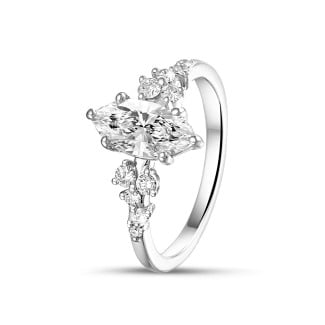
![1.00 carat solitaire cluster ring in white gold with marquise diamond]() BestsellerNew1.00 carat solitaire cluster ring in white gold with marquise diamondFrom USD 4.400,00 (excl. VAT)
BestsellerNew1.00 carat solitaire cluster ring in white gold with marquise diamondFrom USD 4.400,00 (excl. VAT) -
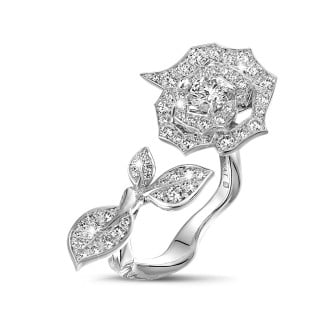
![0.95 carat diamond rose design ring in white gold]() NewPrincess Delphine0.95 carat diamond rose design ring in white goldFrom USD 16.000,00 (excl. VAT)
NewPrincess Delphine0.95 carat diamond rose design ring in white goldFrom USD 16.000,00 (excl. VAT) -
![1.00 carat solitaire ring with an asscher cut diamond in white gold]() Bestseller1.00 carat solitaire ring with an asscher cut diamond in white goldFrom USD 4.700,00 (excl. VAT)
Bestseller1.00 carat solitaire ring with an asscher cut diamond in white goldFrom USD 4.700,00 (excl. VAT) -
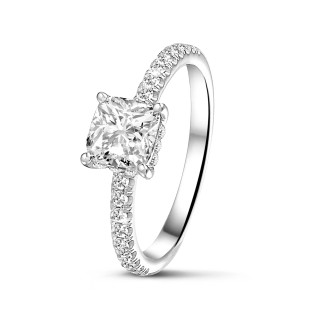
![1.00 carat solitaire ring with a cushion diamond and hidden halo in white gold]() BestsellerNew1.00 carat solitaire ring with a cushion diamond and hidden halo in white goldFrom USD 4.010,00 (excl. VAT)
BestsellerNew1.00 carat solitaire ring with a cushion diamond and hidden halo in white goldFrom USD 4.010,00 (excl. VAT) -
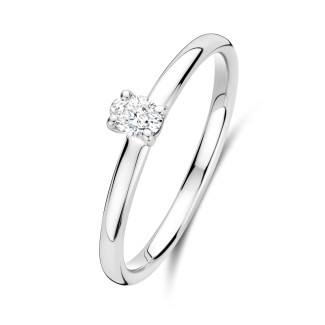
![0.15 carat solitaire ring with a oval cut diamond in white gold]() New0.15 carat solitaire ring with a oval cut diamond in white goldFrom USD 2.210,00 (excl. VAT)
New0.15 carat solitaire ring with a oval cut diamond in white goldFrom USD 2.210,00 (excl. VAT)

Ring Sizer
With a good plastic ring sizer you can easily determine the correct ring size. You can order this at BAUNAT, but there are plenty of alternatives on the market. Ideally, slide the ring sizer on the ring finger of your girlfriend, but if you want to surprise her, this is not really a good idea. Therefore, take a (diamond) ring from her personal collection and find the right size.
Practical step-by-step methods to get an accurate ring size
Measure an existing ring (inner diameter method)
Materials needed: a ruler or caliper that shows millimetres, a magnifying glass if available, a clean flat surface.
Steps:
1. Choose a ring that your partner wears on the same finger if possible. If not available, a ring that fits comfortably on another finger can still help as a reference.
2. Place the ring flat on the ruler or caliper and measure the inner diameter at the widest point, in millimetres. Record the value to the nearest 0.5 mm when possible.
3. Convert the inner diameter to a standard ring size using the conversion values below.
Common errors and how to avoid them: measuring the outer diameter instead of the inner one will give a larger value; make sure you measure the inside edge to inside edge. Measuring on a curved or uneven surface will produce incorrect readings, so use a flat table and view the ruler straight-on.
Temporary string or paper method (wrap-and-mark)
Materials needed: thin string or a strip of paper about 10 cm long, a fine pen, a ruler with millimetre markings.
Steps:
1. Wrap the string or paper snugly around the base of the intended finger. It should feel snug but still able to slide over the knuckle with slight resistance.
2. Mark where the string or paper meets with the pen.
3. Lay the string or paper flat and measure the marked length in millimetres. This length is the circumference of the finger.
4. Convert the circumference (mm) to a ring size using the conversion values below.
Common errors and how to avoid them: do not pull the string too tight, and avoid using very thick paper or ribbon which changes the circumference. Repeat the measurement 2–3 times and take the average for accuracy.
Borrow-and-trace method (privacy-safe borrowing)
Materials needed: borrowed ring, plain white paper, fine pen, ruler with millimetres.
Steps:
1. Borrow a ring from your partner’s jewellery box that clearly fits her finger.
2. Place the ring flat on the paper and trace the inner circle carefully with the pen held vertically.
3. Measure the diameter of the traced inner circle in millimetres. If tracing is imprecise, measure the inner diameter directly with a ruler as in method 1.
4. Use the diameter-to-size conversions below to find the corresponding ring size.
Common errors and how to avoid them: pens with thick tips create larger traces; use a fine tip and trace carefully. If worried about discovery, do this when you have privacy and return the ring immediately.
Printable ring sizer / professional measuring
Materials needed: printer and scissors for a printable sizer, or visit a jeweller for a professional measure.
Steps for printable sizer:
1. Print a reputable ring sizer at 100% scale and check the test circle included on the sheet first.
2. Follow the instructions on the printable: either cut and wrap the strip around the finger or place an existing ring over the size circles to match diameter.
3. If the printable does not align with the test circle, do not use it and prefer a physical measuring tool or professional service.
Professional measuring:
Many jewellers can measure ring size discreetly and accurately. If you are planning a surprise, ask a trusted friend or use a private appointment option so the measurement stays confidential.
Common errors and how to avoid them: scaled prints can shrink or expand slightly depending on the printer settings; always verify the test marker on the sheet before trusting the measurement.
Quick conversion guide (inner diameter and circumference to common sizes)
Use the measurement you took, then match it to the appropriate size below.
- Inner diameter 15.7 mm, circumference 49.3 mm = Size 49 (EU) / 5 (US)
- Inner diameter 16.5 mm, circumference 51.8 mm = Size 52 (EU) / 6 (US)
- Inner diameter 16.9 mm, circumference 53.1 mm = Size 53 (EU) / 6.25 (US)
- Inner diameter 17.3 mm, circumference 54.3 mm = Size 54 (EU) / 7 (US)
- Inner diameter 18.1 mm, circumference 56.9 mm = Size 57 (EU) / 8 (US)
Notes on conversions: EU sizes are commonly expressed as the inner circumference in millimetres rounded to the nearest whole number. When in doubt between two sizes, choose the tighter measurement and consult a professional jeweller for confirmation.
Troubleshooting and tips
- If measurements vary between attempts, use the average of three consistent readings. Small differences of 0.5 mm can change the fit noticeably.
- Compare a borrowed ring with one of your own similar-width rings to check consistency. Dominant hand differences and daily swelling can explain slight variations.
- Wide bands feel tighter than narrow bands. If the ring you measured is wide, consider choosing a half size up when ordering a wide band.
These step-by-step methods allow you to get a reliable ring size without guessing. Combine two methods when possible to cross-check your result for greater confidence.
Before you measure: 6 practical considerations
1) Time of day and temperature
Fingers swell and shrink during the day. Measure in the afternoon or early evening for the most reliable everyday fit, and avoid measuring immediately after exposure to cold or hot water. If you must measure in cold conditions, add a small allowance or repeat the measurement at room temperature.
2) Dominant versus non-dominant hand
The dominant hand is often slightly larger. If the intended finger is on the non-dominant hand, try to measure that hand specifically or use a ring normally worn on that side as a reference.
3) Ring width affects perceived fit
A wide band sits more snugly than a narrow one. If the ring style you choose is wide, consider sizing up by half a size compared with a narrow band measurement.
4) Knuckles versus base of finger
If the knuckle is larger than the base of the finger, measure both and choose a size that slides over the knuckle with gentle resistance but does not spin around the base.
If you are uncertain, remember that professional resizing services can adjust fit. Baunat offers resizing where appropriate; discuss options with customer care if needed, without relying on any assumed measurements.
6) Privacy tips for a surprise
If you are planning a proposal and must be discreet, borrow a ring when she is not around and measure it, or ask a close friend or family member to help obtain a measurement. Alternatively, use a printable sizer sent by mail to her under another pretense, then ask her to try it on and report the result.
One-sentence remedies: measure late afternoon at room temperature; use the same hand as the intended finger; add half a size for wide bands; verify knuckle and base measurements; rely on professional resizing if unsure; use discreet borrowing strategies for surprises.
Real-world examples and mini case studies
Case: Borrowed ring from the jewellery box
Situation: He wanted a surprise and found a ring she wore daily on her right hand.
Method used: Measure an existing ring (inner diameter method).
Steps taken: He measured the inner diameter at 16.5 mm and cross-checked by placing the ring over a printable size circle. The ring was a narrow band.
Result and adjustment: 16.5 mm matched Size 52 (EU). Because the chosen engagement ring was a narrow solitaire, he ordered the same size. The fit was precise and required no adjustment.
Outcome: The ring slid over the knuckle with slight resistance and did not spin, she loved the fit and the surprise.
Case: Measuring with string while she slept
Situation: He wanted to be absolutely sure but could not borrow a ring. He used a string method after she fell asleep.
Method used: Temporary string method.
Steps taken: He wrapped a thin string snugly at the base of her ring finger and marked it, then measured 52 mm circumference.
Result and adjustment: 52 mm circumference corresponded to Size 52 (EU). The couple later chose a medium-width band, so he consulted the sizing guide and ordered the same size.
Outcome: The ring fit comfortably; the couple later confirmed the size with a professional measure and kept the original.
Case: Knuckle is larger than finger base
Situation: She had a noticeable knuckle that made buying rings tricky.
Method used: Combined measurements: string for circumference at base and knuckle, plus trying a borrowed ring.
Steps taken: Base circumference measured 51 mm, knuckle 54 mm. He selected a size that allowed the ring to pass the knuckle with gentle resistance, then chose the next half size up to ensure comfort for a wide band.
Result and adjustment: Chose one half-size up from the base measurement for a wide band.
Outcome: The ring was comfortable all day and did not cut off circulation when hands swelled.
These brief cases show how different methods perform in real situations and how small adjustments - for band width or knuckle differences - help achieve a comfortable, secure fit.
Useful tips
Are you planning to buy a diamond ring for yourself online, or you discovered the surprise of your boyfriend, then you can always go and determine your ring size. Hereby you must take into account a number of things:
• temperature, time, food, drinks, etc., can all have an influence on your ring size. This is the most stable between lunch and supper.
• cold water makes the fingers shrink. Hot water makes them swell.
• If your knuckles are wider than the rest of your fingers, take a ring size in between.
• most people buy their diamonds ring too large. However, this is not a good idea. Make sure that the ring slides tight over the knuckles, to avoid loss.
Still haven’t found a beautiful diamond ring? Feel free to have a look into our extensive collection. Are you interested in or do you have questions about a particular model, please do not hesitate to contact us.
-
Fabienne Rauw
-
BAUNAT Antwerp
-
-
Fabienne, manager of the German market is able to guide every client with finding the right jewel. She takes care of most of the German orders, but also takes other task on her plate. Thanks to her six years of experience at BAUNAT she acquainted well with the product and the marketing around it. Her degree in PR ensures that BAUNAT is well presented across all media channels. For anyone looking into a new investment opportunity, Fabienne is the perfect guide in this process. No question will be left unanswered, and she will help you every step of the way.
Selected Bespoke Projects
• Eternal Bloom bespoke engagement concept - Role: project lead for client briefing and prototype coordination. Fabienne translated personal design references into a 3D-printed prototype, supervised stone selection and ensured the finished piece matched the client’s vision and comfort preferences.
• Personalized anniversary necklace - Role: design coordinator and quality overseer. She managed the custom design process from the initial sketch to final polishing, liaising between client and workshop to preserve proportions and finish.
• Reimagined heirloom ring restoration and redesign - Role: client consultant and technical coordinator. Fabienne guided the client through options to modernize setting details while keeping sentimental elements, delivering a wearable result that respected the original piece.
Her hands-on involvement in bespoke commissions ensures each custom order has a clear brief, careful prototype review and close follow-up with the workshop, so clients receive a tailored jewel that meets both aesthetic and practical expectations.
Professional enquiries
For speaking engagements, press requests or research collaborations, please send your message to BAUNAT’s communications team with the subject line: "Fabienne Rauw - Professional Enquiry." Include a brief description of the request and any relevant dates or documents. The communications team will route enquiries to Fabienne and provide guidance on next steps.
Fabienne, manager of the German market is able to guide every client with finding the right jewel. She takes care of most of the German orders, but also takes other task on her plate. Thanks to her six years of experience at BAUNAT she acquainted well with the product and the marketing around it. Her degree in PR ensures that BAUNAT is well presented across all media channels. For anyone looking into a new investment opportunity, Fabienne is the perfect guide in this process. No question will be left unanswered, and she will help you every step of the way.
Selected Bespoke Projects
• Eternal Bloom bespoke engagement concept - Role: project lead for client briefing and prototype coordination. Fabienne translated personal design references into a 3D-printed prototype, supervised stone selection and ensured the finished piece matched the client’s vision and comfort preferences.
• Personalized anniversary necklace - Role: design coordinator and quality overseer. She managed the custom design process from the initial sketch to final polishing, liaising between client and workshop to preserve proportions and finish.
• Reimagined heirloom ring restoration and redesign - Role: client consultant and technical coordinator. Fabienne guided the client through options to modernize setting details while keeping sentimental elements, delivering a wearable result that respected the original piece.
Her hands-on involvement in bespoke commissions ensures each custom order has a clear brief, careful prototype review and close follow-up with the workshop, so clients receive a tailored jewel that meets both aesthetic and practical expectations.
Professional enquiries
For speaking engagements, press requests or research collaborations, please send your message to BAUNAT’s communications team with the subject line: "Fabienne Rauw - Professional Enquiry." Include a brief description of the request and any relevant dates or documents. The communications team will route enquiries to Fabienne and provide guidance on next steps.