







Features:
-
Posted at:
-
Author:
- Fabienne Rauw
-
BAUNAT Antwerpen
-


-
Reading time:4 minutes
The Evolving Significance of Buying a Brilliant Stone
In the fascinating world of literature, the diamond's tale has mirrored reality in intriguing ways. The phrase 'diamond prices evolution' might seem out of place in a literary context, but industry expert BAUNAT can attest to the fascinating interplay between the market shifts and the glittering gem's representation in literature.
Read summary
How has literature's portrayal of diamonds evolved alongside the industry's transformation?
Throughout history, literature has mirrored the changing perceptions and realities of the diamond industry. From Renaissance texts highlighting the challenges of diamond processing to Victorian-era stories exposing questionable industry practices, literary works have consistently reflected the zeitgeist of their times. F. Scott Fitzgerald's "A Diamond as Big as the Ritz" captured the complex relationship between wealth and morality in the diamond trade, while Ian Fleming's "Diamonds are Forever" explored the intrigue of diamond smuggling. As the industry adopted ethical practices like the Kimberley Process, literature began featuring more positive diamond symbolism, exemplified in modern works like Harry Potter, where diamonds represent achievement and value. Today's literary diamonds predominantly symbolize luxury, love, and legitimate status - a transformation that parallels the industry's evolution toward transparency and ethical practices.

Most viewed diamond jewels
-
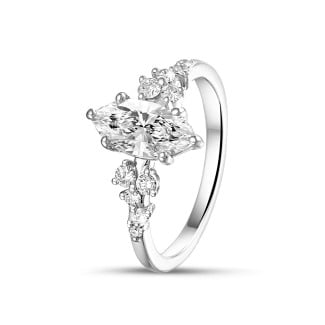
![1.00 carat solitaire cluster ring in white gold with marquise diamond]() BestsellerNew1.00 carat solitaire cluster ring in white gold with marquise diamondFrom USD 4.400,00 (excl. VAT)
BestsellerNew1.00 carat solitaire cluster ring in white gold with marquise diamondFrom USD 4.400,00 (excl. VAT) -
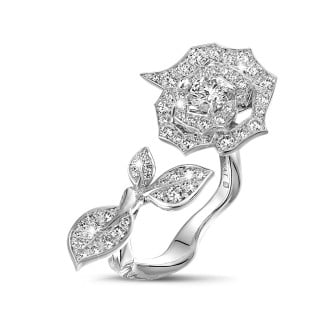
![0.95 carat diamond rose design ring in white gold]() NewPrincess Delphine0.95 carat diamond rose design ring in white goldFrom USD 16.000,00 (excl. VAT)
NewPrincess Delphine0.95 carat diamond rose design ring in white goldFrom USD 16.000,00 (excl. VAT) -
![1.00 carat solitaire ring with an asscher cut diamond in white gold]() Bestseller1.00 carat solitaire ring with an asscher cut diamond in white goldFrom USD 4.700,00 (excl. VAT)
Bestseller1.00 carat solitaire ring with an asscher cut diamond in white goldFrom USD 4.700,00 (excl. VAT) -
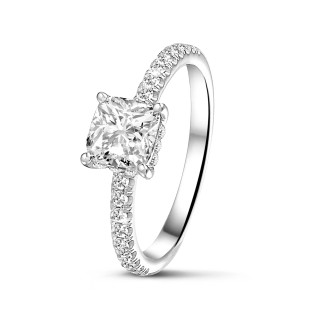
![1.00 carat solitaire ring with a cushion diamond and hidden halo in white gold]() BestsellerNew1.00 carat solitaire ring with a cushion diamond and hidden halo in white goldFrom USD 4.010,00 (excl. VAT)
BestsellerNew1.00 carat solitaire ring with a cushion diamond and hidden halo in white goldFrom USD 4.010,00 (excl. VAT) -
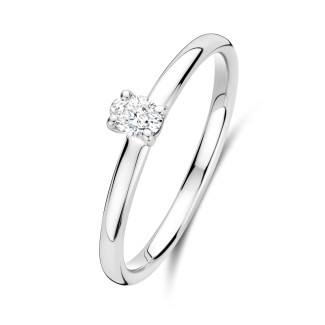
![0.15 carat solitaire ring with a oval cut diamond in white gold]() New0.15 carat solitaire ring with a oval cut diamond in white goldFrom USD 2.210,00 (excl. VAT)
New0.15 carat solitaire ring with a oval cut diamond in white goldFrom USD 2.210,00 (excl. VAT)

The symbolism of a diamond has been steadfast as a beacon of value and status for millennia. Yet, a closer look at historical texts reveals the struggle in diamond processing, given the stone's unparalleled hardness. John Fletcher's Renaissance play 'A Wife for a Month' introduced the 'rough diamond' idiom, aptly portraying the challenge of refining the precious stone. The centuries that followed – as evinced in the 1868 English detective story, The Moonstone – were marked by a turbulent diamond industry with many references hinting at obscure practices until the 20th century dawned.
A striking illustration of this period is F. Scott Fitzgerald's 'A Diamond as Big as the Ritz'. It tells the tale of a wealthy family that owned a mountain of diamonds yet spiralled into a world of crime in a desperate attempt to preserve their fortune. With the advent of the 20th century, the diamond narrative began to evolve, mirroring the actual shifts in diamond prices and market trends.
Just as the exposure and eradication of conflict diamonds transformed the industry, it also altered the diamond's image in literature. Negative connotations gave way to positive imagery; symbolism associated with buying a diamond in literature began to take on more favourable tones. The allure of diamonds and the intrigue they incite has fueled many novels, such as the De Beers-inspired James Bond story, 'Diamonds are Forever,' that explores diamond smuggling.
Diamonds' positive symbolism also pervades modern works, albeit with some outliers referencing past malpractices, such as 'Blood Diamonds' from 2002. However, the Kimberley process has largely purged the industry of these unethical practices, allowing diamonds to reclaim their rightful place as cherished symbols of affection and status. For instance, J.K. Rowling's Harry Potter series awards house points in the form of coloured diamonds, subtly emphasizing the precious nature of diamonds.
In summary, a diamond's role in literature has evolved in tandem with the diamond prices evolution. Today, literature frequently associates buying a diamond with exclusivity—in books, films, and beyond. From the legendary Heart of the Ocean necklace in Titanic to the tale of the pink diamond in 'The Pink Panther', diamonds continue to captivate audiences worldwide.
In the quest for valuable diamonds and the desire to translate literature's romantic narratives into reality, BAUNAT stands as a reliable guide. Reach out to our team of diamond experts at Industry Expert BAUNAT for trustworthy advice about the Diamond Market and to discover the true embodiment of smart investment, quality, and personalized service.
-
Fabienne Rauw
-
BAUNAT Antwerpen
-
-
.
.