







How to recognize a real diamond!
Some gems are so similar to one another that it can sometimes be hard to tell them apart. However, it is easy to determine whether a particular stone is semi-precious or precious without being a diamond expert. Before you buy your wedding band, your necklace pendant or your diamond earrings, here are some criteria that will help you understand immediately whether a diamond is 100% natural or whether it is an imitation.
Read summary
How can you tell if a diamond is genuine without professional tools?
While many gemstones may look similar, there are three reliable ways to verify a diamond's authenticity at home. First, genuine diamonds display exceptional brilliance, sparkling distinctively even in modest lighting conditions. When exposed to sunlight or lamplight, a real diamond will reflect light through all its facets with unique intensity.
The transparency test offers two methods: the fog test, where condensation from your breath should dissipate quickly on a real diamond, and the dot test, where a black dot viewed through a genuine diamond should appear blurry or invisible. Finally, diamonds possess remarkable hardness, capable of scratching glass, though testing this is not recommended to avoid potential damage to your jewelry.
For absolute certainty, consulting diamond experts like those at BAUNAT remains the most reliable option for authentication.

Most viewed diamond jewels
-
![1.00 carat solitaire cluster ring in white gold with marquise diamond]() BestsellerNew1.00 carat solitaire cluster ring in white gold with marquise diamondFrom USD 4.400,00 (excl. VAT)
BestsellerNew1.00 carat solitaire cluster ring in white gold with marquise diamondFrom USD 4.400,00 (excl. VAT) -
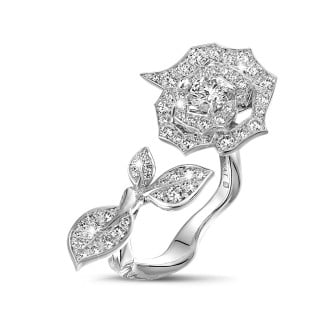
![0.95 carat diamond rose design ring in white gold]() NewPrincess Delphine0.95 carat diamond rose design ring in white goldFrom USD 16.000,00 (excl. VAT)
NewPrincess Delphine0.95 carat diamond rose design ring in white goldFrom USD 16.000,00 (excl. VAT) -
![1.00 carat solitaire ring with an asscher cut diamond in white gold]() Bestseller1.00 carat solitaire ring with an asscher cut diamond in white goldFrom USD 4.700,00 (excl. VAT)
Bestseller1.00 carat solitaire ring with an asscher cut diamond in white goldFrom USD 4.700,00 (excl. VAT) -
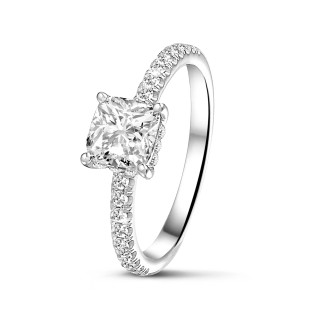
![1.00 carat solitaire ring with a cushion diamond and hidden halo in white gold]() BestsellerNew1.00 carat solitaire ring with a cushion diamond and hidden halo in white goldFrom USD 4.010,00 (excl. VAT)
BestsellerNew1.00 carat solitaire ring with a cushion diamond and hidden halo in white goldFrom USD 4.010,00 (excl. VAT) -
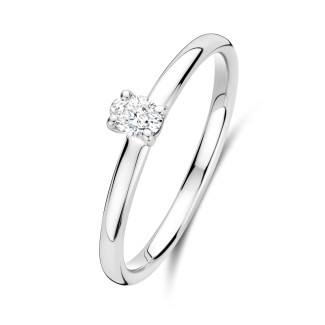
![0.15 carat solitaire ring with a oval cut diamond in white gold]() New0.15 carat solitaire ring with a oval cut diamond in white goldFrom USD 2.210,00 (excl. VAT)
New0.15 carat solitaire ring with a oval cut diamond in white goldFrom USD 2.210,00 (excl. VAT)

Criterion # 1: brilliance
A real diamond will exude an increased shine even in the absence of strong lighting. To test its radiance, you can hold your diamond to the reflection of the sun. If you are in a dark room, the light of a lamp will do. As soon as the reflection of the light hits the diamond, the diamond will shimmer and shine through all its facets, unlike the facets of any other gemstone.
Concrete observation steps and common lookalikes: To test brilliance more reliably, place the stone under a focused lamp or in bright daylight and tilt it slowly while watching for white flashes versus colorful flashes. A genuine diamond returns strong white brilliance with measured, scintillating fire. Pronounced, persistent rainbow flashes often point to moissanite or cubic zirconia. As a quick comparison, view two similar-sized stones side by side in the same light to judge which returns more white sparkle; the one with steadier white return is likelier the diamond.
Criterion # 2: transparency
While diamonds may seem to be transparent, this is by no means the case. It is possible to compare diamonds with other kind of stones, such as Zirconium, in two ways. Firstly, the "fog test": you can exhale onto your diamond ring to create a fog on its surface. The fog does not linger on a real diamond for long, whereas it does persist on Zirconium. A second option is placing the diamond on a well-centered black dot, if the black dot appears clearly through the stone, the stone is fake. If it is a real one however, the black dot should blend completely into the diamond.
Practical transparency checks and what they reveal: For the dot or mirror checks, use a loose stone or remove the ring if possible and place it over a small black mark on white paper. If you can clearly see the dot through the stone, it is probably a simulant. Also inspect under a loupe for signs of double refraction or tiny gas bubbles; double refraction is characteristic of some simulants such as moissanite, while tiny round gas bubbles point to glass-based fakes.
Criterion # 3: hardness
Diamonds are very resistant to the point that they can scratch, and even cut, mineral materials, such as glass. However, if you want to test the authenticity of your diamond jewellery, avoid repeatedly putting the hardness of your diamonds to the test in order to prevent eventual damage. Although diamonds generally never show any scratches, it is advisable to always take good care of them.
Safer hardness proxies and simulant clues: Avoid intentionally scratching stones. Instead, use a loupe to examine facet edges and check for chips at facet junctions. Diamonds keep very crisp facet edges and resist chipping better than many simulants. Cubic zirconia may show slightly rounded facet edges and moissanite can exhibit more noticeable rainbow fire when tilted. These visual proxies are safer to perform and still give reliable clues without risking damage.
In case of any doubt, you can always seek valuable advice from real diamond professionals such as the diamond experts at BAUNAT, who have a well-recognized expertise within this type of evaluation.
Practical tests to identify a real diamond — home and professional methods
1. Fog test (easy, quick) - How to: Hold the stone close to your mouth and breathe onto it so a thin fog forms. Interpretation: If the fog clears almost immediately, the stone is likely a diamond; if the fog lingers for several seconds, it is more likely a simulant. Caveat: Fast clearing is a useful hint but not definitive; the cut and surface cleanliness affect the result.
2. Dot/mirror test - How to: Place the stone over a small, clearly drawn black dot on white paper or position it over a mirror. Interpretation: If you can see the dot or a clear reflection through the stone, it is likely not a diamond; a real diamond refracts light so the dot appears blurred or disappears. Caveat: Works best with loose stones; mounted stones and very shallow cuts can mislead.
3. Sunlight or flashlight observation - How to: Hold the stone under direct sunlight or aim a small flashlight at it while tilting the stone slowly. Interpretation: Watch the balance of white sparkle (brilliance) versus colorful flashes (fire). Natural diamonds usually show strong white brilliance with controlled fire; strong, persistent rainbow flashes may indicate moissanite or cubic zirconia. Caveat: Light type and angle change the appearance, so check in different lighting.
4. Water/weight indication - How to: Drop a loose stone into a clear glass of water or compare the heft in hand against a similar known sample. Interpretation: Some simulants float or sink differently and cubic zirconia often feels heavier than a diamond of the same size. Caveat: Useful only with loose stones and gives an approximate clue rather than proof.
5. UV/fluorescence quick check - How to: Expose the stone to a shortwave UV lamp in a dark room. Interpretation: Some natural diamonds fluoresce a blue glow under UV; absence of fluorescence does not mean the stone is fake, but unusual colours or very strong fluorescence can be a clue. Caveat: Fluorescence varies by diamond and is not a sole reliable indicator.
6. Loupe 10x inspection checklist - How to: Using a 10x jeweller’s loupe, examine facet junctions, facet edges, inclusions and the girdle. Interpretation: Natural diamonds often show natural inclusions, sharp facet edges and crisp facet junctions; man-made simulants may show rounded facet edges or gas bubbles. Checklist: look for natural inclusions, sharp facet lines, no obvious bubbles, and precise symmetrical facets. Caveat: Requires practice; some high-quality simulants mimic these signs closely.
7. Diamond tester / thermal tool explanation - How to: A handheld thermal or conductivity tester is placed against the stone to measure heat or electrical transfer. Interpretation: Real diamonds conduct heat differently than most simulants; a tester indicating diamond-like conductivity is strong evidence. Caveat: Some testers confuse moissanite with diamond because moissanite can show similar conductivity on older devices; use modern, calibrated equipment or combine with other tests.
8. Setting and hallmark inspection - How to: Check the jewellery mounting and any metal stamps. Interpretation: Higher-quality settings and precious metal hallmarks typically accompany genuine diamonds; cheap or poorly finished settings can indicate a simulant. Caveat: Hallmarks can be absent or misleading; settings are a supporting clue, not proof.
9. Weight versus size note - How to: Compare the apparent size to expected weight; a stone that looks large but feels unusually heavy or light for its dimensions can be a simulant. Interpretation: Cubic zirconia is often noticeably heavier than a diamond of the same dimensions. Caveat: Accurate assessment requires experience or a comparison sample.
10. When to consult a lab or professional - How to: If any home test raises doubt, bring the stone to a qualified gemologist or send it to an independent lab for testing. Interpretation: Professionals use microscopes, advanced conductivity devices, spectroscopy and other laboratory methods to distinguish natural diamonds, lab-grown diamonds and simulants. Caveat: Some laboratory methods require loose stones and cannot be performed on certain permanent settings.
Limitations - No single home test is definitive. Combining observations increases confidence, but the only conclusive verification is a professional assessment or an independent laboratory report. When unsure about authenticity or value, seek a gemologist’s opinion or a certified lab report.
Why certificates matter — how to verify authenticity with a lab report
A laboratory report from a recognized gemmological institute is the most reliable way to confirm a diamond’s identity and its key characteristics. Well-known labs include GIA, IGI and HRD; their reports list the stone’s measured weight, plotted characteristics and any comments about treatments or origin. A certificate does not appraise monetary value but provides an unbiased technical description that professionals use.
How to read the essentials (quick checklist):
- Certificate number: verify this unique number on the issuing lab’s online database to confirm the report’s authenticity.
- Carat/weight and plotted diagram: check the weight matches the stone and that the plotted diagram corresponds to observed inclusions.
- Comments or treatment notes: look for any mention of fracture filling, clarity enhancements or whether the stone is lab-grown.
- Measurements and proportions: compare these to the physical stone; significant mismatches can indicate a different stone was submitted.
-
Fabienne Rauw
-
BAUNAT Antwerp
-


-
Fabienne, manager of the German market is able to guide every client with finding the right jewel. She takes care of most of the German orders, but also takes other task on her plate. Thanks to her six years of experience at BAUNAT she acquainted well with the product and the marketing around it. Her degree in PR ensures that BAUNAT is well presented across all media channels. For anyone looking into a new investment opportunity, Fabienne is the perfect guide in this process. No question will be left unanswered, and she will help you every step of the way.
Selected Bespoke Projects
• Eternal Bloom bespoke engagement concept - Role: project lead for client briefing and prototype coordination. Fabienne translated personal design references into a 3D-printed prototype, supervised stone selection and ensured the finished piece matched the client’s vision and comfort preferences.
• Personalized anniversary necklace - Role: design coordinator and quality overseer. She managed the custom design process from the initial sketch to final polishing, liaising between client and workshop to preserve proportions and finish.
• Reimagined heirloom ring restoration and redesign - Role: client consultant and technical coordinator. Fabienne guided the client through options to modernize setting details while keeping sentimental elements, delivering a wearable result that respected the original piece.
Her hands-on involvement in bespoke commissions ensures each custom order has a clear brief, careful prototype review and close follow-up with the workshop, so clients receive a tailored jewel that meets both aesthetic and practical expectations.
Professional enquiries
For speaking engagements, press requests or research collaborations, please send your message to BAUNAT’s communications team with the subject line: "Fabienne Rauw - Professional Enquiry." Include a brief description of the request and any relevant dates or documents. The communications team will route enquiries to Fabienne and provide guidance on next steps.
Fabienne, manager of the German market is able to guide every client with finding the right jewel. She takes care of most of the German orders, but also takes other task on her plate. Thanks to her six years of experience at BAUNAT she acquainted well with the product and the marketing around it. Her degree in PR ensures that BAUNAT is well presented across all media channels. For anyone looking into a new investment opportunity, Fabienne is the perfect guide in this process. No question will be left unanswered, and she will help you every step of the way.
Selected Bespoke Projects
• Eternal Bloom bespoke engagement concept - Role: project lead for client briefing and prototype coordination. Fabienne translated personal design references into a 3D-printed prototype, supervised stone selection and ensured the finished piece matched the client’s vision and comfort preferences.
• Personalized anniversary necklace - Role: design coordinator and quality overseer. She managed the custom design process from the initial sketch to final polishing, liaising between client and workshop to preserve proportions and finish.
• Reimagined heirloom ring restoration and redesign - Role: client consultant and technical coordinator. Fabienne guided the client through options to modernize setting details while keeping sentimental elements, delivering a wearable result that respected the original piece.
Her hands-on involvement in bespoke commissions ensures each custom order has a clear brief, careful prototype review and close follow-up with the workshop, so clients receive a tailored jewel that meets both aesthetic and practical expectations.
Professional enquiries
For speaking engagements, press requests or research collaborations, please send your message to BAUNAT’s communications team with the subject line: "Fabienne Rauw - Professional Enquiry." Include a brief description of the request and any relevant dates or documents. The communications team will route enquiries to Fabienne and provide guidance on next steps.