







Understanding the 4C’s Rule
Understanding diamond valuation essentially revolves around comprehending the 4C’s – criteria that allow gemmologists to objectively evaluate a precious stone such as a diamond. the 4 represents the number of criteria and each 'C' signifies the first letter of each criterion. The value and allure of a precious stone primarily hinge on these elements.
Read summary
What are the 4C's that determine a diamond's value?
When evaluating a diamond's worth, gemmologists use the 4C's criteria: Carat, Clarity, Color, and Cut. Carat measures the diamond's weight (0.2 grams per carat), with stones over 1 carat being rare and more valuable. Clarity assesses imperfections, with Flawless (FL) and Internally Flawless (IF) being the most prestigious grades. Color is graded from D (completely colorless) to Z (yellow/brown tint), with colorless diamonds commanding higher prices. Finally, Cut refers to the diamond's proportions and symmetry, which determine how it reflects light and creates brilliance.
At BAUNAT, these criteria guide their selection of investment-grade diamonds, offering customers quality pieces that represent both beauty and smart luxury investment.

Most viewed diamond jewels
-
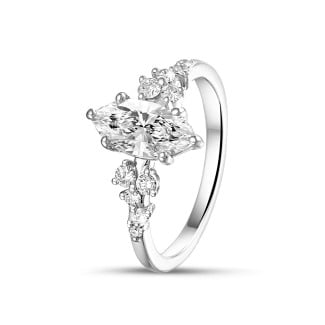
![1.00 carat solitaire cluster ring in white gold with marquise diamond]() BestsellerNew1.00 carat solitaire cluster ring in white gold with marquise diamondFrom USD 4.400,00 (excl. VAT)
BestsellerNew1.00 carat solitaire cluster ring in white gold with marquise diamondFrom USD 4.400,00 (excl. VAT) -
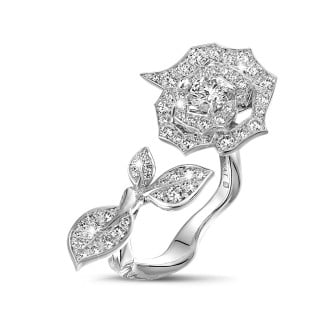
![0.95 carat diamond rose design ring in white gold]() NewPrincess Delphine0.95 carat diamond rose design ring in white goldFrom USD 16.000,00 (excl. VAT)
NewPrincess Delphine0.95 carat diamond rose design ring in white goldFrom USD 16.000,00 (excl. VAT) -
![1.00 carat solitaire ring with an asscher cut diamond in white gold]() Bestseller1.00 carat solitaire ring with an asscher cut diamond in white goldFrom USD 4.700,00 (excl. VAT)
Bestseller1.00 carat solitaire ring with an asscher cut diamond in white goldFrom USD 4.700,00 (excl. VAT) -
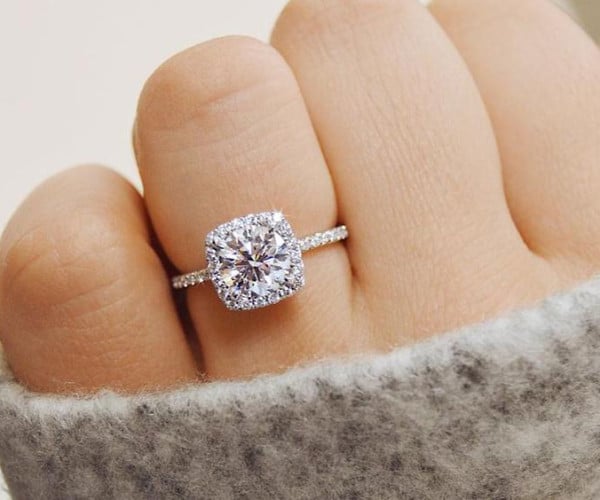
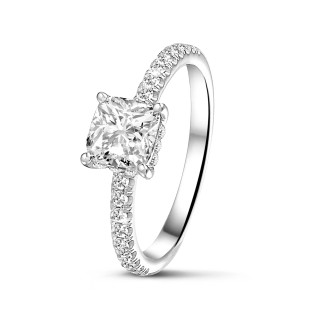
![1.00 carat solitaire ring with a cushion diamond and hidden halo in white gold]() BestsellerNew1.00 carat solitaire ring with a cushion diamond and hidden halo in white goldFrom USD 4.010,00 (excl. VAT)
BestsellerNew1.00 carat solitaire ring with a cushion diamond and hidden halo in white goldFrom USD 4.010,00 (excl. VAT) -
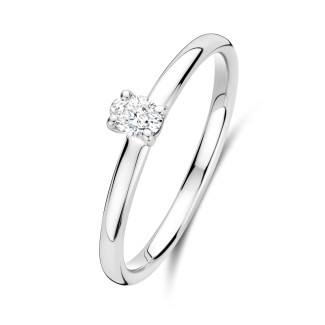
![0.15 carat solitaire ring with a oval cut diamond in white gold]() New0.15 carat solitaire ring with a oval cut diamond in white goldFrom USD 2.210,00 (excl. VAT)
New0.15 carat solitaire ring with a oval cut diamond in white goldFrom USD 2.210,00 (excl. VAT)

First Criterion: Carat
The evaluation of gemstone weight utilizes the unit of Carat (ct). Every Carat can be subdivided into 100 points and equals 0.2 grams. An intriguing fact to keep in mind is that the size of a diamond does not directly correspond with the number of carats, as they simply denote its weight. The discovery of diamonds exceeding 1 carat is a rare event, driving up their price range. At BAUNAT, we offer diamond rings set with 0.30, 1.25 and even 3.00ct, each finely selected to represent our commitment to quality and smart investment.
Why the same carat looks different across gems (size vs weight)
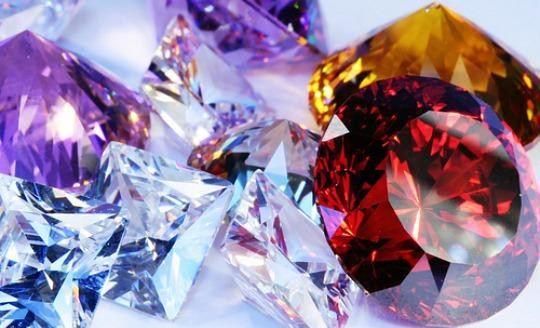
Carat measures weight, not visible size, and density differs between gem species. The same millimetre diameter can therefore translate to different carat weights. Concrete examples for a round cut at similar diameters illustrate the effect:
- 6.5 mm round diamond ≈ 1.00 ct; diamond’s density makes this the familiar benchmark for an apparent 1-carat size.
- 6.5 mm round amethyst ≈ 0.80 ct; amethyst is less dense than diamond, so a similar diameter yields less weight.
- 6.5 mm round zircon ≈ 1.40 ct; zircon is denser, so the same diameter carries more carat weight.
- 7.0 mm round sapphire ≈ 1.50 ct; sapphires (corundum) are denser than diamonds, giving a heavier feel at similar size.
- 6.5 mm round emerald ≈ 1.10 ct; emeralds (beryl family) sit between amethyst and diamond in density, so the weight is slightly higher than for amethyst.
When shopping, compare millimetre measurements as well as carat weight to understand apparent size. If visual size matters more than carat weight, ask for millimetre dimensions or side-by-side photos to judge how a gem will wear.
Second Criterion: Clarity
A diamond is denoted as 'pure' if it has no internal or external imperfections. Determining the purity of a diamond requires an expert's trained eye, using a sufficiently large magnifying glass or a binocular - a specific microscope utilized by gemmologists. The diamond market, as BAUNAT has observed with the diamond prices evolution, holds a great deal of value in clarity, with FL (Flawless) and IF (Internally Flawless) considered the epitome of diamond quality.
Third Criterion: Colour
Diamond colour categorizations spread across a spectrum from D to Z. The closer a diamond is to being colourless, the more valuable it's considered. A perfectly colourless diamond belongs to category D, while those bearing shades of grey, brown or yellow fall under Z. Diamonds do manifest in 'fancy' colours like red, green, blue, black or purple, though these are exceptionally rare and their value falls below that of a colourless diamond.
Beyond the D–Z scale for diamonds, colour in coloured gems is assessed by three linked attributes: hue (the basic colour, for example blue or green), tone (the lightness to darkness) and saturation (the intensity or purity of the hue). Strong, vivid saturation often increases value, even when the hue is not perfectly pure. For example, an intensely saturated green emerald will generally be preferred over a paler green beryl because the vividness gives the gem more presence. Watch for colour zoning, where patches of different colour appear within one stone, and for colour-change gems that show different hues under different lights; both affect desirability and price.
Last Criterion: Cut
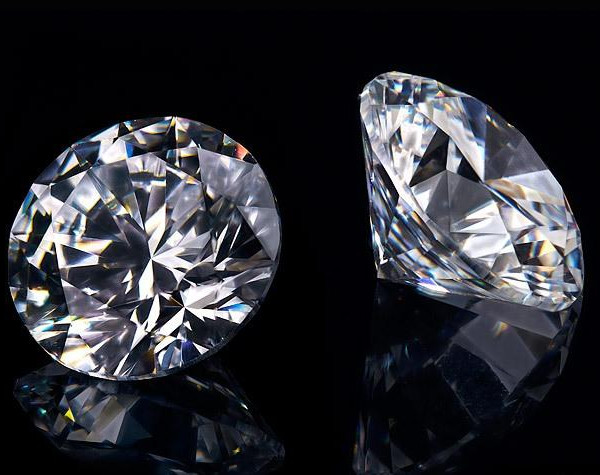
The cut of a diamond varies significantly, each cut enhancing the inherent brilliance of the diamond. A well-cut diamond will have numerous facets, evenly matched between the crown and the culet of the gem. The facets need to be symmetrical and proportionate to the height of the crown.
Cutting choices change how a gem returns light. Windowing happens when proportions are too shallow and light passes through rather than reflecting back, producing a washed-out centre. A very deep cut can create dark areas and reduce apparent brightness. For coloured gems, cutters sometimes trade sparkle for deeper colour; a slightly deeper pavilion or altered facet plan can concentrate colour, improving visual appeal at the expense of some brilliance. Cabochon cutting is a deliberate choice when the goal is to show colour, asterism or chatoyancy, or when inclusions would distract in a faceted stone. In short, faceted cuts prioritise sparkle, cabochons prioritise colour and optical effects, and the right choice depends on the material and the buyer’s preference.
At BAUNAT, we're not just about selling diamonds. We believe in providing quality, efficiency, and personalized service, mirroring the values of the Smart Luxury Consumer. As industry experts, we understand the diamond prices evolution, ensuring that our customers make smart investments. Remember, when you buy from BAUNAT, you're buying more than just a diamond; you're buying years of industry expertise and a commitment to quality.
-
Fabienne Rauw
-
BAUNAT Antwerp
-


-
Fabienne, manager of the German market is able to guide every client with finding the right jewel. She takes care of most of the German orders, but also takes other task on her plate. Thanks to her six years of experience at BAUNAT she acquainted well with the product and the marketing around it. Her degree in PR ensures that BAUNAT is well presented across all media channels. For anyone looking into a new investment opportunity, Fabienne is the perfect guide in this process. No question will be left unanswered, and she will help you every step of the way.
Selected Bespoke Projects
• Eternal Bloom bespoke engagement concept - Role: project lead for client briefing and prototype coordination. Fabienne translated personal design references into a 3D-printed prototype, supervised stone selection and ensured the finished piece matched the client’s vision and comfort preferences.
• Personalized anniversary necklace - Role: design coordinator and quality overseer. She managed the custom design process from the initial sketch to final polishing, liaising between client and workshop to preserve proportions and finish.
• Reimagined heirloom ring restoration and redesign - Role: client consultant and technical coordinator. Fabienne guided the client through options to modernize setting details while keeping sentimental elements, delivering a wearable result that respected the original piece.
Her hands-on involvement in bespoke commissions ensures each custom order has a clear brief, careful prototype review and close follow-up with the workshop, so clients receive a tailored jewel that meets both aesthetic and practical expectations.
Professional enquiries
For speaking engagements, press requests or research collaborations, please send your message to BAUNAT’s communications team with the subject line: "Fabienne Rauw - Professional Enquiry." Include a brief description of the request and any relevant dates or documents. The communications team will route enquiries to Fabienne and provide guidance on next steps.
Fabienne, manager of the German market is able to guide every client with finding the right jewel. She takes care of most of the German orders, but also takes other task on her plate. Thanks to her six years of experience at BAUNAT she acquainted well with the product and the marketing around it. Her degree in PR ensures that BAUNAT is well presented across all media channels. For anyone looking into a new investment opportunity, Fabienne is the perfect guide in this process. No question will be left unanswered, and she will help you every step of the way.
Selected Bespoke Projects
• Eternal Bloom bespoke engagement concept - Role: project lead for client briefing and prototype coordination. Fabienne translated personal design references into a 3D-printed prototype, supervised stone selection and ensured the finished piece matched the client’s vision and comfort preferences.
• Personalized anniversary necklace - Role: design coordinator and quality overseer. She managed the custom design process from the initial sketch to final polishing, liaising between client and workshop to preserve proportions and finish.
• Reimagined heirloom ring restoration and redesign - Role: client consultant and technical coordinator. Fabienne guided the client through options to modernize setting details while keeping sentimental elements, delivering a wearable result that respected the original piece.
Her hands-on involvement in bespoke commissions ensures each custom order has a clear brief, careful prototype review and close follow-up with the workshop, so clients receive a tailored jewel that meets both aesthetic and practical expectations.
Professional enquiries
For speaking engagements, press requests or research collaborations, please send your message to BAUNAT’s communications team with the subject line: "Fabienne Rauw - Professional Enquiry." Include a brief description of the request and any relevant dates or documents. The communications team will route enquiries to Fabienne and provide guidance on next steps.