







Features:
-
Category:
-
Posted at:
-
Author:
- Stefaan Mouradian & Steven Boelens
-
Founders of BAUNAT
-


-
Reading time:12 minutes
In this article:
- Understanding average carat weight
- Regional trends & what buyers typically choose
- The importance of personal preference in finding the appropriate carat size
- Budget considerations when deciding
- a per-carat price grid (natural vs lab-grown) with baseline grading assumptions
- Hand and ring size
- Optical illusions and perceived size: how the cut and setting play a significant role
- a concise carat-to-diameter (mm) table and short explanatory copy
- Pros and cons of different carat weights
- Below 1 carat
- 1 to 2 carats
- Above 2 carats
- Looking at the other 3 C’s of diamonds: cut, clarity and colour
- What about the precious metal carats?
- Ready to determine your carat size?
Your guide to choosing the carat size for your engagement ring
Buying an engagement ring is a monumental decision, and one of the most pivotal aspects is determining the perfect carat size. While some might be drawn to the allure of larger diamonds, others may prioritise subtle elegance. Here’s an in-depth guide to help you choose the ideal carat size for your engagement ring.
Read summary
How do you choose the perfect carat size for your engagement ring?
When selecting an engagement ring's carat size, several key factors work together to create the ideal choice. While the average engagement ring in North America and Europe features a 1.0 to 1.2-carat diamond, personal preference should guide your decision. The diamond's appearance depends not just on carat weight, but also on cut quality, setting style, and the wearer's hand size. Smaller hands can make diamonds appear larger, while certain cuts like oval or marquise can create the illusion of greater size.
Budget naturally plays a role, with 1-carat diamonds typically ranging from €3,900 to €4,500, though exceptional stones can reach €12,000. Consider that settings like halos can enhance a smaller diamond's visual impact, while factors like cut quality and metal choice can significantly influence the ring's overall appearance. The key is finding the balance between size, quality, and personal style that best represents your relationship.
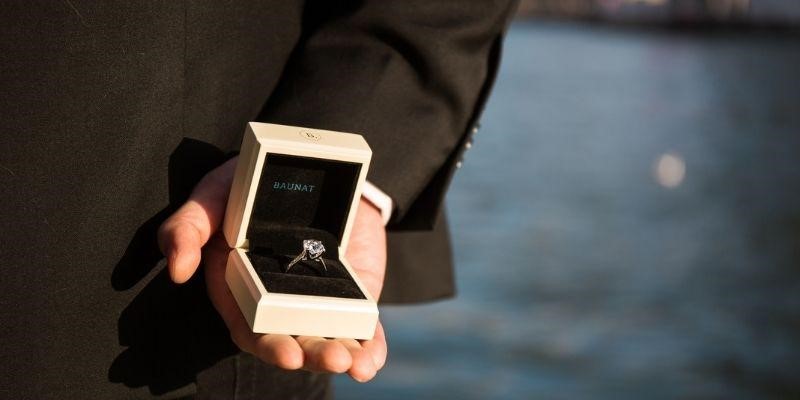
5 Questions to Find Her Perfect Engagement Ring
Are you planning to propose? Finding the right engagement ring is a defining step. Every ring is handcrafted in Antwerp from the finest materials by skilled artisans. Discover what engagement ring fits her personality.
Most viewed diamond jewels
-
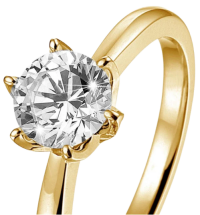
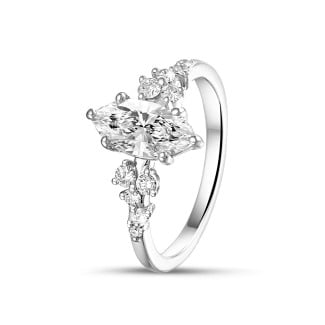
![1.00 carat solitaire cluster ring in white gold with marquise diamond]() BestsellerNew1.00 carat solitaire cluster ring in white gold with marquise diamondFrom USD 4.400,00 (excl. VAT)
BestsellerNew1.00 carat solitaire cluster ring in white gold with marquise diamondFrom USD 4.400,00 (excl. VAT) -
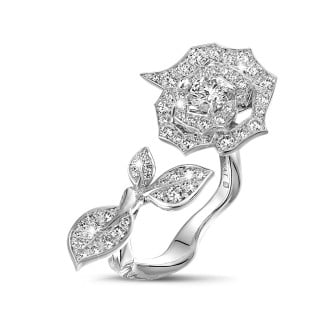
![0.95 carat diamond rose design ring in white gold]() NewPrincess Delphine0.95 carat diamond rose design ring in white goldFrom USD 16.000,00 (excl. VAT)
NewPrincess Delphine0.95 carat diamond rose design ring in white goldFrom USD 16.000,00 (excl. VAT) -
![1.00 carat solitaire ring with an asscher cut diamond in white gold]() Bestseller1.00 carat solitaire ring with an asscher cut diamond in white goldFrom USD 4.700,00 (excl. VAT)
Bestseller1.00 carat solitaire ring with an asscher cut diamond in white goldFrom USD 4.700,00 (excl. VAT) -
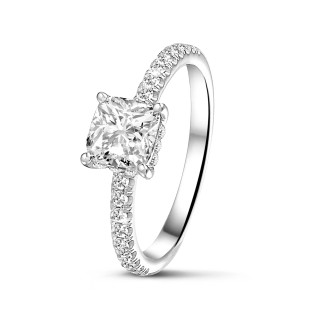
![1.00 carat solitaire ring with a cushion diamond and hidden halo in white gold]() BestsellerNew1.00 carat solitaire ring with a cushion diamond and hidden halo in white goldFrom USD 4.010,00 (excl. VAT)
BestsellerNew1.00 carat solitaire ring with a cushion diamond and hidden halo in white goldFrom USD 4.010,00 (excl. VAT) -
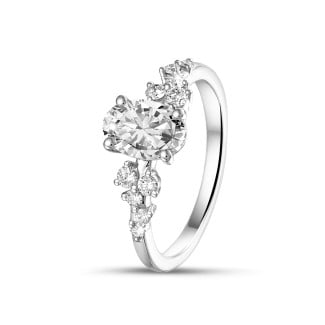
![1.00 carat solitaire cluster ring in white gold with oval diamond]() BestsellerNew1.00 carat solitaire cluster ring in white gold with oval diamondFrom USD 4.590,00 (excl. VAT)
BestsellerNew1.00 carat solitaire cluster ring in white gold with oval diamondFrom USD 4.590,00 (excl. VAT)

.
Understanding average carat weight
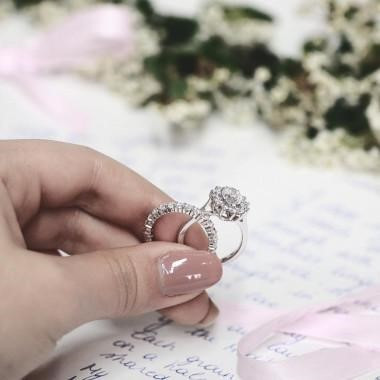
In North America and Europe, most engagement rings feature diamonds weighing between 1.0 and 1.2 carats, offering a balance between size, visual impact, and affordability. However, trends vary worldwide, and preferences may lean toward smaller or larger diamonds depending on location and budget. To explore these trends further and discover what might be the right fit for you, check out our detailed article on average carat weight.
Regional trends & what buyers typically choose
Market observations show modest regional variation in popular carat brackets. In North America the modal engagement-ring carat commonly falls around 1.0–1.2 ct, reflecting a preference for a clearly noticeable centre stone. In the United Kingdom the average tends to be slightly lower, with many buyers clustering in the 0.75–1.0 ct bracket, though metropolitan buyers in cities such as London often opt for larger sizes. Across continental Europe averages are mixed, commonly ranging between 0.75 and 1.2 ct depending on local tradition and purchasing power. These figures are market observations rather than firm rules, but they illustrate that cultural and regional norms influence what most buyers choose.The importance of personal preference in finding the appropriate carat size
Budget considerations when deciding
While the price of a diamond is influenced by carat size, quality, and shape, finding a diamond that aligns with your personal preferences is often about making informed decisions rather than focusing solely on budget. For example, a 1.00-carat diamond can typically range between €3,900 and €4,500, while exceptional diamonds of the same weight may reach up to €12,000, depending on quality and market trends.It's important to note that diamond shape also plays a crucial role in price variation. Round diamonds, known for their brilliance and popularity, tend to cost more than other shapes like cushion or princess cuts, even at the same carat weight. With BAUNAT’s range of options, you can tailor your choice to reflect your individual taste, opting for the diamond that resonates with both your style and expectations.
a per-carat price grid (natural vs lab-grown) with baseline grading assumptions
Baseline assumptions for the table below: round shape, Very Good to Excellent cut, colour range H–G, clarity range VS2–SI1. These assumptions give a practical market snapshot; actual prices depend on exact grading, certification and market supply.Natural diamond (typical range) - Lab-grown diamond (typical range)
0.30 ct - modest entry level - modest entry level0.50 ct - lower mid-range - noticeably lower than natural
0.75 ct - mid-range - mid-to-low range
1.00 ct - mainstream market range - substantially lower than natural
1.25 ct - premium mainstream - lower premium range
1.50 ct - higher mid-to-premium - lower high-range
2.00 ct - premium/high-end range - high-range but generally less than natural
Key notes:
- Main price drivers are shape, cut quality, colour and clarity, plus certification and market demand. A small step up in cut or clarity can materially change price.
- A common cost-saving tactic is to choose just under a full carat (for example 0.97–0.99 ct) to avoid the retail price jump that often occurs at whole carat marks.
- Use this grid as a starting point, then review individual stones and their certificates to compare real inventory.
Hand and ring size
Interestingly, the size of the wearer’s hand and finger can influence how a diamond appears. Smaller hands can make a diamond look larger, while larger hands might make the same diamond seem smaller. Similarly, a slender ring band can accentuate the size of the diamond, creating a more prominent effect. It’s essential to try on a few rings to see how different carat sizes visually balance with your hand and finger dimensions. Find out more about measuring your partner’s finger size.Optical illusions and perceived size: how the cut and setting play a significant role
Diamonds are masters of illusion. The way a diamond is cut can significantly affect its perceived size. For example, elongated shapes like oval, marquise, and pear cuts tend to appear larger than their actual carat weight. Additionally, a well-cut diamond with excellent symmetry and proportions will reflect light more efficiently, making it look more substantial and more brilliant.The setting of a diamond also has a profound effect on how its size is perceived. Certain settings, such as halo settings, create an optical illusion that makes the centre diamond look larger by surrounding it with smaller diamonds. Similarly, bezel settings can give the impression of a larger stone by encasing the diamond in a thin metal rim. The choice of metal colour can also impact perception; for example, a white metal like platinum or white gold can enhance the brilliance and apparent size of a diamond.
a concise carat-to-diameter (mm) table and short explanatory copy
Below is a quick reference showing approximate diameters for commonly chosen round brilliant diamonds. These figures help you compare visual size at a glance when shopping or trying on rings.0.30 ct - ~4.3 mm
0.50 ct - ~5.2 mm
0.75 ct - ~5.8 mm
1.00 ct - ~6.5 mm
1.25 ct - ~6.9–7.0 mm
1.50 ct - ~7.4–7.5 mm
2.00 ct - ~8.2–8.3 mm
A short caveat: these diameters assume a typical round brilliant proportion (common table and depth) and will vary by shape and specific cut. Pear, oval and marquise shapes spread weight differently and often present larger face-up measurements than a round of the same carat weight. When comparing stones, use millimetres as the primary way to match perceived size rather than relying on carat alone.
Pros and cons of different carat weights
Below 1 carat
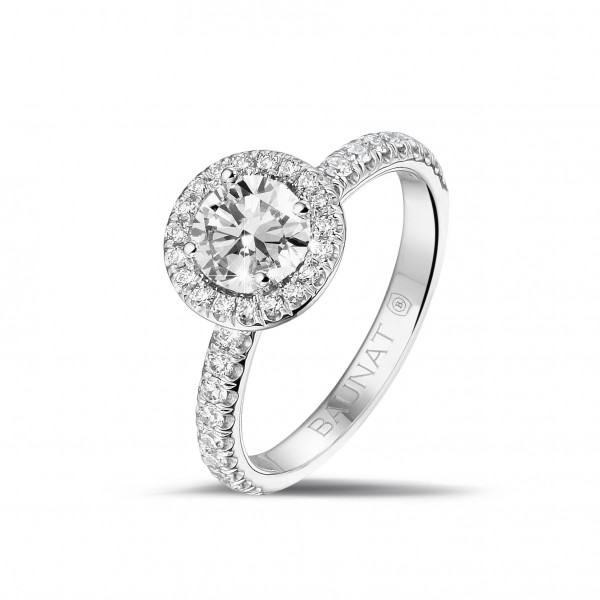
If a 1.00ct diamond isn't your preferred choice, we recommend considering designs that enhance the diamond's visual impact, such as the halo or trilogy settings, which can make the overall appearance look more substantial. The halo design is an excellent choice if you prefer to maintain the classic single centre stone look, while enhancing its visual impact.Extra sparkle is added through a circle of smaller diamonds surrounding the centre stone, so even if the centre stone weighs just 0.50ct, the whole design will be just as stunning and brilliant.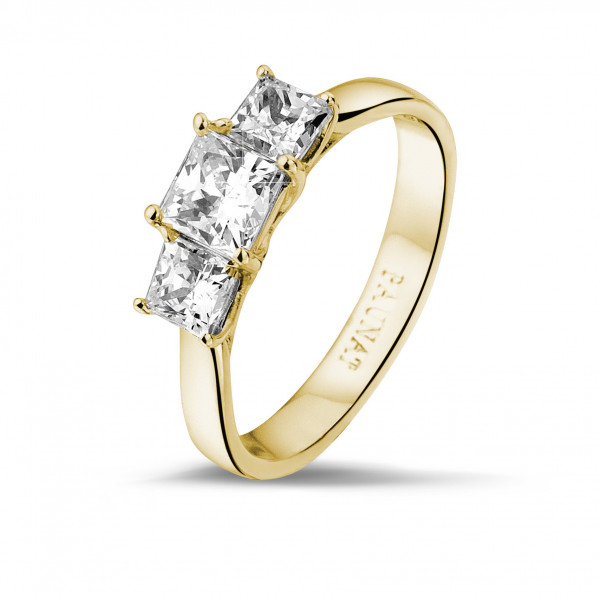
Pros:
- More affordable
- Often appear more delicate and graceful
- Great for individuals with smaller hands or those who prefer subtlety
- May not have the same visual impact as larger stones
- Fewer opportunities to showcase intricate settings
1 to 2 carats
- Strikes a balance between size and affordability
- More noticeable yet still elegant
- Offers a wide range of setting styles
Cons:
- Can be pricier than smaller diamonds
- May require a more robust setting for security
Above 2 carats
- Presents a striking and impressive appearance
- Ideal for those who desire a statement piece
- Allows for more creative and elaborate settings
Cons:
- Significantly more expensive
- Heavier and may feel bulkier on the finger
- Requires more care to protect against damage
Looking at the other 3 C’s of diamonds: cut, clarity and colour
A smaller diamond with a better cut will sparkle beautifully and appear larger than it actually is. And that is not the only tip in having a diamond look bigger than it actually is. When choosing the right diamonds, consider the 4Cs: cut, colour, clarity, and carat. Together, these details are indispensable in your engagement ring quest.
Given the market is in a constant state of flux, there is no fixed price for a 1-carat diamond. This is why we adjust our prices at BAUNAT every week to reflect market dynamics, ensuring you always get the most fair price.
What about the precious metal carats?
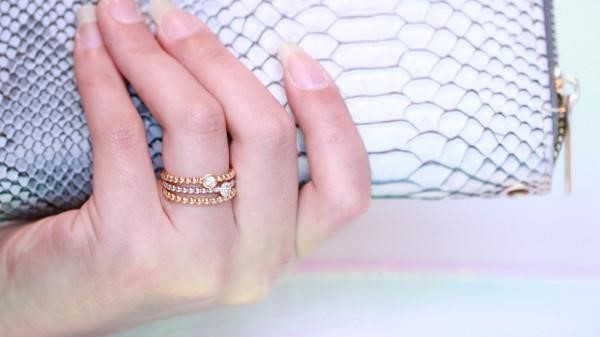
At BAUNAT, for an 18-karat gold ring we use 75% pure gold and 25% silver, copper or palladium. 18-karat gold is the optimum jewellery content. Less than 18 kt renders the ring pieces less valuable, but pure gold is very soft and fragile. So more than 18-carat gold will make your ring less robust and too delicate for long-term wear.
Find out more about the precious metals you can choose from here
Ready to determine your carat size?
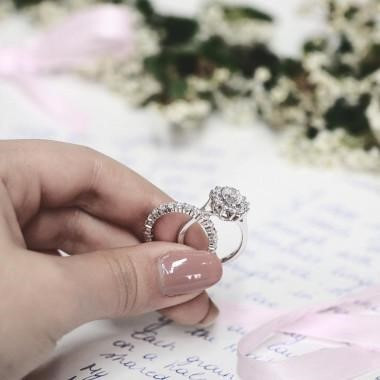
If you’re ready to take the next step, why not book a consultation with one of our expert jewellers at BAUNAT? Allow us to assist you in finding the perfect diamond that embodies your elegance and sophistication.
Happy diamond shopping!
-
Stefaan Mouradian & Steven Boelens
-
Founders of BAUNAT
-
-
Stefaan Mouradian
Stefaan is Co-Founder of BAUNAT, Managing Director and President of the Board. He combines two master’s degrees (Business Administration and Economics) with a broad knowledge of the global business world. Stefaan has held various management positions in the banking & finance industry and was also for many years strategic advisor in the international diamond and jewellery industry. As a real entrepreneur he is savvy in a large variety of domains like E-commerce, finance, legal, real estate, strategy, marketing, management, and of course diamonds.
Professional timeline & industry work
Stefaan Mouradian started his career after completing studies in Business Administration and Economics, initially working in banking and finance before moving into the diamond and jewellery sector. He held senior management and advisory roles across retail, trading and manufacturing, and later co-founded BAUNAT, where he is Managing Director and President of the Board. His experience covers e-commerce development, finance and operations, which helped shape BAUNAT’s vertically integrated model.
Traceability and authentication initiatives
In recent years Mouradian has taken part in industry projects that address diamond traceability and mounted-stone authentication. He has been involved with initiatives such as Spacecode, JewelMatch and DiamondMatch, each aimed at linking documentation and provenance to individual stones or mounted jewels. Spacecode works with secure identifiers connected to a stone’s report and supply records; JewelMatch focuses on attaching documentation to the physical mounted piece; DiamondMatch aims to improve interoperability between grading and tracking systems. Mouradian’s contributions range from advisory input to promoting practical tools that make provenance data usable for retailers and end customers. In a LinkedIn post he highlighted the need for verifiable mounted-stone authentication as a way to strengthen consumer confidence in diamond provenance.
Recognitions and public mentions
Mouradian has appeared in industry press and on panels discussing e-commerce, sourcing and certification. Those appearances reflect ongoing engagement with provenance, standards and the practical application of traceability technologies.
Steven Boelens
Steven Boelens is the Co-Founder of BAUNAT and Executive Board Member. His extensive experience as a diamond broker, marketing manager and co-founder of multiple companies make him a true master when it comes to diamonds and diamond jewellery. In addition to his experience, Steven is a HRD graduate in polished and rough diamonds which he completed in Antwerp. He got to know the fundamentals of business at the Vlerick Business School and at Ghent University where he got his master’s degrees.
About Baunat Group
Baunat Group is a privately held jewellery and diamond group that brings several complementary brands together under one strategic umbrella. The company’s mission is to combine high-quality craftsmanship with a model it calls Smart Luxury, offering premium pieces while keeping direct access for clients through both online and showroom channels. Design, manufacturing and retail are integrated, with attention to provenance and consistent quality.
The Group’s brand architecture includes three distinct labels, each with a clear market role. BAUNAT focuses on natural diamond jewellery handcrafted in Antwerp and sold through the Group’s web shop and showrooms. VALQUÈRE is positioned around laboratory-grown diamonds and contemporary design, for clients seeking a different value proposition. BNT Diamonds handles sourcing and investment-grade natural stones, supporting the Group’s supply chain and serving partners and customers who require certified natural diamonds.
Antwerp-based craftsmanship is central to the Group’s approach, with key design and finishing stages carried out in its ateliers. The company follows recognised due diligence frameworks for sourcing and pursues traceability and conflict-free practices across its supply chain. Operationally, this means in-house cutting and setting combined with documented procedures that support provenance and customer reassurance.
Leadership context
Co-founders Stefaan Mouradian and Steven Boelens direct the Group’s commercial and strategic agenda. Their roles in building and scaling the business explain why an author page for them also functions as a concise introduction to Baunat Group’s brands, market positioning and operational focus.
Stefaan Mouradian
Stefaan is Co-Founder of BAUNAT, Managing Director and President of the Board. He combines two master’s degrees (Business Administration and Economics) with a broad knowledge of the global business world. Stefaan has held various management positions in the banking & finance industry and was also for many years strategic advisor in the international diamond and jewellery industry. As a real entrepreneur he is savvy in a large variety of domains like E-commerce, finance, legal, real estate, strategy, marketing, management, and of course diamonds.
Professional timeline & industry work
Stefaan Mouradian started his career after completing studies in Business Administration and Economics, initially working in banking and finance before moving into the diamond and jewellery sector. He held senior management and advisory roles across retail, trading and manufacturing, and later co-founded BAUNAT, where he is Managing Director and President of the Board. His experience covers e-commerce development, finance and operations, which helped shape BAUNAT’s vertically integrated model.
Traceability and authentication initiatives
In recent years Mouradian has taken part in industry projects that address diamond traceability and mounted-stone authentication. He has been involved with initiatives such as Spacecode, JewelMatch and DiamondMatch, each aimed at linking documentation and provenance to individual stones or mounted jewels. Spacecode works with secure identifiers connected to a stone’s report and supply records; JewelMatch focuses on attaching documentation to the physical mounted piece; DiamondMatch aims to improve interoperability between grading and tracking systems. Mouradian’s contributions range from advisory input to promoting practical tools that make provenance data usable for retailers and end customers. In a LinkedIn post he highlighted the need for verifiable mounted-stone authentication as a way to strengthen consumer confidence in diamond provenance.
Recognitions and public mentions
Mouradian has appeared in industry press and on panels discussing e-commerce, sourcing and certification. Those appearances reflect ongoing engagement with provenance, standards and the practical application of traceability technologies.
Steven Boelens
Steven Boelens is the Co-Founder of BAUNAT and Executive Board Member. His extensive experience as a diamond broker, marketing manager and co-founder of multiple companies make him a true master when it comes to diamonds and diamond jewellery. In addition to his experience, Steven is a HRD graduate in polished and rough diamonds which he completed in Antwerp. He got to know the fundamentals of business at the Vlerick Business School and at Ghent University where he got his master’s degrees.
About Baunat Group
Baunat Group is a privately held jewellery and diamond group that brings several complementary brands together under one strategic umbrella. The company’s mission is to combine high-quality craftsmanship with a model it calls Smart Luxury, offering premium pieces while keeping direct access for clients through both online and showroom channels. Design, manufacturing and retail are integrated, with attention to provenance and consistent quality.
The Group’s brand architecture includes three distinct labels, each with a clear market role. BAUNAT focuses on natural diamond jewellery handcrafted in Antwerp and sold through the Group’s web shop and showrooms. VALQUÈRE is positioned around laboratory-grown diamonds and contemporary design, for clients seeking a different value proposition. BNT Diamonds handles sourcing and investment-grade natural stones, supporting the Group’s supply chain and serving partners and customers who require certified natural diamonds.
Antwerp-based craftsmanship is central to the Group’s approach, with key design and finishing stages carried out in its ateliers. The company follows recognised due diligence frameworks for sourcing and pursues traceability and conflict-free practices across its supply chain. Operationally, this means in-house cutting and setting combined with documented procedures that support provenance and customer reassurance.
Leadership context
Co-founders Stefaan Mouradian and Steven Boelens direct the Group’s commercial and strategic agenda. Their roles in building and scaling the business explain why an author page for them also functions as a concise introduction to Baunat Group’s brands, market positioning and operational focus.