







Features:
-
Posted at:
-
Author:
- Stephanie Hesters
-
BAUNAT Antwerp
-


-
Reading time:8 minutes
In this article:
- The historical significance of cuff bracelets
- A complex chapter: The "Slave" bracelet
- Open and Closed Cuff Bracelets in today’s fashion
- Different types of cuff bracelets
- Fashion tips for wearing cuff bracelets
- Finding the metal and colour that suit you
- Choosing your cuff bracelet design
- There's something to match every taste.
- Combination and layering of different bracelets
- Wearing bracelets all year round
- Discover the fascinating world of bracelets
- Frequently asked Questions
The meaning behind the cuff bracelet and their distinctive allure
When we think of jewellery, the first pieces that come to mind are often necklaces or earrings, but bracelets—especially cuff bracelets—are among the most underrated accessories. While they might seem simple at first glance, cuff bracelets add layers of sophistication and can make an impeccable fashion statement. From fashion enthusiasts and royalty to everyday jewellery lovers, cuff bracelets have graced wrists for centuries, captivating with their ageless allure and versatile designs. In this article, we dive deep into the world of cuff bracelets, exploring why they deserve a place in every jewellery collection.
Read summary
What makes cuff bracelets so distinctive and appealing across different eras and cultures?
Cuff bracelets have graced wrists from ancient Egypt to modern times, symbolising protection, status, and personal style. They come in various designs, from simple, elegant pieces to intricate and eye-catching patterns. Their versatility and rich history make them timeless accessories that appeal to diverse tastes, blending traditional craftsmanship with contemporary fashion.

Most viewed diamond jewels
-
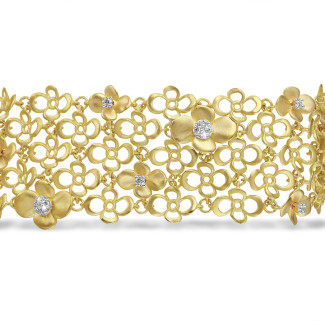
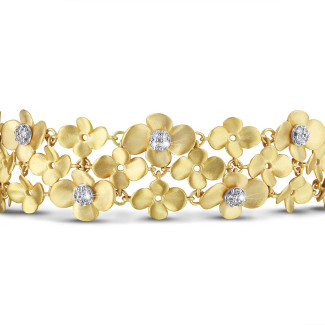
![0.80 carat diamond design floral bracelet in yellow gold]() 0.80 carat diamond design floral bracelet in yellow goldFrom USD 14.220,00 (excl. VAT)
0.80 carat diamond design floral bracelet in yellow goldFrom USD 14.220,00 (excl. VAT) -
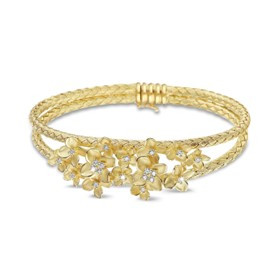
![0.75 carat diamond design floral bracelet in yellow gold]() 0.75 carat diamond design floral bracelet in yellow goldFrom USD 13.740,00 (excl. VAT)
0.75 carat diamond design floral bracelet in yellow goldFrom USD 13.740,00 (excl. VAT) -
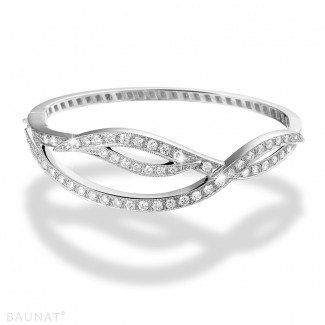
![Exclusive BAUNAT stock sale (no 30 day return) - 0.55 carat diamond design floral bangle bracelet in white gold]() Exclusive BAUNAT stock sale (no 30 day return) - 0.55 carat diamond design floral bangle bracelet in white goldFrom USD 8.100,00 (excl. VAT)
Exclusive BAUNAT stock sale (no 30 day return) - 0.55 carat diamond design floral bangle bracelet in white goldFrom USD 8.100,00 (excl. VAT) -
![2.43 carat diamond design bracelet in white gold]() 2.43 carat diamond design bracelet in white goldFrom USD 17.220,00 (excl. VAT)
2.43 carat diamond design bracelet in white goldFrom USD 17.220,00 (excl. VAT) -
![3.32 carat diamond design bracelet in white gold]() 3.32 carat diamond design bracelet in white goldFrom USD 17.750,00 (excl. VAT)
3.32 carat diamond design bracelet in white goldFrom USD 17.750,00 (excl. VAT)


The historical significance of cuff bracelets
Ancient origins and cultural meanings
- Ancient Egyptians adorned themselves with cuffs, believing they had protective powers. Royals and warriors alike wore them as talismans. These bracelets were often inscribed with hieroglyphics.
- In Ancient Greece and Rome, cuff bracelets symbolised status and authority, with designs that reflected wealth and artistic skill.
- Among Native American tribes, such as the Navajo and Hopi, they represented cultural identity and spiritual connections. These bracelets were often crafted from silver, turquoise, and coral.
- In Ancient India, cuffs were symbols of love and commitment, exchanged between couples like modern-day rings.
A complex chapter: The "Slave" bracelet
Despite this challenging past, cuff bracelets have evolved significantly across cultures. For instance, in India, they symbolised love and commitment, much like rings today. This transformation — from symbols of oppression to expressions of love and status — demonstrates the diverse roles these bracelets have played throughout history, making them powerful reflections of human culture and resilience.

Open and Closed Cuff Bracelets in today’s fashion
Different types of cuff bracelets
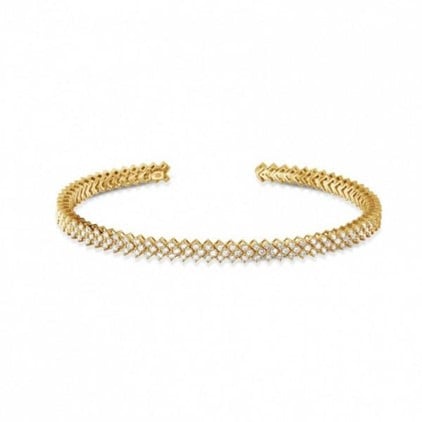
- Yellow gold cuff bracelets: timeless and luxurious, perfect for those who love a classic look
- White gold cuff bracelets: seek and modern, ideal for a minimalist aesthetic
- Red gold cuff bracelets: exquisite and eye-catching, they add a touch of glamour to any outfit
- Engraved cuffs: stuffed with initials, dates, special messages, or even diamonds
Fashion tips for wearing cuff bracelets
Finding your ideal width
The width of the bracelet is crucial. For those with thin wrists, narrower bracelets may be more elegant and proportional, whereas wider bracelets, like those 6 cm wide, can appear bulky and less refined. Find more about finding your ideal bracelet size.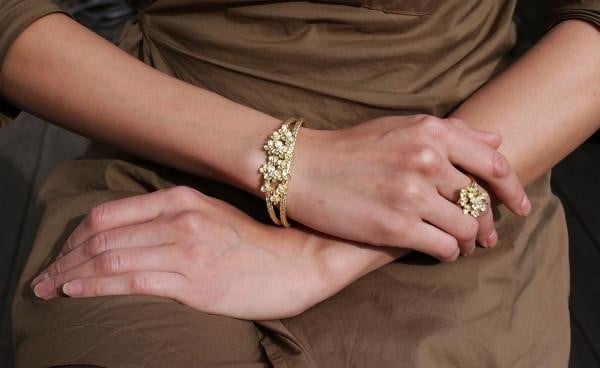
Finding the metal and colour that suit you
Second, choose the colour of the precious metal and the design. From yellow, red to white gold, your choice depends on your skin colour and what you would like to see. Options include:If you're unsure, mixing different metals and bracelets can create a trendy and personalised look.
Choosing your cuff bracelet design
Simple, slim designs
Imagine slipping on a delicate, slim gold bracelet that seamlessly blends with any outfit. This type of design exudes understated elegance, perfect for both casual outings and sophisticated events. It's the kind of piece that doesn't shout for attention but whispers sophistication, subtly enhancing your overall look. A simple, slim bracelet can be a timeless addition to your jewellery collection, offering versatility and charm that suits any occasion.Intricate designs with wavy or floral elements
For those who love a bit of flair, consider a cuff bracelet adorned with intricate patterns. Picture a bracelet that features wavy lines, creating a sense of movement and fluidity on your wrist. Or perhaps a floral design, with delicate blossoms and leaves carved into the metal, adding a touch of nature-inspired beauty. These intricate designs turn your bracelet into a statement piece, something that can catch the eye and spark conversations. They allow you to express your personality and style through unique, artistic details that make your accessory truly stand out.There's something to match every taste.
Combination and layering of different bracelets
Combining different bracelets is a fashionable trend. Pairing a gold-plated cuff with a silver or steel bracelet can create a unique and stylish appearance.Wearing bracelets all year round
Did you realise you can also have your cuff bracelet on show during the cold winter months? It's very on trend nowadays to wear bracelets over your long sleeves instead of underneath. Meaning you can appreciate them all year round.Discover the fascinating world of bracelets
Frequently asked Questions
How can I measure the size of a bracelet?
Measuring the right size for your bracelet is very easy. Simply measure the circumference of your wrist just past the small lump below the wrist. The easiest way to measure is with a flexible measuring tape for clothing. You can also use a tape measure and a ruler to determine your bracelet size. Depending on the wearing comfort you prefer, add a number of centimetres, for a close-fitting bracelet 1 cm, for a normal-fitting bracelet 1.5 cm and for a larger bracelet 2 cm. The easiest way to find out the ideal size for you is to measure a bracelet length you find comfortable. The length of the bracelet in centimetres is then the bracelet size you order. This is also handy if you want to give a bracelet as a present. Then you borrow a bracelet from the person who is going to wear it.
-
Stephanie Hesters
-
BAUNAT Antwerp
-
-
As the Head of Diamond Buying at BAUNAT, Stephanie has an extensive knowledge of the diamond and the evolution of diamond prices. Thanks to her broad product knowledge gained throughout her years at BAUNAT and the Diamond Foundation Course by De Beers, Stephanie advises our customers interested in the investment side of diamonds to optimize every investment. To support her skills she has a bachelor’s degree in Business Management together with her master’s in Communication.
About Stephanie Hesters (also known as Stephanie Lasters)
Stephanie Hesters, sometimes listed online as Stephanie Lasters, is Head of Diamond Buying at BAUNAT. She manages diamond sourcing and valuation, advises clients on market trends and pricing, and helps those looking for investment-grade stones. She completed the Diamond Foundation Course by De Beers and holds a bachelor’s degree in Business Management and a master’s in Communication.
Selected projects & collaborations
• Eternal Bloom Collection with Princess Delphine of Saxe-Coburg (2026), curator and project lead - guided creative direction and diamond selection for an exclusive collection that blends classical motifs with contemporary craftsmanship.
• Investment Diamonds Advisory Series (2024), author and presenter - developed client-facing guides and presentations on diamond valuation and market dynamics for private buyers and collectors.
• BAUNAT Editorial Features and Product Launches (2022–2025), contributor - worked with design and marketing teams to shape product narratives and ensure technical accuracy in launch materials and editorial content.
As the Head of Diamond Buying at BAUNAT, Stephanie has an extensive knowledge of the diamond and the evolution of diamond prices. Thanks to her broad product knowledge gained throughout her years at BAUNAT and the Diamond Foundation Course by De Beers, Stephanie advises our customers interested in the investment side of diamonds to optimize every investment. To support her skills she has a bachelor’s degree in Business Management together with her master’s in Communication.
About Stephanie Hesters (also known as Stephanie Lasters)
Stephanie Hesters, sometimes listed online as Stephanie Lasters, is Head of Diamond Buying at BAUNAT. She manages diamond sourcing and valuation, advises clients on market trends and pricing, and helps those looking for investment-grade stones. She completed the Diamond Foundation Course by De Beers and holds a bachelor’s degree in Business Management and a master’s in Communication.
Selected projects & collaborations
• Eternal Bloom Collection with Princess Delphine of Saxe-Coburg (2026), curator and project lead - guided creative direction and diamond selection for an exclusive collection that blends classical motifs with contemporary craftsmanship.
• Investment Diamonds Advisory Series (2024), author and presenter - developed client-facing guides and presentations on diamond valuation and market dynamics for private buyers and collectors.
• BAUNAT Editorial Features and Product Launches (2022–2025), contributor - worked with design and marketing teams to shape product narratives and ensure technical accuracy in launch materials and editorial content.