







Features:
-
Category:
-
Posted at:
-
Author:
- Fabienne Rauw
-
BAUNAT Antwerp
-


-
Reading time:10 minutes
In this article:
- The average carat size for a diamond engagement ring
- How big does a 1 carat diamond really look? — by shape and mm
- Understanding carat: beyond the numbers
- Practical grade choices: color, clarity and where to save
- Advantages of a 1 carat engagement ring over other sizes
- Popular styles for 1 carat rings
- Solitaire
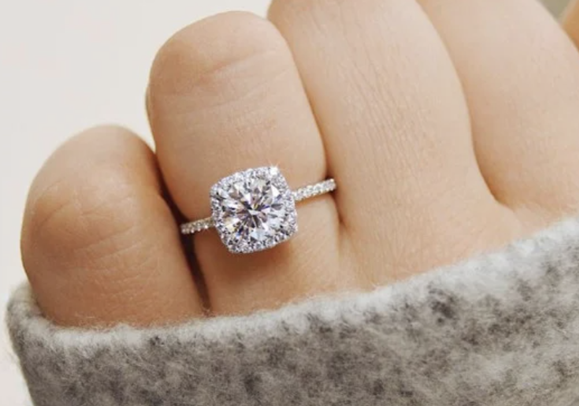
- Halo design
- 3 stone
- The three-stone setting, also known as a trilogy ring, represents the past, present, and future of a relationship. Flanked by two smal
- The importance of professional guidance
- Discover the perfect 1 carat engagement ring at BAUNAT
- Quick buying checklist for a 1 ct engagement ring
- What else would you like to know about our engagement rings?
Why should you buy a 1 carat diamond engagement ring?
Ah, the engagement ring – a symbol of eternal love and the promise of a shared future. When it comes to selecting the perfect ring, one of the most common questions is about the ideal diamond size. The 1 carat diamond solitaire remains a timeless and popular choice, celebrated for its perfect balance of elegance and impact. Set in exquisite platinum, white, red or yellow gold, a 1 carat diamond engagement ring offers a harmonious blend of opulence and grace. In this article, we will explore why this classic carat weight continues to be a beloved and wise option and what to look for when making your purchase.
Read summary
What Makes a 1 Carat Diamond Engagement Ring an Ideal Choice?
Wondering about the perfect diamond size for your engagement ring? The 1 carat diamond remains a timeless choice that balances elegance with impact. While average sizes vary globally (1 carat in the US, 0.6 in the UK, and 0.5 in Europe), the 1 carat diamond offers unique advantages.
This popular size provides versatility across various settings and strikes the perfect balance between noticeable presence and comfortable wearability. As a measurement of weight (not dimension), a carat equals 0.2 grams—a standard derived from carob seeds.
Whether set in a classic solitaire, stunning halo, or meaningful three-stone design, a well-chosen 1 carat diamond offers excellent value while making a statement. When selecting your ring, focus on the 4 Cs (cut, clarity, color, and carat) and seek professional guidance to ensure you find a piece that symbolizes your enduring love.
Most viewed diamond jewels
-
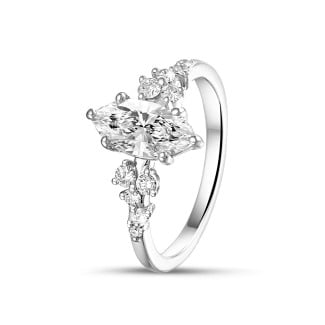
![1.00 carat solitaire cluster ring in white gold with marquise diamond]() BestsellerNew1.00 carat solitaire cluster ring in white gold with marquise diamondFrom USD 4.400,00 (excl. VAT)
BestsellerNew1.00 carat solitaire cluster ring in white gold with marquise diamondFrom USD 4.400,00 (excl. VAT) -
![1.00 carat solitaire cluster ring in white gold with a round diamond]() Bestseller1.00 carat solitaire cluster ring in white gold with a round diamondFrom USD 4.130,00 (excl. VAT)
Bestseller1.00 carat solitaire cluster ring in white gold with a round diamondFrom USD 4.130,00 (excl. VAT) -
![1.00 carat solitaire ring with an asscher cut diamond in white gold]() Bestseller1.00 carat solitaire ring with an asscher cut diamond in white goldFrom USD 4.700,00 (excl. VAT)
Bestseller1.00 carat solitaire ring with an asscher cut diamond in white goldFrom USD 4.700,00 (excl. VAT) -
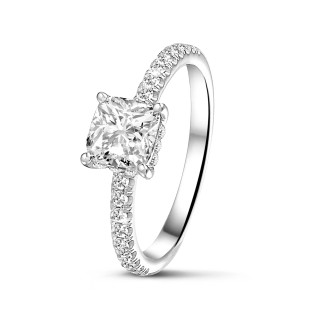
![1.00 carat solitaire ring with a cushion diamond and hidden halo in white gold]() BestsellerNew1.00 carat solitaire ring with a cushion diamond and hidden halo in white goldFrom USD 4.010,00 (excl. VAT)
BestsellerNew1.00 carat solitaire ring with a cushion diamond and hidden halo in white goldFrom USD 4.010,00 (excl. VAT) -
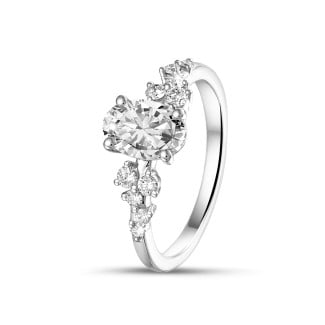
![1.00 carat solitaire cluster ring in white gold with oval diamond]() BestsellerNew1.00 carat solitaire cluster ring in white gold with oval diamondFrom USD 4.590,00 (excl. VAT)
BestsellerNew1.00 carat solitaire cluster ring in white gold with oval diamondFrom USD 4.590,00 (excl. VAT)


.
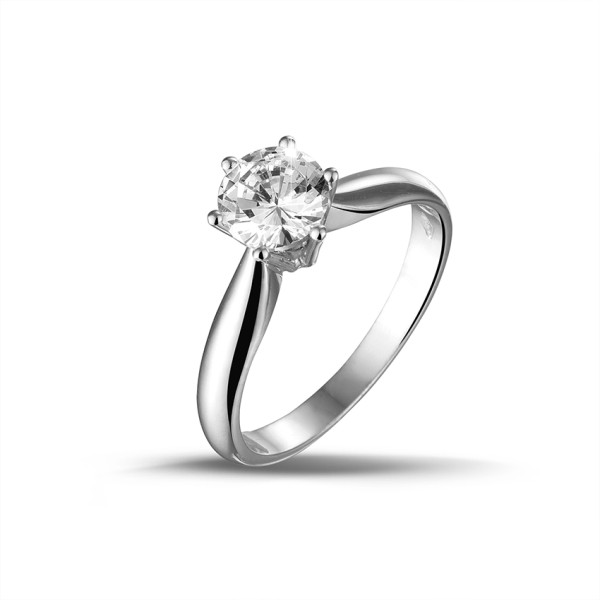
The average carat size for a diamond engagement ring
When selecting an engagement ring, one common question is about the ideal diamond size. The average diamond carat weight for an engagement ring in the United States is about one carat. However, this figure varies significantly based on location and demographics. For example, in the United Kingdom, the average size is around 0.6 carats, while in Europe, it hovers around 0.5 carats.
Fabienne Rauw notes that age also influences diamond size preferences. Younger couples in their twenties or early thirties often choose diamonds between one and two carats, while older clients tend to select larger diamonds, likely due to having more savings and being further along in their careers.
The 1 carat diamond solitaire remains a timeless and popular choice, celebrated for its perfect balance between visible luxury and sophisticated elegance. Interestingly, its popularity can also be attributed to psychological factors. “One” is a nice, round number, making it more appealing. Visually, a 1 carat diamond is not easily distinguishable from a 0.9 or 1.1 carat diamond, but it hits the sweet spot where most people perceive it as neither too small nor too large. Additionally, a diamond of this size is physically noticeable from a distance, not just its sparkle.
How big does a 1 carat diamond really look? — by shape and mm
Typical face-up dimensions (approximate ranges)
- Round brilliant: 6.4–6.5 mm diameter. The round maximises brilliance and suits classic solitaires.
- Oval: 7.5 × 5.0 mm (length × width). The elongated outline makes the diamond look larger than a round of the same weight.
- Pear: 8.5 × 5.0–5.5 mm. The tapered shape increases perceived length, creating an impression of greater size on the finger.
- Marquise: 10.0 × 4.0–4.5 mm. Very elongated, this shape gives a large face-up appearance but needs a setting that protects the points.
- Cushion: 6.0–6.5 mm (square-ish cushions may be slightly under this measurement). Cushions vary by depth and profile; some present a larger face-up area, others appear deeper Emerald/Asscher (step cuts): 6.5–7.0 mm for more square-ish proportions; step cuts often have more depth and less spread, so they can appear smaller face-up than brilliant cuts of the same weight.
Shape recommendations based on perceived size and sparkle
- If maximum apparent size is the priority: choose an elongated shape such as oval, marquise, or pear. These shapes distribute weight over a longer outline, creating a larger face-up impression.
- If maximum brilliance is the priority: choose a round brilliant with an excellent cut; it reflects the most light and appears lively.
- For a balance of size and vintage character: consider well-proportioned cushions or radiant cuts, which can offer generous face-up area with appealing light performance.
Example comparisons
- Round vs Oval: a well-cut round of 6.5 mm will emphasise sparkle and symmetry, while an oval around 7.5 × 5.0 mm with the same carat weight will appear larger across the finger due to its elongated silhouette.
- Cushion vs Emerald: a one-carat cushion that is shallow-spread will appear larger face-up than an emerald cut of the same weight, because step cuts tend to retain more depth.
Understanding carat: beyond the numbers
Unlike precious metals such as gold or platinum, which are measured in grams with their purity expressed in karats (like 18 karat gold), diamonds' weight—and by extension, their perceived size—is measured in carats. The origin of this measurement dates back to the use of carob tree seeds, known for their consistent weight of 0.2 grams, which made them ideal for use as a standard measure. Although modern technology has replaced these seeds, the carat system remains a cornerstone of diamond trading. The abbreviation for carat is "ct," and the term is sometimes referred to as carat weight.
Practical grade choices: color, clarity and where to save
Recommended ranges and trade-offs
- Colour: G–H. These near-colourless grades keep a white appearance in common settings and are more cost-effective than higher grades. In yellow or rose gold settings, H often works well because the metal’s warmth can mask a slight tint.
- Clarity: VS1–VS2 as a first choice; VS2–SI1 can be acceptable for certain shapes when the stone is eye-clean. Many well-cut round and other brilliant-style stones in the VS2–SI1 range show no visible inclusions to the unaided eye. Step cuts and some elongated shapes reveal inclusions more readily, so for emerald or
- Cut: Prioritise cut above all. An excellent or ideal cut has the biggest impact on sparkle and perceived size. A one-carat stone with strong proportions will look and perform better than a heavier stone with a weaker cut.
Examples to guide your choice
- If you are budget-focused: consider G colour with VS2 clarity in a well-cut round or brilliant-style stone. This keeps sparkle while optimising cost.
- If brilliance matters most: choose an excellent or very good cut and G colour; clarity can be VS1 or VS2 provided the stone is eye-clean.
- For step cuts or open-table shapes: lean toward G–H colour and VS1 clarity to avoid visible inclusions and keep the stone looking pure and luminous.
Do not recommend
Avoid recommending clarity grades below SI1 as a default; SI1 is acceptable only when the specific stone has been verified by a trained professional. Also, do not promote lower-purity alloys; Baunat uses premium materials and guidance should reflect that standard.Three-point checklist for buyers
- Prioritise cut: choose the best cut grade your budget allows, since it determines brilliance.
- Then choose colour: G–H offers the best visual value for a near-colourless look.
- Finally choose clarity and shape together: pick a clarity that is eye-clean for the chosen shape, favouring VS1–VS2 for step cuts and allowing VS2–SI1 for brilliant cuts.
Advantages of a 1 carat engagement ring over other sizes
- Versatility: whether set in a classic solitaire or a more intricate halo design, a 1 carat diamond complements a myriad of styles and settings.
- Balance: it offers a perfect balance between size and manageability, making it comfortable for daily wear while still making a statement.
- Value: in terms of investment, a 1 carat diamond often provides the best value for money, balancing size with quality and affordability.
- Timelessness: its enduring popularity ensures that a 1 carat engagement ring remains a symbol of timeless elegance and sophistication.
Popular styles for 1 carat rings
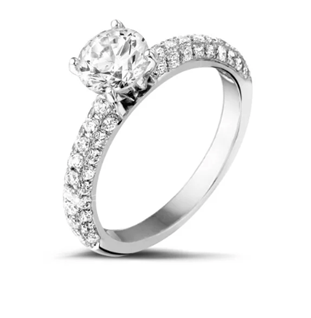
Solitaire
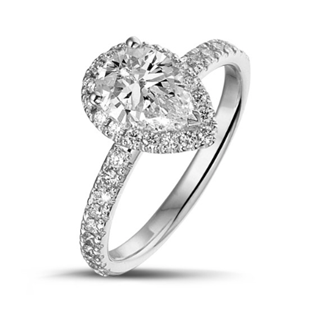
Halo design
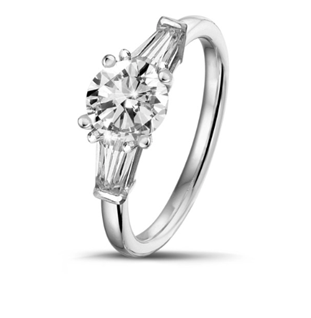
3 stone
The three-stone setting, also known as a trilogy ring, represents the past, present, and future of a relationship. Flanked by two smal
The importance of professional guidance
Discover the perfect 1 carat engagement ring at BAUNAT
Quick buying checklist for a 1 ct engagement ring
- Confirm cut quality: an excellent or ideal cut delivers the most sparkle and improves face-up appeal.
- Choose a shape that suits your priority: elongated shapes for perceived size, round for maximum brilliance, cushions and radiant for a mix of size and sparkle.
- Aim for G–H colour for a near-colourless look in most settings.
- Select clarity that is eye-clean for the chosen shape; target VS1–VS2 for step cuts and VS2–SI1 for brilliant.
- Consider near‑1.0 ct options (for example 0.90 ct) if you prefer better proportions or more favourable trade-offs without sacrificing visual impact.
- Insist on certification from a reputable lab and professional inspection before purchase.