







Features:
-
Category:
-
Posted at:
-
Author:
- Fabienne Rauw
-
BAUNAT Antwerp
-


-
Reading time:8 minutes
In this article:
A Trio of Advice for Your Ideal Engagement Ring Purchase
Navigating the vast sea of engagement rings can be daunting, whether you are the diamond ring purchaser or the honoured one on the receiving end. At BAUNAT, we believe in making this journey hassle-free. Here are three tips to help you choose the perfect engagement ring:
Read summary
How can you choose the perfect engagement ring?
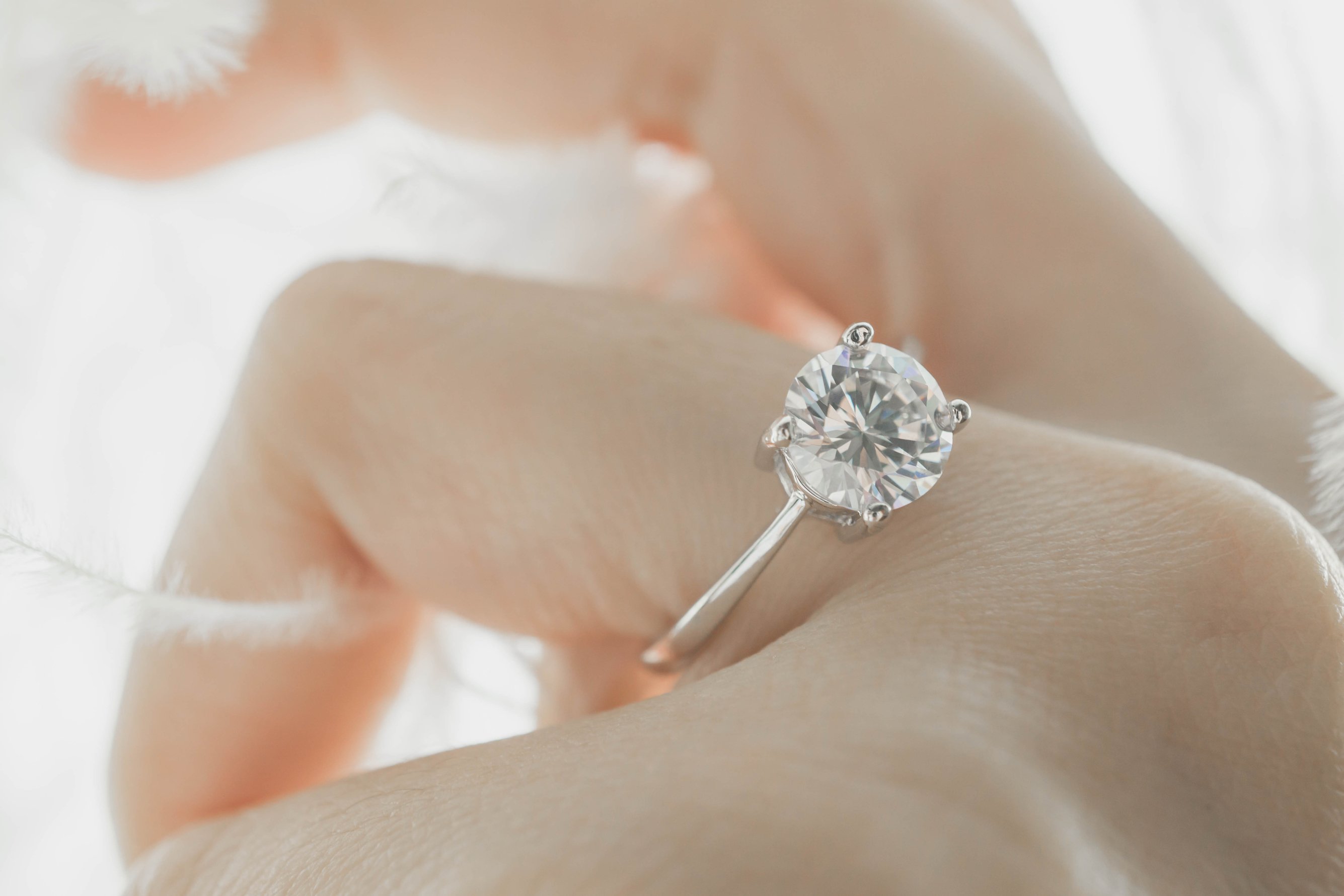
Finding your ideal engagement ring involves careful consideration of three key elements. First, ensure the correct size—whether you choose the traditional left ring finger or the right, consider selecting the ring together to guarantee a comfortable fit that's neither too loose nor too tight.
Second, select a durable alloy that will withstand daily wear. Platinum offers exceptional longevity, while white gold provides timeless elegance with proper maintenance.
Finally, choose the right gemstone. While diamonds remain popular for their hardness and brilliant shine, other precious stones like rubies or emeralds can add a personal touch to your ring.
At BAUNAT, we guide customers through these choices, helping you make an informed investment that balances quality, style, and longevity—creating a symbol of love that will endure for years to come.
5 Questions to Find Her Perfect Engagement Ring
Are you planning to propose? Finding the right engagement ring is a defining step. Every ring is handcrafted in Antwerp from the finest materials by skilled artisans. Discover what engagement ring fits her personality.
Most viewed diamond jewels
-
![0.67 carat trilogy ring in yellow gold with round diamonds]() Bestseller0.67 carat trilogy ring in yellow gold with round diamondsFrom USD 5.930,00 (excl. VAT)
Bestseller0.67 carat trilogy ring in yellow gold with round diamondsFrom USD 5.930,00 (excl. VAT) -
![2.00 carat solitaire ring in red gold with round diamond and four prongs]() Bestseller2.00 carat solitaire ring in red gold with round diamond and four prongsFrom USD 2.930,00 (excl. VAT)
Bestseller2.00 carat solitaire ring in red gold with round diamond and four prongsFrom USD 2.930,00 (excl. VAT) -
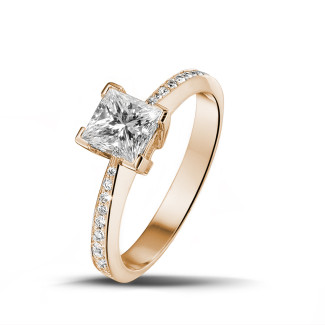
![1.20 carat solitaire ring in red gold with princess diamond and side diamonds]() Bestseller1.20 carat solitaire ring in red gold with princess diamond and side diamondsFrom USD 3.750,00 (excl. VAT)
Bestseller1.20 carat solitaire ring in red gold with princess diamond and side diamondsFrom USD 3.750,00 (excl. VAT) -
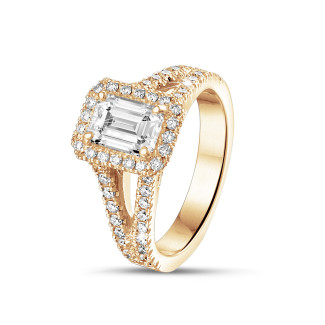
![1.00 carat solitaire ring in red gold with an emerald cut diamond and side diamonds]() Bestseller1.00 carat solitaire ring in red gold with an emerald cut diamond and side diamondsFrom USD 6.840,00 (excl. VAT)
Bestseller1.00 carat solitaire ring in red gold with an emerald cut diamond and side diamondsFrom USD 6.840,00 (excl. VAT) -
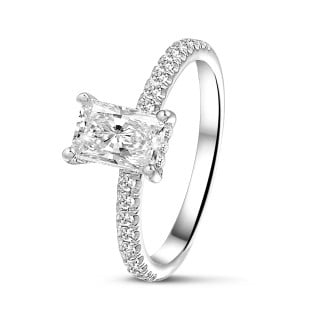
![1.00 carat solitaire ring with a radiant cut diamond and hidden halo in white gold]() Bestseller1.00 carat solitaire ring with a radiant cut diamond and hidden halo in white goldFrom USD 4.620,00 (excl. VAT)
Bestseller1.00 carat solitaire ring with a radiant cut diamond and hidden halo in white goldFrom USD 4.620,00 (excl. VAT)
1. How Do You Choose the Right Ring Size For the Engagement Ring?
2. How Do You Choose the Alloy For Your Engagement Rings?
3. How Do You Know What Precious Stone Suits You the Best?
In your journey of buying the perfect engagement ring, remember that the key is to make informed decisions in line with the current diamond prices evolution and market trends. Make sure to consider these helpful tips from BAUNAT, the diamond industry expert. Our commitment to quality, efficiency, and personalized service ensures that you make a smart investment, reflecting your taste and standing the test of time.
Verification and viewing guidance
- How to verify a diamond certificate: Compare the certificate fields with your invoice and the stone. Match carat weight, cut grade, colour grade, clarity grade and the certificate number. Note the lab name and use its online lookup, where available, to confirm the certificate number and report details. Differences in carat weight, certificate number or core grades are a reason to query the seller.
- Practical viewing tips: Lighting and setting change perceived colour and brilliance. View a diamond in natural daylight where possible to assess colour, then check it under indoor lighting to see how it looks in everyday wear. The mounting matters: a yellow-gold setting can make a diamond appear warmer, while a white metal setting often emphasises perceived whiteness. If possible, view the stone both loose and set, because settings alter reflections and apparent size.
- Photographs versus in-hand appearance: Photos are useful but affected by lighting, camera settings and processing. Expect some difference between online images and the stone in person. Red flags include missing or incomplete certification, mismatched certificate numbers, or specifications that change between the listing and the paperwork. Quality thresholds for