







Features:
-
Category:
-
Posted at:
-
Author:
- Stephanie Hesters
-
BAUNAT Antwerp
-


-
Reading time:9 minutes
In this article:
Engagement rings history: here’s what you need to know
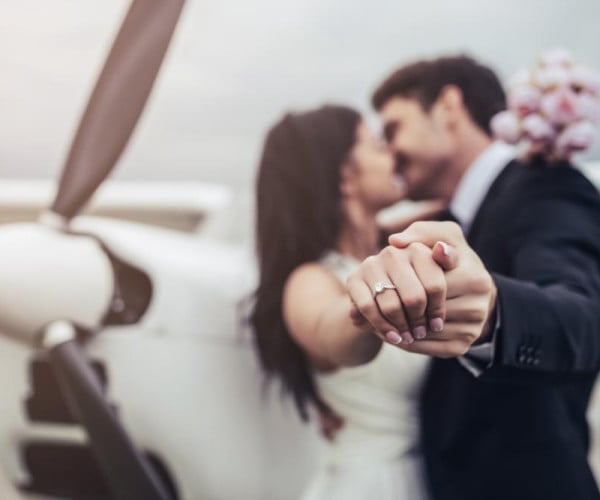
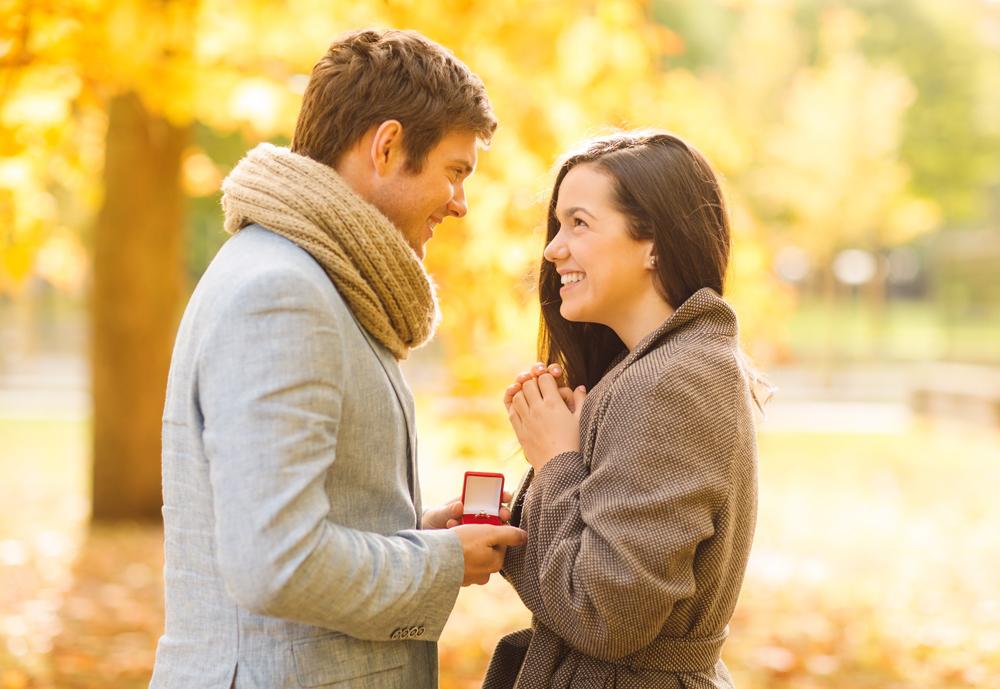
We have all heard wonderful stories about proposals being made in the most romantic, special, and sometimes simplest ways. All proposals are unique to the couple who got engaged, but most have one thing in common: the proposal was made with an engagement ring. You may think this habit has only been around for a few decades, but it actually dates back way further than that. Let’s delve into all you want to know about the lovely history of engagement rings.
Read summary
What's the fascinating history behind the tradition of engagement rings?
The tradition of engagement rings dates back to ancient Egypt around 2600 BC, where circular rings symbolized eternity and were worn on the fourth finger of the left hand—believed to connect directly to the heart via the "vena amoris." Romans later adopted this tradition using iron rings as commitment symbols.
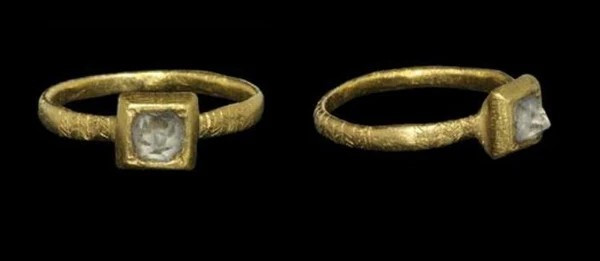
Diamonds weren't introduced until the late 15th century when Archduke Maximilian of Austria proposed to Mary of Burgundy with a diamond-studded ring. However, diamond engagement rings as we know them today surged in popularity after South African diamond discoveries in 1866 and De Beers' legendary "Diamonds are Forever" marketing campaign in 1947.
Modern engagement rings offer endless customization options, from classic solitaires to elaborate halo settings, with various gemstone colors, shapes, and personalized engravings to create unique symbols of love.
5 Questions to Find Her Perfect Engagement Ring
Are you planning to propose? Finding the right engagement ring is a defining step. Every ring is handcrafted in Antwerp from the finest materials by skilled artisans. Discover what engagement ring fits her personality.
Most viewed diamond jewels
-
![3.00 carat solitaire diamond ring in yellow gold]() Bestseller3.00 carat solitaire diamond ring in yellow goldFrom USD 2.840,00 (excl. VAT)
Bestseller3.00 carat solitaire diamond ring in yellow goldFrom USD 2.840,00 (excl. VAT) -
![0.90 carat solitaire diamond ring in red gold]() Bestseller0.90 carat solitaire diamond ring in red goldFrom USD 3.070,00 (excl. VAT)
Bestseller0.90 carat solitaire diamond ring in red goldFrom USD 3.070,00 (excl. VAT) -
![1.00 carat solitaire ring in white gold with side diamonds]() Bestseller1.00 carat solitaire ring in white gold with side diamondsFrom USD 4.680,00 (excl. VAT)
Bestseller1.00 carat solitaire ring in white gold with side diamondsFrom USD 4.680,00 (excl. VAT) -
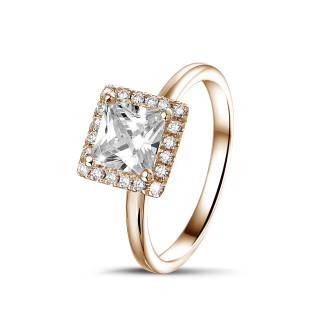
![0.70 carat solitaire halo ring with a princess diamond in red gold with round diamonds]() Bestseller0.70 carat solitaire halo ring with a princess diamond in red gold with round diamondsFrom USD 4.420,00 (excl. VAT)
Bestseller0.70 carat solitaire halo ring with a princess diamond in red gold with round diamondsFrom USD 4.420,00 (excl. VAT) -
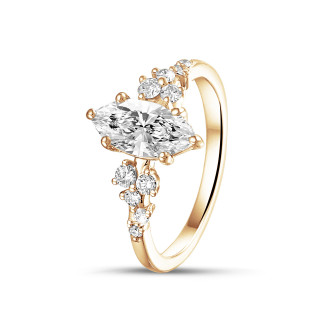
![1.00 carat solitaire cluster ring in red gold with marquise diamond]() BestsellerNew1.00 carat solitaire cluster ring in red gold with marquise diamondFrom USD 4.440,00 (excl. VAT)
BestsellerNew1.00 carat solitaire cluster ring in red gold with marquise diamondFrom USD 4.440,00 (excl. VAT)

The origin of the engagement ring
Ancient Egypt
The Roman influence
Regional customs and historic ring types
Regional wearing customs: left, right and shared traditions
Different countries developed distinct habits for how and where engagement and wedding rings are worn. In many Anglophone countries the engagement ring is traditionally worn on the fourth finger of the left hand, a practice with roots in classical symbolism. In several continental European and Eastern European traditions the right hand is preferred, and in some places couples move the engagement ring from one hand to the other during the wedding ceremony. Nordic countries often have a custom of both partners wearing engagement or wedding rings, reflecting a more mutual expression of commitment. These variations are cultural norms rather than strict rules, and modern couples commonly choose what feels right for their relationship.
Historic ring types: gimmel, posie and puzzle rings
Gimmel or gimmal rings were popular from the late medieval period into the Renaissance. Made in two or three interlocking hoops, they could be separated and worn by the betrothed during courtship and reunited at marriage to form a single band, symbolising union. Posie rings are inscribed bands, often bearing short poems, mottos or vows on the inside; common from the 15th to 18th centuries, they served as private expressions of affection. Puzzle rings, made from multiple hinged bands that form a cohesive shape when assembled, worked as decorative jewellery and symbolic tests of fidelity or skill. Each type had a particular role in betrothal rituals and remains a source of inspiration for vintage-style designs today.
The introduction of diamonds in engagement rings
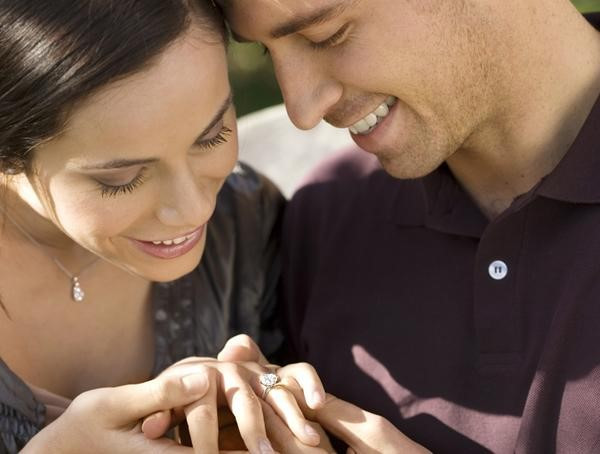
The marriage proposal, diamond engagement ring included
This company is the ancestor of the diamond giant we know today that created the most iconic slogan in the industry ever: “Diamonds are forever”. It was launched in 1947 and was proclaimed the best slogan of the twentieth century in 1999 by the magazine Advertising Age.
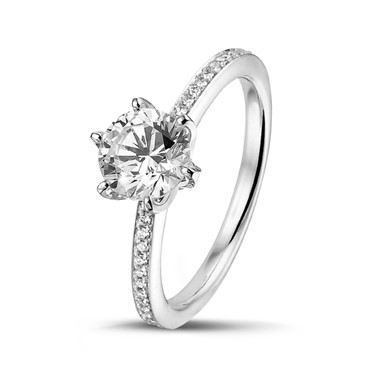
The modern-day diamond engagement ring
Ring styles
- Solitaire: The classic choice, featuring a single diamond or gemstone, allowing it to take full focus.
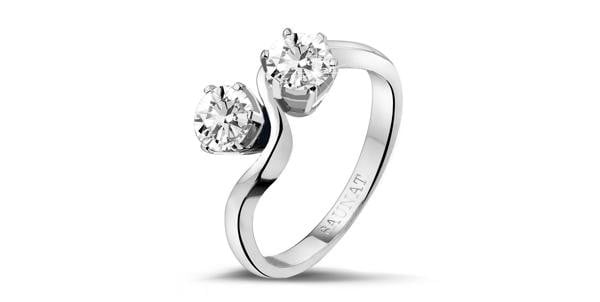
- Two-stone: Often symbolising partnership, this design showcases two stones representing the couple.
- Three-stone: Symbolising the past, present, and future, this style features three diamonds or gemstones.
- Halo: Surrounds the centre stone with smaller diamonds, creating a radiant and glamorous look.
- Entourage: Similar to the halo, but with more detailed vintage-inspired embellishments.
- Cocktail: A bold statement ring, featuring a large gemstone with an extravagant and decorative design, perfect for those who love to make a statement.
Ring setting
- Prong setting: A classic choice that holds the diamond securely while showcasing its brilliance.
- Halo setting: Features a circle of smaller diamonds around the centre stone, enhancing the ring’s sparkle.
- Bezel setting: Surrounds the diamond with a metal rim, offering a sleek and secure look.
- Pavé setting: The band is embedded with small diamonds, adding more dazzle to the ring.
Gemstone shape
- Round: Timeless and brilliant.
- Princess: A square shape with sharp angles for a modern look.
- Oval: Elegant and elongating for the finger.
- Cushion: Soft, rounded edges for a vintage feel.
- Emerald: A rectangular shape with a more subtle sparkle, known for its art-deco aesthetic.
Custom engravings
In essence, modern engagement rings offer endless possibilities for customization, allowing each couple to create a one-of-a-kind symbol of their love.
Fan of historical designs? Try art deco engagement rings
If you're a fan of historical designs, why not explore the fascinating world of Art Deco engagement rings? Their intricate craftsmanship and vintage appeal might be just what you’re looking for.
-
Stephanie Hesters
-
BAUNAT Antwerp
-
-
As the Head of Diamond Buying at BAUNAT, Stephanie has an extensive knowledge of the diamond and the evolution of diamond prices. Thanks to her broad product knowledge gained throughout her years at BAUNAT and the Diamond Foundation Course by De Beers, Stephanie advises our customers interested in the investment side of diamonds to optimize every investment. To support her skills she has a bachelor’s degree in Business Management together with her master’s in Communication.
As the Head of Diamond Buying at BAUNAT, Stephanie has an extensive knowledge of the diamond and the evolution of diamond prices. Thanks to her broad product knowledge gained throughout her years at BAUNAT and the Diamond Foundation Course by De Beers, Stephanie advises our customers interested in the investment side of diamonds to optimize every investment. To support her skills she has a bachelor’s degree in Business Management together with her master’s in Communication.