







Features:
-
Category:
-
Posted at:
-
Author:
- Kim Wouters
-
BAUNAT Antwerp
-


-
Reading time:11 minutes
In this article:
Diamond settings explained: the pavé ring setting
Choosing the right setting is fundamental when choosing a ring or other jewellery. It does not only determine the style of your jewellery, but also how it is worn and the amount of looking after it needs. Do you have an elegant style, and are you looking for jewellery with several diamonds next to one other? Then the pavé setting, with small stones set next to one another, is right for you. It also matches well with other settings. BAUNAT explains why you should choose a pavé setting for your engagement ring.
Read summary
What makes the pavé setting a popular choice for diamond rings?
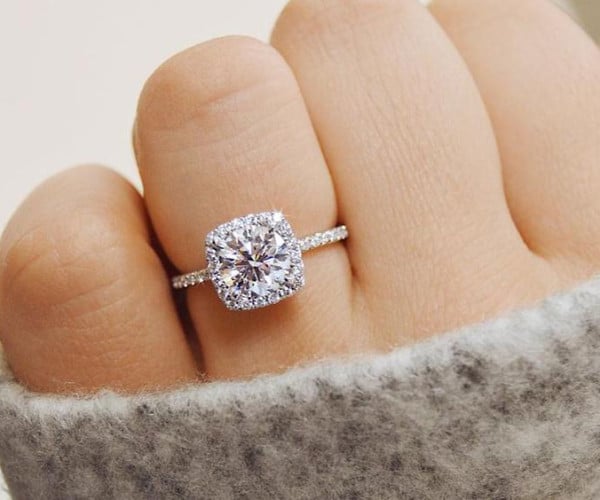
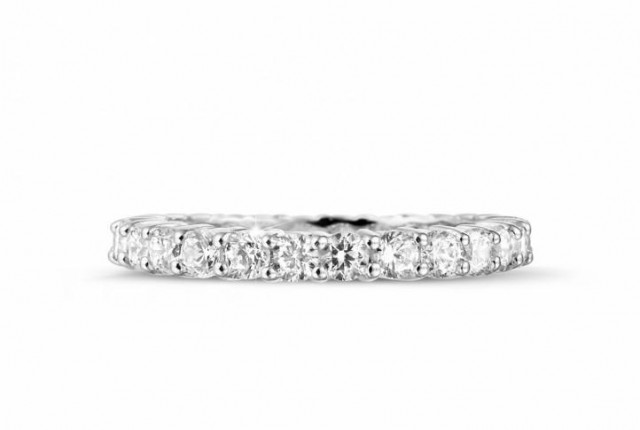
The pavé setting features small diamonds placed closely together, secured by tiny, nearly invisible prongs that resemble beads. This arrangement creates the illusion of one continuous diamond surface, as the French name suggests—like a "paved" street. The setting maximizes brilliance by allowing diamonds to catch light from all angles, creating exceptional sparkle no matter how the ring is viewed.
This setting offers practical advantages too: it's more cost-effective than a single large diamond while providing impressive brilliance. Versatile by nature, pavé can be combined with other settings to enhance a solitaire diamond or create a halo effect that makes the center stone appear larger.
For elegance with minimal visible metal (especially in white gold), the pavé setting delivers a seamless, floating diamond appearance that adds sophistication to any jewelry piece.

Most viewed diamond jewels
-
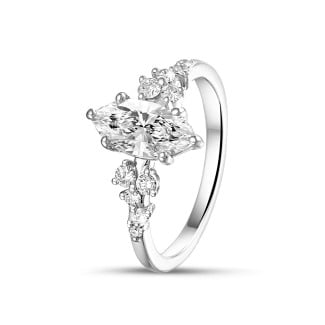
![1.00 carat solitaire cluster ring in white gold with marquise diamond]() BestsellerNew1.00 carat solitaire cluster ring in white gold with marquise diamondFrom USD 4.400,00 (excl. VAT)
BestsellerNew1.00 carat solitaire cluster ring in white gold with marquise diamondFrom USD 4.400,00 (excl. VAT) -
![1.00 carat solitaire cluster ring in white gold with a round diamond]() Bestseller1.00 carat solitaire cluster ring in white gold with a round diamondFrom USD 4.130,00 (excl. VAT)
Bestseller1.00 carat solitaire cluster ring in white gold with a round diamondFrom USD 4.130,00 (excl. VAT) -
![1.00 carat solitaire ring with an asscher cut diamond in white gold]() Bestseller1.00 carat solitaire ring with an asscher cut diamond in white goldFrom USD 4.700,00 (excl. VAT)
Bestseller1.00 carat solitaire ring with an asscher cut diamond in white goldFrom USD 4.700,00 (excl. VAT) -
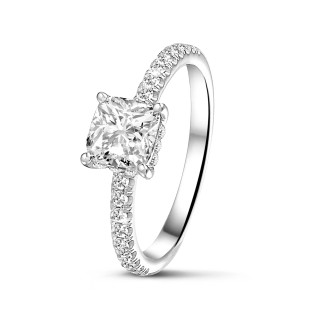
![1.00 carat solitaire ring with a cushion diamond and hidden halo in white gold]() BestsellerNew1.00 carat solitaire ring with a cushion diamond and hidden halo in white goldFrom USD 4.010,00 (excl. VAT)
BestsellerNew1.00 carat solitaire ring with a cushion diamond and hidden halo in white goldFrom USD 4.010,00 (excl. VAT) -
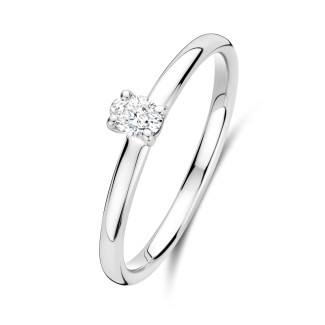
![0.15 carat solitaire ring with a oval cut diamond in white gold]() New0.15 carat solitaire ring with a oval cut diamond in white goldFrom USD 2.210,00 (excl. VAT)
New0.15 carat solitaire ring with a oval cut diamond in white goldFrom USD 2.210,00 (excl. VAT)


What exactly is the pavé setting?
Platinum and 18k white gold are common choices for pavé because they provide a pale backdrop that reduces the visibility of the metal between stones and complements the diamonds' brilliance. Platinum is naturally white and very durable, giving excellent long-term stability for delicate bead work. Eighteen-karat white gold also gives a bright, complementary look;
Yellow and rose gold give a warmer contrast that can emphasise the diamonds against a coloured background, creating a classic or vintage feel. These metals suit designs where a warmer overall tone is desired, though the metal will be more noticeable between very small stones than when using a pale metal.
Avoid metals below 18k for pavé work if your priority is long-term durability and a premium finish. Discuss intended wear and finish with your advisor so the chosen metal supports both the aesthetic and the maintenance profile of the pavé setting.
How to clean and care for a pavé ring
1) Daily care tips
- Remove your pavé ring for activities that risk knocks or abrasion, such as sports, gardening, heavy lifting, or DIY. Even small impacts can loosen the tiny beads that hold accent stones.
- Avoid direct contact with household chemicals, chlorine and beauty products. Perfume and lotion residue can collect between stones and reduce sparkle.
- Store the ring separately from other jewellery to prevent rubbing that can wear the small prongs or beads.
2) Weekly gentle cleaning
- Materials: soft-bristled brush, mild liquid soap, lukewarm water, lint-free cloth or paper towel.
- Step 1: Prepare a shallow bowl with lukewarm water and a few drops of mild soap.
- Step 2: Let the ring sit for a minute or two to loosen surface dirt. Do not soak for long with pavé pieces.
- Step 3: Brush gently along the rows of accent stones with light strokes from the top down to avoid levering stones out of their seats.
- Step 4: Rinse under running lukewarm water and pat dry with a lint-free cloth. Inspect the setting while drying.
3) What to avoid
- Prolonged soaking and aggressive ultrasonic or steam cleaning can increase the chance of tiny pavé stones becoming loose. Check with a professional before using those methods, especially on older rings or pieces with very small beads.
- Do not use abrasive cleaners, toothpaste, or stiff brushes. These can scratch the metal and wear down the bead work that secures the stones.
4) Inspection checklist
- Visual check: hold the ring under a bright light and follow each row for gaps, tilted stones or visible metal where a stone should sit.
- Tap test: gently tap the setting near the pavé with a non-metallic tool; a change in sound can indicate a loose stone. Do this lightly.
- Thread/needle test: run a clean, fine-tip object (for example a toothpick) gently along the row to feel for unevenness or snagging that could mean loose beads.
- If you find a loose or missing stone, stop wearing the ring and have a professional jeweller inspect it; prompt attention reduces the risk of further loss.
5) Professional maintenance
- Have a trained jeweller check bead tightness and the overall setting periodically. During a check the jeweller can tighten beads, replace lost accents and professionally clean areas that are risky to treat at home.
- Keep a record of professional services and tell the jeweller if the ring has been resized or heavily worn, so they can inspect altered areas closely.
Small pavé diamonds sit in tiny beads; cleaning methods that push too hard or go too deep without inspection can loosen those beads. When in doubt, consult a professional.

“A diamond ring with pavé setting guarantees an amazing look”

Benefits of choosing pavé engagement rings
- Enhanced sparkle: the closely set small diamonds in a pavé setting are strategically placed to reflect light from all angles, resulting in a dazzling sparkle that catches attention.
- Cost-effective brilliance: thanks to its composition, a row of very small diamonds close together, the price of a diamond ring with a pavé setting is much less than that of a ring having just one large diamond.
- Versatile styles: rings with pavé settings also come in different styles, both contemporary and traditional. You should realise there is a huge variety of possible ways to mix and match with other settings. For greater individuality, you could, for example, mix the pavé setting with the prong setting. This means your solitaire diamond can be enhanced with diamonds along the side in a pavé setting, for extra sparkle. You can also have your central diamond surrounded by diamonds in a halo ring. This makes the central diamond look bigger, which often adds value to an engagement ring.
Resizing, repairs and what to expect
Regular check-ups for bead and prong tightness are a sensible precaution to avoid surprise losses of tiny diamonds.
What other settings does Baunat offer?
Our experts are always ready to give advice and help you choose the right setting. The diamond setting will define the style of your jewellery, as well how careful you need to be with your ring. So don't hesitate to get in touch with any questions.
Of course, BAUNAT can also offer other types of settings in her tailor-made jewellery. Please contact info@baunat.com in case you are interested in a tailor-made jewel with a different diamond setting.
Frequently asked Questions
Pavé
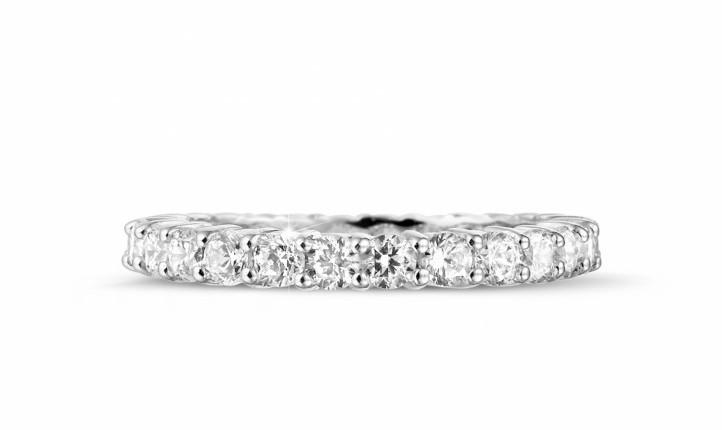
Pave stands for a style of jewellery setting in which numerous small diamonds are mounted close together to create a glistening diamond crust that covers the whole piece of jewellery and obscures the metal under it. This can either be a single row, as a plurality of rows side by side. In this way, this looks like a continuous surface of sparkling diamonds. Because these diamonds are placed close together, it looks like the ring is totally made out of diamonds. Putting small diamonds in pave requires meticulous handiwork. A gem can exist of either entirely tiny pave diamonds, or is also often used in the binder of a solitaire ring.
Pavé styles and when to choose them
Micro-pavé
Definition: Very small diamonds set so closely that the metal is almost invisible, creating a smooth, glittering surface.
Visual cues: extremely fine sparkle, tiny visible facets rather than distinct stones; a uniform “diamond dust” appearance.
Use-cases and guidance: ideal for delicate halos, thin accent rows and refined eternity styles. Accent sizes are very small and require careful handling because of the size of the beads. Choose micro-pavé when a seamless, refined look is the priority.
Standard pavé
Definition: Slightly larger accent diamonds than micro-pavé, set in bead or prong clusters to create a bright surface.
Visual cues: individual stones are easier to distinguish and offer stronger single-stone sparkle.
Use-cases and guidance: commonly used on shanks, shoulders and half-eternity bands where a balance of durability and brilliance is wanted.
Micro vs standard pavé - a quick comparison
Micro-pavé prioritises an ultra-fine, continuous shimmer and is best when a delicate, high-end finish is wanted. Standard pavé offers more robustness and easier servicing while still delivering strong brilliance. Choose micro-pavé for refined halos and thin shoulders; choose standard pavé where durability and more visible stone definition are preferred.
Note: pavé accent diamonds are typically much smaller than centre stones
Frequently asked Questions
What is a pavé setting?
The pavé setting positions the gemstones very closely together, so barely any precious metal is visible on the ring and is mostly used with small diamonds in a row. The row of diamonds and the tiny precious metal prongs that keep them in place result in a brilliant shine.
Learn more about the diamond ring settings or instantly choose the right setting for your diamond from BAUNAT.
What is the difference between pave and prong setting?
What is a French pave?
French pave is a style of setting small diamonds into a ring that features small, V-shaped cutouts underneath each diamond. This design allows more light to reach the stones while minimizing the visibility of the metal, creating the appearance of a solid diamond ring. The diamond setter hand cuts these V or U shapes into the metal to achieve this look.
-
Kim Wouters
-
BAUNAT Antwerp
-
-
Kim, BAUNAT-certified is quite the Jill of all trades. After being submerged into all aspects of the brand, and being responsible for customer success, order & sales, office management, product management, she has become an expert in everything diamond and jewellery related. Apart from this product expertise, Kim’s master’s degree in communications makes her an excellent Diamond Jewellery Advisor to help you discover your personal taste and make sure all your expectations are exceeded.
Kim, BAUNAT-certified is quite the Jill of all trades. After being submerged into all aspects of the brand, and being responsible for customer success, order & sales, office management, product management, she has become an expert in everything diamond and jewellery related. Apart from this product expertise, Kim’s master’s degree in communications makes her an excellent Diamond Jewellery Advisor to help you discover your personal taste and make sure all your expectations are exceeded.