







Features:
-
Category:
-
Posted at:
-
Author:
- Sofie Kuppens
-
BAUNAT Antwerp
-


-
Reading time:16 minutes
In this article:
- The cathedral setting explained
- Security, durability and pairing considerations
- Different cathedral setting options at BAUNAT
- Cathedral setting types explained
- Discover the BAUNAT difference
- How to choose a cathedral engagement ring / Cleaning & care for cathedral settings
- What other engagement ring settings are there?
The cathedral engagement ring setting: a bold statement piece
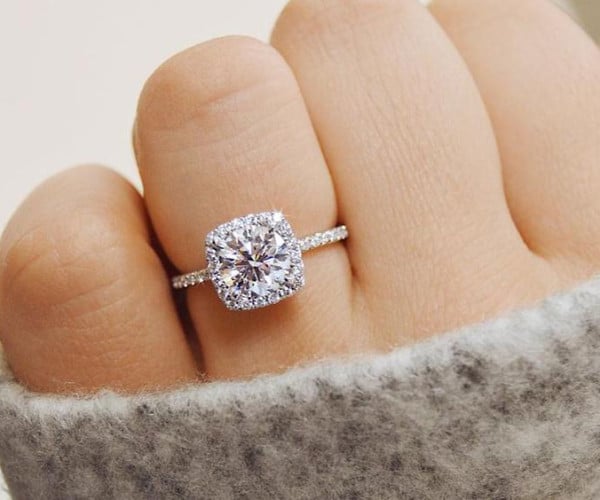
Do you want to make the diamond in your engagement ring pop? Then consider an impressive cathedral setting for an engagement ring, which offers a real eye-catching look no one can ignore. This look is also very popular for marriage proposals.
Not sure what a cathedral setting actually is? Luckily, we can help.
Read summary
What Makes Cathedral Engagement Rings Stand Out?
Looking for a ring that dramatically showcases your diamond? A cathedral engagement ring might be perfect for you. Named after Gothic cathedrals, this setting uses elegant metal arches to elevate the diamond above the band, creating an impressive visual impact that makes the stone appear larger and more prominent.
The cathedral setting offers versatility with various diamond shapes, especially round brilliant, princess, and cushion cuts. At BAUNAT, you can customize your ring with different metals including white gold, yellow gold, red gold, or platinum. You can even add personal engravings for a unique touch.
While cathedral rings deliver undeniable elegance, they do require more careful maintenance as the elevated design can collect dirt in crevices and may catch on clothing. For those willing to provide proper care, this architectural setting creates a bold statement piece that symbolizes timeless romance.

Most viewed diamond jewels
-
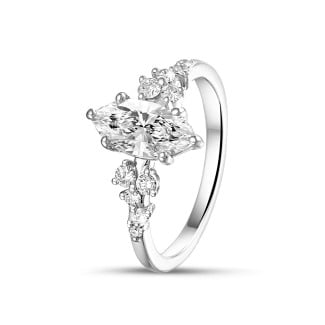
![1.00 carat solitaire cluster ring in white gold with marquise diamond]() BestsellerNew1.00 carat solitaire cluster ring in white gold with marquise diamondFrom USD 4.400,00 (excl. VAT)
BestsellerNew1.00 carat solitaire cluster ring in white gold with marquise diamondFrom USD 4.400,00 (excl. VAT) -
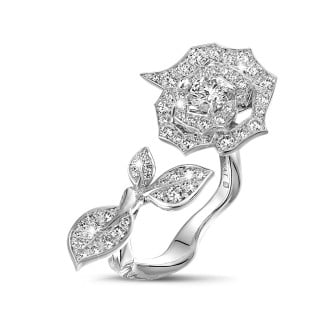
![0.95 carat diamond rose design ring in white gold]() NewPrincess Delphine0.95 carat diamond rose design ring in white goldFrom USD 16.000,00 (excl. VAT)
NewPrincess Delphine0.95 carat diamond rose design ring in white goldFrom USD 16.000,00 (excl. VAT) -
![1.00 carat solitaire ring with an asscher cut diamond in white gold]() Bestseller1.00 carat solitaire ring with an asscher cut diamond in white goldFrom USD 4.700,00 (excl. VAT)
Bestseller1.00 carat solitaire ring with an asscher cut diamond in white goldFrom USD 4.700,00 (excl. VAT) -
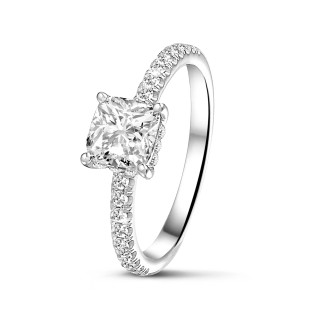
![1.00 carat solitaire ring with a cushion diamond and hidden halo in white gold]() BestsellerNew1.00 carat solitaire ring with a cushion diamond and hidden halo in white goldFrom USD 4.010,00 (excl. VAT)
BestsellerNew1.00 carat solitaire ring with a cushion diamond and hidden halo in white goldFrom USD 4.010,00 (excl. VAT) -
![1.00 carat solitaire cluster ring in white gold with oval diamond]() BestsellerNew1.00 carat solitaire cluster ring in white gold with oval diamondFrom USD 4.590,00 (excl. VAT)
BestsellerNew1.00 carat solitaire cluster ring in white gold with oval diamondFrom USD 4.590,00 (excl. VAT)

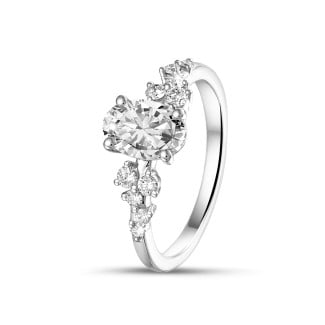

The cathedral setting explained
The most impressive thing about a cathedral-style engagement ring is not how the diamonds are attached but their height, especially compared with other settings.
Advantages of the cathedral setting:
- Elevates the diamond, making it appear larger and more prominent.
- Adds elegance and character to the ring’s overall design.
- Suitable for various diamond shapes, especially round brilliant, princess, and cushion cuts.
Disadvantages of the cathedral setting:
- Requires more effort to clean, as dirt and grease can accumulate in crevices.
- Less suitable for daily wear due to the elevated setting being prone to snagging on clothing.
- Demands more delicate handling and care to maintain its exquisite look.
Security, durability and pairing considerations
Cathedral rings differ in how well they protect the centre diamond. Bezel and basket styles offer the most protection because metal surrounds more of the stone, shielding edges from impact. Lower galleries and reinforced prongs also increase everyday resilience. By contrast, very high prong profiles and delicate pavé shoulders expose more stone surface and carry higher snag risk; these designs benefit from stronger prong heads and slightly thicker shoulder metal. Split-shank and trellis constructions can be robust when made in 18Kt gold or platinum, but their thinner decorative parts require careful finishing to avoid weak points. For customers who expect heavy daily wear, choose lower galleries, reinforced prongs or partial bezels to reduce vulnerability without losing the cathedral look.
Pairing & stacking with wedding bands
Different cathedral setting options at BAUNAT
Cathedral setting types explained
A direct expression of the style’s origins, the classic cathedral lifts the centre stone on two smooth metal arches that meet beneath the diamond. It visually lengthens the finger and gives the diamond an elevated, elegant profile. Decorative elements are usually restrained to keep the silhouette clean, though a narrow gallery or tapered shoulders are common. This variant suits shoppers after a timeless, architectural look and pairs well with straight or gently contoured wedding bands. Best diamond shapes: round brilliant, cushion and oval. Security/durability: generally secure with medium-height arches and four-to-six prongs; very high galleries increase snag risk, so reinforced prongs are wise for daily wear.
Split-shank cathedral setting
The split-shank opens the band into two or more slender arms as they rise toward the gallery, creating extra visual interest and a lighter top view. Split shanks can carry pavé accents or be left polished for contrast. The frame makes the centre diamond appear larger and gives scope for side stones. Ideal buyer: someone who wants a distinctive ring that still reads classic. Recommended shapes: round brilliant, princess and cushion. Security/durability: extra contact points help lateral support, but thin shanks last longer in sturdier metals such as 18Kt gold or platinum.
Halo / hidden-halo cathedral setting
A halo cathedral surrounds or partly conceals the centre stone with a ring of smaller diamonds, either visible from above or tucked under the gallery as a hidden halo. The halo increases perceived size and adds sparkle without greatly raising the profile. Shoulders often feature pavé or milgrain to complement the halo. Ideal for buyers seeking strong brilliance and presence. Best shapes: round brilliant and cushion work especially well; princess can be adapted. Security/durability: halos provide some buffering for the centre stone, though they add more exposed surface to keep clean; secure prong construction for halo stones is important.
Pavé and channel-set cathedral variations
These styles place pavé or channel-set accent diamonds along the arches or shoulders, adding continuous sparkle to the cathedral lines. Pavé gives a delicate glittering texture, while channel-set accents offer a sleeker, more protected row. Ideal buyer: someone who wants extra brilliance built into the architecture. Recommended shapes: round brilliant pairs best with pavé; elongated cuts such as emerald or radiant suit channel rows. Security/durability: channel settings protect side stones better than pavé; for everyday wear prefer larger channel rails and well-secured pavé beads.
Bezel / basket cathedral setting - durability
A bezel or partial bezel adapts to the cathedral by surrounding the lower portion of the centre stone with metal that flows into the arches, or by using a basket-style cup under the diamond. The diamond still reads elevated but sits within a cleaner metal frame. Ideal buyer: those who prioritise protection and modern lines. Best shapes: round brilliant and oval; step cuts can work with partial bezels. Security/durability: among the most protective cathedral variants, suitable for active wearers when paired with 18Kt gold or platinum.
Trellis / double-arch cathedral setting
This subtype uses intertwining arches or multiple vertical rails beneath the centre stone to create a woven, architectural look. The trellis adds texture to the profile and can include openwork or milgrain for a vintage feel. It gives strong side support and an ornate side view. Ideal buyer: those drawn to craftsmanship and vintage details. Recommended shapes: cushion, oval and round brilliant. Security/durability: structurally robust when well executed, though intricate openwork may need occasional inspection to prevent snagging.
Mini / low cathedral setting
A scaled-down cathedral keeps the lifted aesthetic but with a lower gallery, offering many visual benefits while reducing snag potential. Decorative options are typically restrained to preserve the low profile. Ideal buyer: someone who wants cathedral styling for daily wear. Recommended shapes: round brilliant and princess remain versatile. Security/durability: lower galleries resist catching and accidental knocks better; pair with reinforced prongs for added security.
Contoured & notched cathedral designs (pairing-friendly)
These variants include a pre-shaped profile or notches to accept a wedding band, either contoured or notched for a straight band. The result is a smoother match between engagement ring and wedding ring while keeping the cathedral’s elevation. Ideal buyer: those planning a matched set. Recommended shapes: compatible across many cuts depending on notch geometry. Security/durability: contouring itself does not weaken the design, but ensure notches do not overly thin shoulder metal.
Hybrid and bespoke cathedral interpretations
Many contemporary cathedrals combine elements - for example, a split-shank with a hidden halo or a bezel cup with trellis arches. Bespoke options let you balance elevation, protection and ornamentation to suit your lifestyle. Ideal buyer: someone seeking a unique statement with tailored durability and proportions. Recommended shapes: choose based on the combined elements and consult a designer for proportion advice. Security/durability: depends on the choices, but bespoke work at BAUNAT focuses on reinforced settings and premium metals to meet everyday use.
Metal choices
- White gold: A sleek, modern choice that accentuates the diamond’s brilliance.
- Yellow gold: A classic option that adds warmth and a traditional touch.
- Red gold: A unique and romantic choice, offering a subtle blush hue that stands out with elegance
- Platinum: A durable and luxurious metal that enhances the ring's overall elegance.
Diamond shapes
- Round brilliant: The timeless classic that maximises sparkle.
- Princess cut: A square shape that offers a modern, geometric look.
- Cushion cut: A blend of the round and princess cuts, perfect for a vintage-inspired design.
Engraving options
Discover the BAUNAT difference
How to choose a cathedral engagement ring / Cleaning & care for cathedral settings
Start with a clear checklist to focus your search. 1) Define priorities: decide whether you want a dramatic statement, a low-profile practical ring, or a balance of both. 2) Choose metal: BAUNAT recommends 18Kt gold or platinum for longevity and the best long-term finish. 3) Select band width: narrower bands (around 2.5–3.5 mm) feel delicate and suit smaller diamonds; wider bands (about 3.5–4.5 mm) support larger stones and bolder arches. 4) Decide on arch height: a high cathedral emphasises drama and lengthens the finger; a low cathedral lowers snag risk and suits daily wear. 5) Pick a diamond shape that fits the profile: round brilliant and cushion work with most cathedral subtypes; elongated shapes such as oval and marquise benefit from supportive prong designs. 6) Accent choices: choose pavé, channel, halo or bezel accents depending on the look and level of protection desired. 7) Consider pairing: if you want a matching wedding band, opt for a contoured or notched cathedral variant, or plan a custom wedding band to match the profile. 8) Final step: consult BAUNAT for custom proportions and a preview of how elements sit together to ensure comfort and durability.
Cleaning & care for cathedral settings
Cathedral galleries and accent details trap dirt more than flat profiles, so a simple routine keeps your ring brilliant. Weekly to monthly: soak the ring in warm water with a mild detergent for 10–20 minutes, gently agitate and brush with a soft-bristled brush to reach crevices, then rinse and dry with a lint-free cloth. Monthly: visually inspect prongs and accent settings for wear or loose stones. Yearly: arrange a professional inspection and cleaning so BAUNAT’s experts can check prongs, settings and overall condition and perform any recommended maintenance. Avoid ultrasonic cleaners for delicate pavé or very intricate openwork unless a professional advises use.
What other engagement ring settings are there?
The cathedral setting is impressive thanks to the exquisite, curved lines and the diamond standing proudly above the ring. But there are several other ways to set a diamond in a ring besides the cathedral setting.
-
Sofie Kuppens
-
BAUNAT Antwerp
-
-
“Logistics Champion”, which is the title Sofie was awarded with in 2018, leads and supervises the processing of orders and logistics and closely working together with the BAUNAT order team. She strives to ensure maximum customer satisfaction by keeping our clients up to date in the production process and delivering on-time. To improve her product expertise even further, Sofie completed the Diamond Foundation Course by De Beers, which makes her a true diamond specialist.
Professional experience
BAUNAT Group N.V. - Logistics Champion & Order Team Lead (2016–present)
Sofie supervises processing of bespoke orders and coordinates logistics between production and customer service. She keeps clients informed during production, improves internal workflows to reduce variability in lead times, and helped introduce quality checkpoints that raised order accuracy and client satisfaction.
Customer Service & Production Coordinator, BAUNAT Antwerp (2012–2016)
Coordinated daily activity between ateliers and the orders desk, trained new staff to handle custom requests, and developed procedures for order tracking and client communication that strengthened after‑sales follow‑up.
Retail Sales Advisor, Fine Jewellery Boutique (2009–2012)
Advised clients on high‑end jewellery purchases, gained hands‑on experience with diamond grading basics, and refined consultation skills that inform her current role in bespoke order management.
Diamond Foundation Course, De Beers - Certified Graduate (2020)
Completed professional training in diamond properties and grading to deepen gemstone knowledge used in quality checks and client consultations.
Education & credentials
AP Hogeschool Antwerpen - Degree in Applied Business Management, marketing track. De Beers Diamond Foundation Course - Certified Graduate, 2020. Ongoing in‑house BAUNAT training in bespoke jewellery processes and customer experience.
Selected publications & courses
Diamond Foundation Course, De Beers, provider certification and practical grading sessions. BAUNAT blog articles by Sofie Kuppens on engagement ring selection, diamond care and jewellery trends, published on the BAUNAT site between 2023 and 2025. Internal BAUNAT workshops on order logistics and client communication.
Recent activity & perspectives
Unveiling the importance of Engagement Ring Insurance in the UK - "Insuring an engagement ring is not only about protection, it is about securing the emotional and financial value of a lifelong symbol." (12-07-2024, Gemstones)
Unlocking the Meaning Behind Your Engagement Ring's Gemstone - "A gemstone can carry sentiment and story; choosing the right stone means balancing personal meaning with lasting quality." (11-07-2024, Jewellery)
Mastering the Art of Wearing Asymmetrical Earrings - "Asymmetry offers a contemporary silhouette that allows each ear to tell part of a single, stylish story; the key is proportional balance." (04-07-2024, Earrings)
Choosing the right carat weight for your diamond earrings - "Visual impact depends on setting and cut as much as on carat weight; thoughtful design can maximise perceived sparkle without unnecessary size." (11-09-2024, Jewellery)
“Logistics Champion”, which is the title Sofie was awarded with in 2018, leads and supervises the processing of orders and logistics and closely working together with the BAUNAT order team. She strives to ensure maximum customer satisfaction by keeping our clients up to date in the production process and delivering on-time. To improve her product expertise even further, Sofie completed the Diamond Foundation Course by De Beers, which makes her a true diamond specialist.
Professional experience
BAUNAT Group N.V. - Logistics Champion & Order Team Lead (2016–present)
Sofie supervises processing of bespoke orders and coordinates logistics between production and customer service. She keeps clients informed during production, improves internal workflows to reduce variability in lead times, and helped introduce quality checkpoints that raised order accuracy and client satisfaction.
Customer Service & Production Coordinator, BAUNAT Antwerp (2012–2016)
Coordinated daily activity between ateliers and the orders desk, trained new staff to handle custom requests, and developed procedures for order tracking and client communication that strengthened after‑sales follow‑up.
Retail Sales Advisor, Fine Jewellery Boutique (2009–2012)
Advised clients on high‑end jewellery purchases, gained hands‑on experience with diamond grading basics, and refined consultation skills that inform her current role in bespoke order management.
Diamond Foundation Course, De Beers - Certified Graduate (2020)
Completed professional training in diamond properties and grading to deepen gemstone knowledge used in quality checks and client consultations.
Education & credentials
AP Hogeschool Antwerpen - Degree in Applied Business Management, marketing track. De Beers Diamond Foundation Course - Certified Graduate, 2020. Ongoing in‑house BAUNAT training in bespoke jewellery processes and customer experience.
Selected publications & courses
Diamond Foundation Course, De Beers, provider certification and practical grading sessions. BAUNAT blog articles by Sofie Kuppens on engagement ring selection, diamond care and jewellery trends, published on the BAUNAT site between 2023 and 2025. Internal BAUNAT workshops on order logistics and client communication.
Recent activity & perspectives
Unveiling the importance of Engagement Ring Insurance in the UK - "Insuring an engagement ring is not only about protection, it is about securing the emotional and financial value of a lifelong symbol." (12-07-2024, Gemstones)
Unlocking the Meaning Behind Your Engagement Ring's Gemstone - "A gemstone can carry sentiment and story; choosing the right stone means balancing personal meaning with lasting quality." (11-07-2024, Jewellery)
Mastering the Art of Wearing Asymmetrical Earrings - "Asymmetry offers a contemporary silhouette that allows each ear to tell part of a single, stylish story; the key is proportional balance." (04-07-2024, Earrings)
Choosing the right carat weight for your diamond earrings - "Visual impact depends on setting and cut as much as on carat weight; thoughtful design can maximise perceived sparkle without unnecessary size." (11-09-2024, Jewellery)