







How may the size of the culet influence your diamond purchase?
Here we shall delve into a part called the culet, this tiny little part at the tip of a diamond which may even seem irrelevant to some but can play an important role for several reasons.
Read summary
What role does a diamond's culet play in its quality and value?
The culet, a small facet at the bottom tip of a diamond, might seem insignificant but can notably impact a diamond's overall quality. This optional facet, which creates the difference between a 57 or 58-faceted round brilliant diamond, primarily serves to protect the stone from chipping at its pointed end. While not mandatory, the culet's size matters significantly - ideally being none, very small, or small (about 1.5% of the diamond's diameter). Larger culets can create an undesirable "window" effect, allowing you to see through the diamond, which affects its appearance and value. When selecting a diamond, consider your setting choice - a protective ring structure might make a culet unnecessary. BAUNAT recommends evaluating the culet's size during purchase, as it can influence both the diamond's durability and price.

Most viewed diamond jewels
-
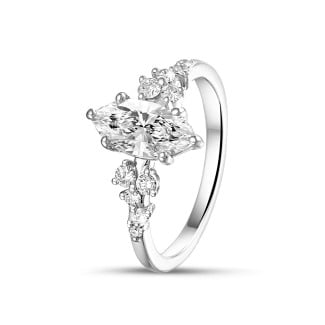
![1.00 carat solitaire cluster ring in white gold with marquise diamond]() BestsellerNew1.00 carat solitaire cluster ring in white gold with marquise diamondFrom USD 4.400,00 (excl. VAT)
BestsellerNew1.00 carat solitaire cluster ring in white gold with marquise diamondFrom USD 4.400,00 (excl. VAT) -
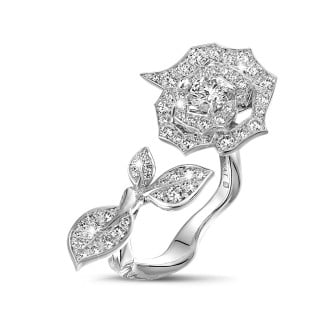
![0.95 carat diamond rose design ring in white gold]() NewPrincess Delphine0.95 carat diamond rose design ring in white goldFrom USD 16.000,00 (excl. VAT)
NewPrincess Delphine0.95 carat diamond rose design ring in white goldFrom USD 16.000,00 (excl. VAT) -
![1.00 carat solitaire ring with an asscher cut diamond in white gold]() Bestseller1.00 carat solitaire ring with an asscher cut diamond in white goldFrom USD 4.700,00 (excl. VAT)
Bestseller1.00 carat solitaire ring with an asscher cut diamond in white goldFrom USD 4.700,00 (excl. VAT) -
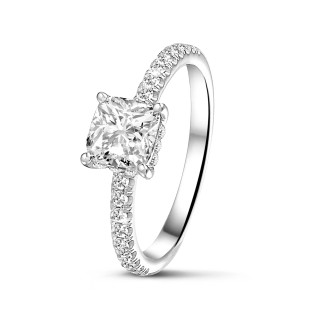
![1.00 carat solitaire ring with a cushion diamond and hidden halo in white gold]() BestsellerNew1.00 carat solitaire ring with a cushion diamond and hidden halo in white goldFrom USD 4.010,00 (excl. VAT)
BestsellerNew1.00 carat solitaire ring with a cushion diamond and hidden halo in white goldFrom USD 4.010,00 (excl. VAT) -
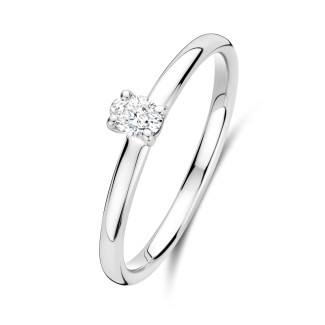
![0.15 carat solitaire ring with a oval cut diamond in white gold]() New0.15 carat solitaire ring with a oval cut diamond in white goldFrom USD 2.210,00 (excl. VAT)
New0.15 carat solitaire ring with a oval cut diamond in white goldFrom USD 2.210,00 (excl. VAT)

The Culet
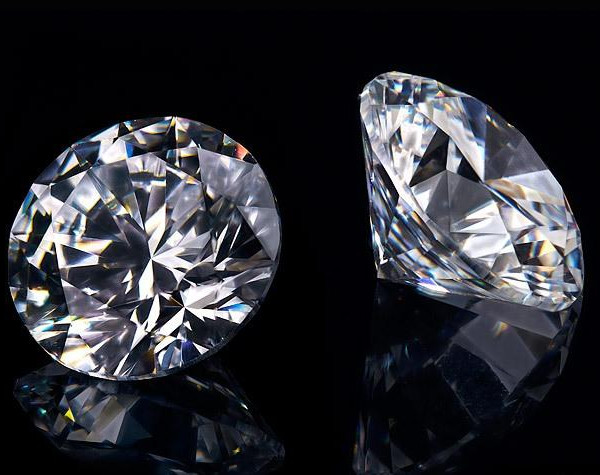
A round brilliant diamond is composed of either 57 or 58 facets. What makes this difference? Whether an extra tiny polished facet at the tip of the diamond and parallel to the table, called culet, has been cut or not. This applies mainly to round brilliant diamonds and not as much to most fancy shaped diamonds or old cuts.
The main purpose of a culet is actually to prevent damage to the point of the diamond. When there is no culet it is more likely for a diamond over time to get a little chip at the tip. It is not a mandatory feature to look for when buying a diamond but depending on the size of the diamond and the setting you intend to use it can be considered.
Should you wish to set your diamond high on a ring and with a ring structure that protects the stone all around, then of course you can buy a diamond that has no culet.
Culet grades explained (None to Extremely Large)
Laboratories and graders use standard grade names to describe a culet, and each name maps to an observable size range rather than an exact millimetre. Below is a practical mapping most commonly used in reports and by professionals, expressed as approximate percentage ranges of the average diameter and with plain‑language cues and buyer guidance.
None / Pointed - approximately 0%: Appears as a sharp point, effectively invisible from the table. Buyer note: offers the cleanest face‑up appearance but requires a protected setting if you want extra tip protection. Ideal for modern rounds when maximum brilliance is desired.
Very Small - up to about 0.5–1.0%: Looks like a pinpoint under magnification and is typically invisible to the unaided eye. Buyer note: excellent compromise between aesthetics and durability, preferred for most new round brilliants.
Small - roughly 1.0–1.5%: May be faintly visible as a tiny dot through the table under strong light. Buyer note: still acceptable for modern stones, especially when the setting offers some protection.
Medium - roughly 1.5–3.0%: Can create a small central dark area or ‘window’ when viewed face‑up in some lighting. Buyer note: tolerable in protected settings or for larger stones where the effect is less disturbing; generally avoid for small rounds where it becomes noticeable.
Large - roughly 3.0–7.0%: Clearly visible as a dark circle or hole through the table and likely to affect the perceived brilliance. Buyer note: not recommended for new modern rounds intended for maximum sparkle.
Very Large - roughly 7.0–10.0%: Pronounced visible opening at the culet, significantly affecting light return. Buyer note: acceptable only for specific vintage or stylistic choices, not for contemporary ideal cuts.
Extremely Large - above roughly 10%: A large visible void through the centre of the face‑up view. Buyer note: typically a historical feature rather than a design choice for new rounds.
For buyers: prefer None, Very Small or Small for modern round brilliants when face‑up appearance is a priority; accept Medium or larger only for protected settings, larger stones, or when authentic vintage character is specifically desired.
What happens when the culet is too large?
The size of the culet is determined in percentage which can be calculated by dividing the cult size in millimetres by the average diameter of the stone and multiply the result by 100.
Based on this result, the culet will be defined as very small and small when measuring about 1.5%, to very large and extremely large when measuring up to 15%.
None, very small and small are the sizes that are best evaluated visually. Medium could be tolerated depending also not the size of the diamond, but beyond that it wouldn’t be recommended.
If the size of the culet is too large, there is what we call a “window”, which literally allows you to look through the diamond. Should you have doubts, try this little trick, you hold your diamond with the tweezers face up and move a pen underneath the diamond, if the culet facet is too big, you will literally be able to see the pen across the diamond.
A large culet changes how light behaves inside the diamond. Where a very small or absent culet preserves internal reflections that return to the viewer as brilliance and
sparkle, a medium or larger culet creates a direct path for light to escape, an effect gemmologists call light leakage. Visually this often appears as a stable dark or grey spot near the centre when the stone is viewed face‑up, because light that would otherwise reflect back is lost through the culet facet.
To check for this effect without laboratory tools, use a few simple visual tests: 1) Face‑up check under bright, diffuse light: hold the stone table‑up and look for a persistent dark dot in the centre; if it appears and does not shift as you move the stone, the culet is likely large enough to affect appearance. 2) Rotate the stone slowly: if a central dark area remains fixed while surrounding flashes change, light is leaking through the culet rather than being returned. 3) Compare with a known Very Small/None example when possible, or view a certificate diagram to confirm the culet grade. 4) For mounted stones, view in several lighting conditions and slightly tilt the finger to catch any central dark patch that might be hidden in one angle.
Most reputable grading reports list the culet grade explicitly and show it on the diagram of the stone. Before purchase, confirm the culet field on the certificate - common entries read 'Culet: None', 'Very Small', 'Small', 'Medium', 'Large', 'Very Large' or 'Extremely Large' - and compare that grade with what you see in the face‑up view. If a report indicates Medium or larger and the certificate diagram shows a central facet, ask for images or a video of the actual diamond to judge the visual impact; for mounted stones, request photos taken in natural and bright light to check for any central dark area caused by the culet.
Buyer takeaway: None or Very Small preserves maximum brilliance but needs a careful setting to protect the tip; Very Small to Small is the best practical balance for contemporary rounds; Medium and larger sizes increasingly risk visible light leakage and reduced sparkle, so they should be chosen only for protected settings or when vintage character is the objective.
When a diamond is already set into a ring, we do know it is not as easy to see, but once you know what to look for, you will be able to spot it even in set rings.
Should this particular part of the anatomy of a diamond be considered when buying a diamond? We believe so, as the price can vary depending on the size of the culet.
If you are considering buying a diamond and would like some guidance on this particular subject, the team at BAUNAT would be very happy to assist you further with your query.
The diamonds as well at the jewellery at BAUNAT are certified by the most reputed labs and we know we can provide you with what you are looking for.
-
Fabienne Rauw
-
BAUNAT Antwerp
-


-
Fabienne, manager of the German market is able to guide every client with finding the right jewel. She takes care of most of the German orders, but also takes other task on her plate. Thanks to her six years of experience at BAUNAT she acquainted well with the product and the marketing around it. Her degree in PR ensures that BAUNAT is well presented across all media channels. For anyone looking into a new investment opportunity, Fabienne is the perfect guide in this process. No question will be left unanswered, and she will help you every step of the way.
Selected Bespoke Projects
• Eternal Bloom bespoke engagement concept - Role: project lead for client briefing and prototype coordination. Fabienne translated personal design references into a 3D-printed prototype, supervised stone selection and ensured the finished piece matched the client’s vision and comfort preferences.
• Personalized anniversary necklace - Role: design coordinator and quality overseer. She managed the custom design process from the initial sketch to final polishing, liaising between client and workshop to preserve proportions and finish.
• Reimagined heirloom ring restoration and redesign - Role: client consultant and technical coordinator. Fabienne guided the client through options to modernize setting details while keeping sentimental elements, delivering a wearable result that respected the original piece.
Her hands-on involvement in bespoke commissions ensures each custom order has a clear brief, careful prototype review and close follow-up with the workshop, so clients receive a tailored jewel that meets both aesthetic and practical expectations.
Professional enquiries
For speaking engagements, press requests or research collaborations, please send your message to BAUNAT’s communications team with the subject line: "Fabienne Rauw - Professional Enquiry." Include a brief description of the request and any relevant dates or documents. The communications team will route enquiries to Fabienne and provide guidance on next steps.
Fabienne, manager of the German market is able to guide every client with finding the right jewel. She takes care of most of the German orders, but also takes other task on her plate. Thanks to her six years of experience at BAUNAT she acquainted well with the product and the marketing around it. Her degree in PR ensures that BAUNAT is well presented across all media channels. For anyone looking into a new investment opportunity, Fabienne is the perfect guide in this process. No question will be left unanswered, and she will help you every step of the way.
Selected Bespoke Projects
• Eternal Bloom bespoke engagement concept - Role: project lead for client briefing and prototype coordination. Fabienne translated personal design references into a 3D-printed prototype, supervised stone selection and ensured the finished piece matched the client’s vision and comfort preferences.
• Personalized anniversary necklace - Role: design coordinator and quality overseer. She managed the custom design process from the initial sketch to final polishing, liaising between client and workshop to preserve proportions and finish.
• Reimagined heirloom ring restoration and redesign - Role: client consultant and technical coordinator. Fabienne guided the client through options to modernize setting details while keeping sentimental elements, delivering a wearable result that respected the original piece.
Her hands-on involvement in bespoke commissions ensures each custom order has a clear brief, careful prototype review and close follow-up with the workshop, so clients receive a tailored jewel that meets both aesthetic and practical expectations.
Professional enquiries
For speaking engagements, press requests or research collaborations, please send your message to BAUNAT’s communications team with the subject line: "Fabienne Rauw - Professional Enquiry." Include a brief description of the request and any relevant dates or documents. The communications team will route enquiries to Fabienne and provide guidance on next steps.