







Features:
-
Posted at:
-
Author:
- An Van Puyvelde
-
An Van Puyvelde - Order & Administration Manager
-


-
Reading time:14 minutes
In this article:
- Meaningful traditional engagement rituals
- The sacred nature of traditional weddings
- Exploring Baunat's options for catholic engagement rings
- Devotional ring styles: rosary, medal, saint signets and their meanings
- Craftsmanship, materials and why it matters for sacramental rings
- Key features of classic rings
- Choosing a Catholic ring: materials, motifs and fit
- Find your catholic engagement ring at Baunat
- Frequently asked Questions
Catholic engagement rings & wedding traditions
Catholic engagement rings have long been a symbol of love and commitment, but within the Catholic tradition, they carry an even deeper meaning. For Catholic couples embarking on the sacred journey of marriage, engagement rings are not merely pieces of jewellery but profound symbols of faith, unity, and divine love. This article delves into the unique significance of Catholic engagement rings, the traditional engagement rituals within the faith, and why these rings are an excellent choice for those looking to honour their religious heritage.
Read summary
What is the significance of Catholic engagement rings and how are they integrated into traditional Catholic wedding ceremonies?
Catholic engagement rings symbolize love, commitment, and faith. Traditional Catholic engagements involve rituals such as the blessing of the ring by a priest and pre-marital counselling. The rings play a crucial role in both the engagement and wedding ceremonies, symbolizing spiritual commitment and divine grace.

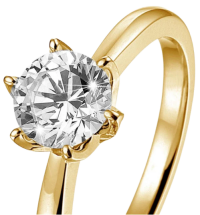
5 Questions to Find Her Perfect Engagement Ring
Are you planning to propose? Finding the right engagement ring is a defining step. Every ring is handcrafted in Antwerp from the finest materials by skilled artisans. Discover what engagement ring fits her personality.
Most viewed diamond jewels
-
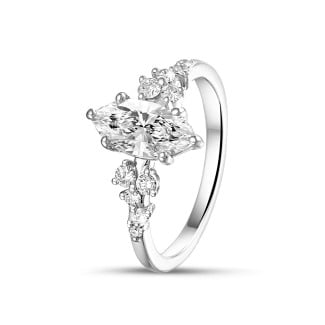
![1.00 carat solitaire cluster ring in white gold with marquise diamond]() BestsellerNew1.00 carat solitaire cluster ring in white gold with marquise diamondFrom USD 4.400,00 (excl. VAT)
BestsellerNew1.00 carat solitaire cluster ring in white gold with marquise diamondFrom USD 4.400,00 (excl. VAT) -
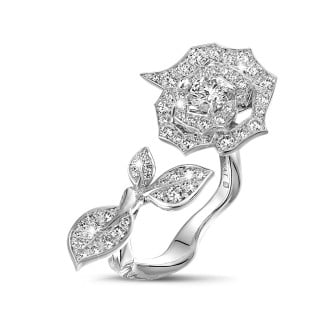
![0.95 carat diamond rose design ring in white gold]() NewPrincess Delphine0.95 carat diamond rose design ring in white goldFrom USD 16.000,00 (excl. VAT)
NewPrincess Delphine0.95 carat diamond rose design ring in white goldFrom USD 16.000,00 (excl. VAT) -
![1.00 carat solitaire ring with an asscher cut diamond in white gold]() Bestseller1.00 carat solitaire ring with an asscher cut diamond in white goldFrom USD 4.700,00 (excl. VAT)
Bestseller1.00 carat solitaire ring with an asscher cut diamond in white goldFrom USD 4.700,00 (excl. VAT) -
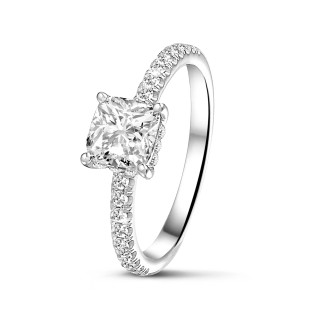
![1.00 carat solitaire ring with a cushion diamond and hidden halo in white gold]() BestsellerNew1.00 carat solitaire ring with a cushion diamond and hidden halo in white goldFrom USD 4.010,00 (excl. VAT)
BestsellerNew1.00 carat solitaire ring with a cushion diamond and hidden halo in white goldFrom USD 4.010,00 (excl. VAT) -
![1.00 carat solitaire cluster ring in white gold with oval diamond]() BestsellerNew1.00 carat solitaire cluster ring in white gold with oval diamondFrom USD 4.590,00 (excl. VAT)
BestsellerNew1.00 carat solitaire cluster ring in white gold with oval diamondFrom USD 4.590,00 (excl. VAT)

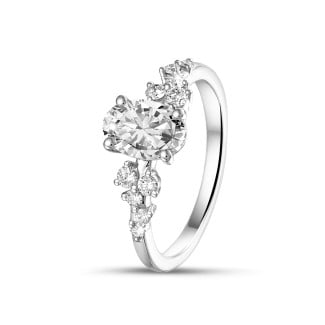
.
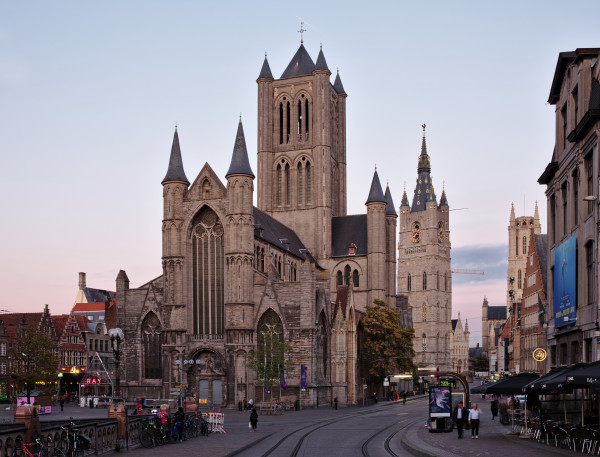
Meaningful traditional engagement rituals
During the engagement period, couples are encouraged to participate in pre-marital counselling or Pre-Cana, named after the wedding feast at Cana where Jesus performed His first miracle. These sessions help the couple prepare for the sacrament of marriage, reinforcing the importance of their commitment and the spiritual gravity of their union.
Historically, early Christian and Catholic traditions did not focus heavily on engagement rings. The essence of marriage was seen in the spiritual union before God. However, during the Middle Ages, engagement rings gained prominence. Their circular shape, symbolising eternity, resonated with Catholic teachings on the permanence of marriage.
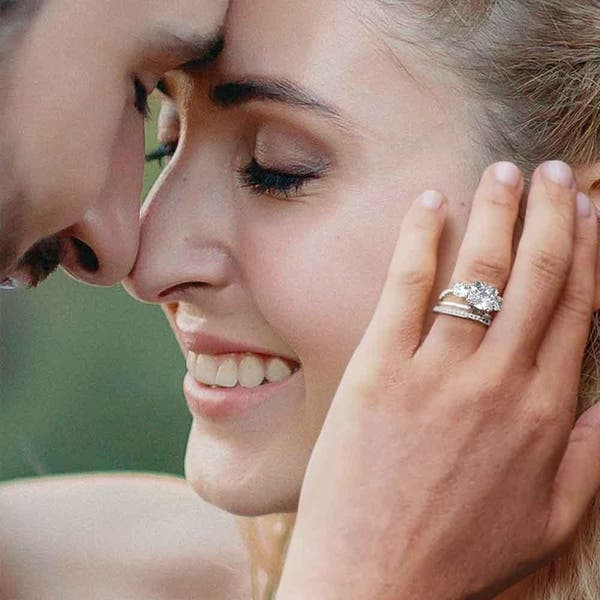
The sacred nature of traditional weddings
Hymns are sung, psalms are read, and cherished friends or family members share passages from the Old and New Testament. These steps lead up to the pivotal moment of the exchange of rings. The engagement ring, serving as a meaningful precursor to the wedding ring, symbolises the couple's intention to marry and their preparation for this sacred sacrament.
During the ceremony, the rings are blessed by the priest and then placed on the fourth finger of the left hand, a tradition held dear in Catholic countries like Ireland, Latin America, and the Philippines. This exchange is not just a declaration of mutual consent; it’s an invocation of divine grace upon the union, underscoring the sacred nature of marriage.
Finally, the priest may invite the couple to seal their vows with a kiss, marking the beginning of their journey together. As they leave the church, they carry with them the blessings and support of their faith and community, stepping into a future built on love and commitment.
Exploring Baunat's options for catholic engagement rings
Devotional ring styles: rosary, medal, saint signets and their meanings
Rosary rings - Rosary rings evoke the tactile rhythm of prayer, often formed as a narrow band with bead-like details that suggest the Hail Mary beads of a rosary. Symbolically they stand for a life of prayer and constant remembrance of the mysteries. Design cues include small round or faceted bead motifs around the band or a tiny central bead, sometimes accented with a single, modest diamond. For a sacramental jewel, choose 18Kt or higher gold and solid craftsmanship so the bead detail wears evenly over years of daily devotion.Miraculous Medal signet - Modeled on the famed Miraculous Medal, these signet-style rings feature the Virgin’s image or related iconography engraved or relief-carved into a flat face. They signal trust in Mary’s intercession and a visible commitment to Marian devotion. Typical designs use an oval or round tablet on a substantial shank, with fine engraving or low-relief sculpture; stone accents are usually minimal to keep the image legible. Prefer heavier-gauge 18Kt gold and crisp engraving; Baunat’s classic signet styles are a reference point for well-defined medal work.
Saint Benedict ring - The Saint Benedict ring incorporates recognizable Benedictine iconography: the cross, Latin initials and protective inscriptions associated with the saint. These rings are worn as signs of spiritual protection and obedience to a rule of life. Expect a bold face with clear lettering or the medal’s cross, sometimes framed within a signet bezel; finishes range from high polish to antiqued relief to enhance legibility. Choose solid 18Kt gold and precise, deep engraving or casting so the inscriptions remain sharp through daily wear.
Trinity and three-braid styles - The Trinity or three-braid rings use interlaced bands or triple-knot motifs to symbolize Father, Son and Holy Spirit or the biblical image of a cord of three strands. They are chosen for marriages as visible commitments to a God-centered union. Look for three interwoven bands, a tri-lobed signet, or a braided profile; some versions add small stones at junction points for subtle emphasis. Prioritise heavyweight 18Kt gold and flawless brazing or hand-weaving so the braid reads clearly and retains structural integrity.
Craftsmanship, materials and why it matters for sacramental rings
Finishing techniques translate craftsmanship into touch and appearance. High polish gives a luminous field for engraved images to contrast against, brushed or satin finishes soften reflective glare for everyday wear, and antiquing or selective blackening highlights lettering and sculptural details. Signet finishing in particular may combine a flat, mirror-polished face with bevelled shoulders to frame an image. Each finish requires controlled handwork or precision tooling to achieve consistent, lasting results.
Stone and diamond considerations should respect both visual harmony and Baunat’s standards. When gems are used to accent devotional motifs, choose colours and clarities that complement the iconography without overpowering it. Baunat adheres to strict quality thresholds, favouring well-coloured and well-cut stones that enhance a jewel’s presence while maintaining spiritual dignity. Avoid overly large or flashy stones that distract from the devotional focus.
Provenance and making process matter to many couples seeking sacramental pieces. Baunat pieces are produced with transparent supply-chain practices and artisanal finishing, bringing together responsible sourcing of metals and stones with in-house or partner ateliers skilled in engraving and casting. Artisans trained in classical techniques perform the finishing steps that give devotional rings their character, from hand engraving to final burnishing.
Key features of classic rings
- Minimalistic design: our rings boast a clean and sophisticated look, free from unnecessary embellishments. This minimalistic approach ensures that the focus remains on the stunning quality of the diamond and the craftsmanship of the ring.
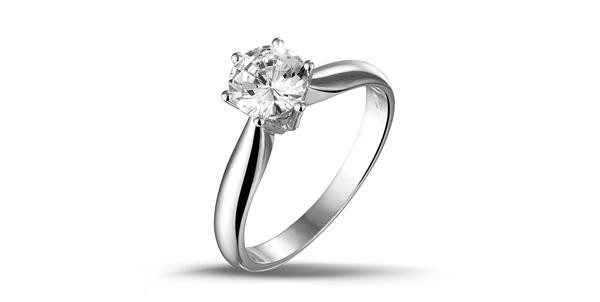
- Solitaire setting: the solitaire ring setting is a hallmark of classic jewellery. A single diamond takes centre stage, symbolising purity, unity, and eternal love. This setting allows the diamond to shine in all its glory, making a bold yet elegant statement. The solitaire ring is a testament to the saying, "Less is more."
Choosing a Catholic ring: materials, motifs and fit
Pick metal with longevity in mind. 18Kt and higher gold combines a rich appearance with the robustness needed for engraving and long-term wear; it also accepts polishing and repair without losing character. Avoid overly soft alloys for signets and medallions where fine detail must survive daily handling.
Choose signet versus band by lifestyle and visibility. A signet face offers space for imagery and inscriptions and reads well at a glance, while a plain devotional band presents subtler repeated symbolism and often wears more comfortably for manual work. For everyday comfort, opt for a slightly rounded interior shank and moderate width rather than an overly heavy profile.
Engraving and personalization: short inscriptions - dates, a short motto, or a saint’s name - are traditional and meaningful. Keep lettering concise so it remains legible; deeper engraving and a sturdier gold alloy will preserve the inscription over time. If you choose gem accents, select restrained sizes and colours that support the devotional focus rather than distract from it.
Fit and width: practical considerations matter for daily sacramental wear. Thinner bands suit those who prefer subtlety, while wider bands or signets work for more visible devotional statements. Try on samples in the desired width to ensure comfort, and choose a profile that sits securely without high edges that catch on clothing. A carefully chosen balance of motif, metal and fit will create a ring that is both spiritually resonant and comfortable for a lifetime of wear.
Find your catholic engagement ring at Baunat
Discover the art of timeless elegance with Baunat.
Frequently asked Questions
Engagement ring which hand/engagement ring which hand Muslim/engagement ring which hand Christian
The engagement ring: on which hand do I wear it? The engagement ring: on which hand do I wear it as a Muslim? The engagement ring: on which hand do I wear it as a Christian?
In most cultures, people wear both the engagement ring and wedding ring on the left-hand ring finger. As a Christian, you can also wear the engagement ring on the left hand and the wedding ring on the right hand. In countries of the Islam culture, the hand on which rings are worn varies from country to country. Jordan Muslims wear their wedding ring on the right hand, but in Iran people choose the left hand.
What is the romantic history of diamonds?
The diamond is used in many pieces of exquisite jewellery and comes in various sizes. It is, however, in its smallest form that it catches our interest the most: the diamond ring given in token of love and marriage. The actual history of this tradition transcends the perception of its creation as marketing hyperbole. The modern solitaire is just the most recent step on a long road from the past.
Rings date back several millennia, but those that are given as a token of love are first noted by the comic Roman poet Plautus in the 2nd century BCE. In those times, wedding rings were known for their interior inscriptions that recorded the marriage contracts signed in the presence of the Emperor's image. This custom was continued and Christianized by the 4th century, when priests would not permit weddings anymore without the exchange of rings.
What different shapes of diamonds do you use in your jewellery?
Diamonds come in different shapes. Each shape has different and unique characteristics that come to determine its specific quality. In most cases, BAUNAT uses the four following diamond shapes for its jewellery:
- Round
The round brilliant cut diamond is by far the most popular and most researched diamond shape available today. This shape has set the traditional standard for all diamond shapes. In addition, a round diamond will typically give you more flexibility in terms of balancing cut, colour, and clarity grades while still getting the fire and brilliance you want. Furthermore, it is the most classic choice. White gold earrings with a round diamond e.g. are extremely versatile. - Princess
The princess diamond has a square shape, with a length/width ratio of around 1.00 and 1.05. The princess cut is also referred to as the square modified brilliant cut, the square cut or the rectangular modified brilliant cut. The latter term is used when the proportions exceed 1.05. The cut requires more weight to be directed toward the diamond's depth in order to maximize brilliance. Depth percentages of 70% to 78% are not uncommon with these diamond shapes. - Pear
This brilliant-cut diamond looks like a sparkling teardrop because of its single point and rounded end. The pear diamond’s unique look makes it a popular choice for a variety of jewellery such as diamond pendants and diamond earrings. - Oval
The oval diamond has a traditional cutting shape with a particular touch. This shape is slightly less common than a brilliant and yet approximates the sparkling brilliance of a brilliant cut diamond. This diamond cut is popular among people with small hands and thin fingers, because the elegant oval shape has an elongating effect. Oval diamonds are also frequently seen in the engagement rings of celebrities and European princesses. - On demand, BAUNAT also offers other diamond shapes such as heart, Asscher, emerald, marquise, radiant or cushion.
More information about the 4Cs
-
An Van Puyvelde
-
An Van Puyvelde - Order & Administration Manager
-
-
An supervises BAUNAT’s order processing and logistics, working closely with the internal order team to ensure a seamless customer experience. She plays a key role in coordinating production timelines and maintaining clear communication with clients throughout the entire process. With a strong focus on precision and reliability, An is dedicated to delivering each piece on time while keeping customers fully informed, contributing to BAUNAT’s high standard of service and customer satisfaction.
An supervises BAUNAT’s order processing and logistics, working closely with the internal order team to ensure a seamless customer experience. She plays a key role in coordinating production timelines and maintaining clear communication with clients throughout the entire process. With a strong focus on precision and reliability, An is dedicated to delivering each piece on time while keeping customers fully informed, contributing to BAUNAT’s high standard of service and customer satisfaction.