







Features:
-
Category:
-
Posted at:
-
Author:
- Kim Wouters
-
BAUNAT Antwerp
-


-
Reading time:5 minutes
In this article:
- What typifies the baguette cut?
- The history of the baguette cut
- The appearance of the baguette diamond
- The difference between the baguette cut and the emerald cut
- The baguette cut as a central or side stone?
- What should I pay attention to when purchasing a baguette cut diamond?
- What other cuts are available?
What is the baguette cut?
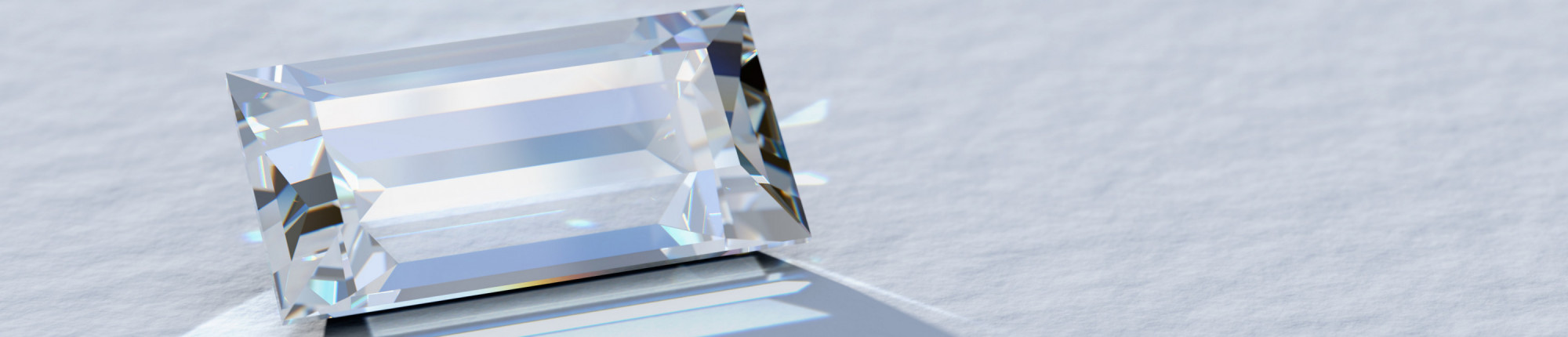
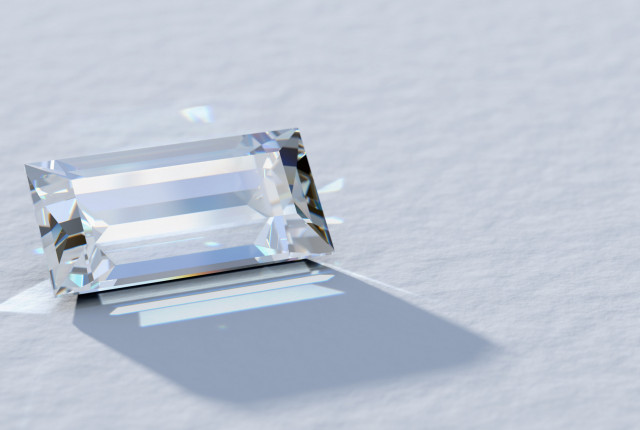
You might be wondering what a baguette diamond is. A baguette cut is a cut for diamonds or other precious stones that is less known than the popular brilliant, princess cut or cushion cut. The cut has been around for centuries, and was often used for diamonds in royal jewels.
Find your custom-made jewel at BAUNAT.
Read summary
What is the baguette cut diamond and why is it special?
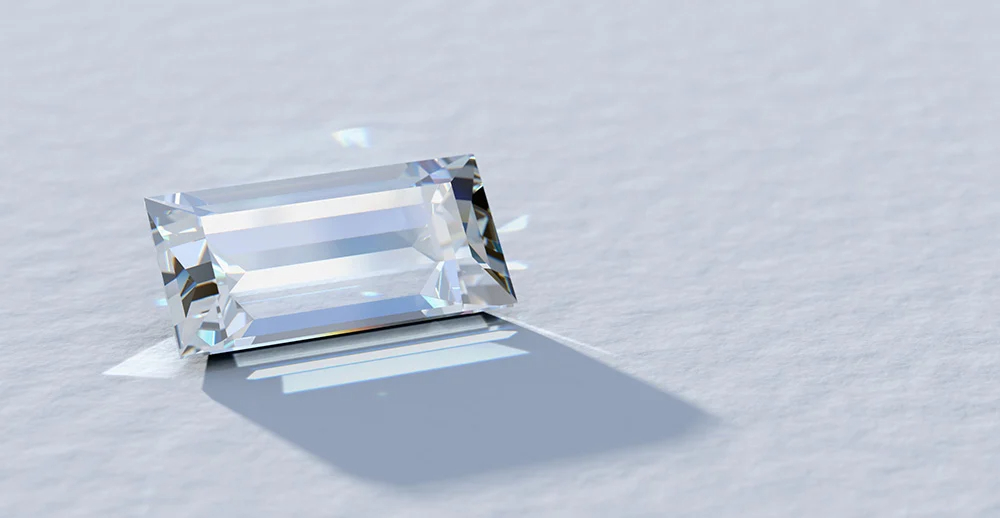
The baguette cut diamond features a distinctive long, rectangular shape with just 14 facets and a 5:1 ratio, emphasizing brightness over sparkle. Dating back to the 15th century, this elegant cut evolved from the hogback design and became popular among royalty, later experiencing a revival during the Art Deco period through Cartier around 1912.
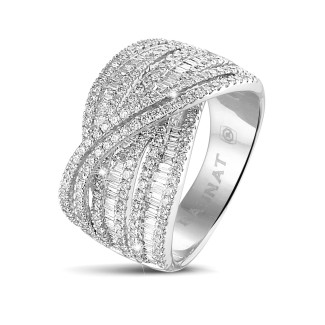
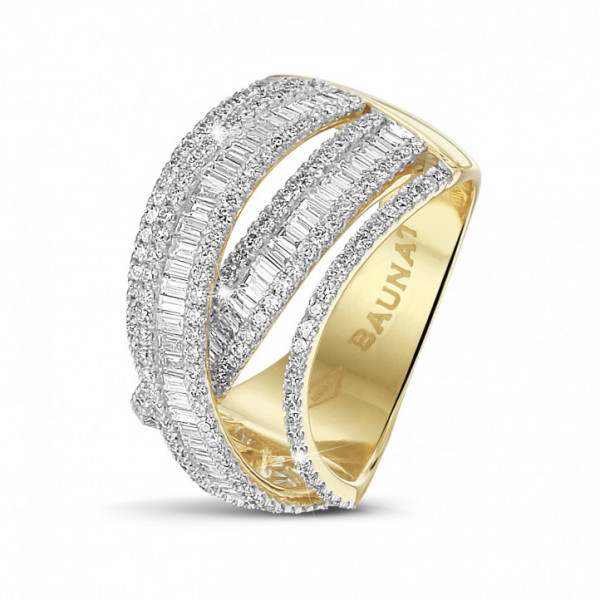
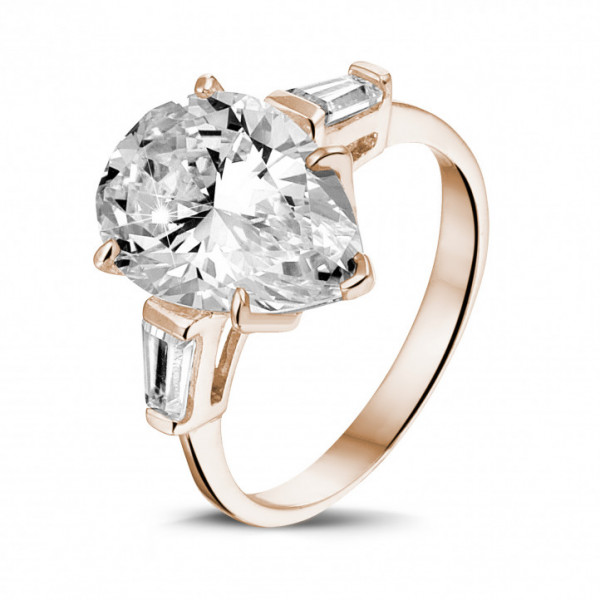
Though rarely used as center stones, baguette diamonds excel as side stones, perfectly complementing other cuts without stealing attention. The name derives from the French "bague" (small jewel) and resembles the famous French bread in shape.
Unlike the similar emerald cut, which has 50-58 facets, baguette diamonds are narrower and longer. When purchasing, focus on color matching with your center stone, as baguette cuts reveal color more readily than brilliant cuts. The ideal ratio should be between 1:5 and 1:7.
Most viewed diamond jewels
What typifies the baguette cut?
The history of the baguette cut
The name comes from the French word 'bague' which means small jewel or ring. The baguette became the cut for nobles and royals, and adorned several crowns and royal jewels. The name is also often linked to the French bread, baguette thanks to its elongated shape. Around the year 1912 Cartier made the cut extremely popular, especially since it fit perfectly in Art Deco.
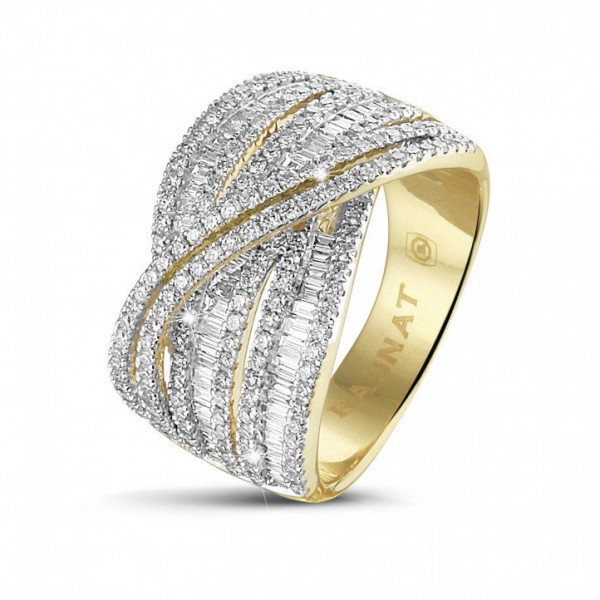
The appearance of the baguette diamond
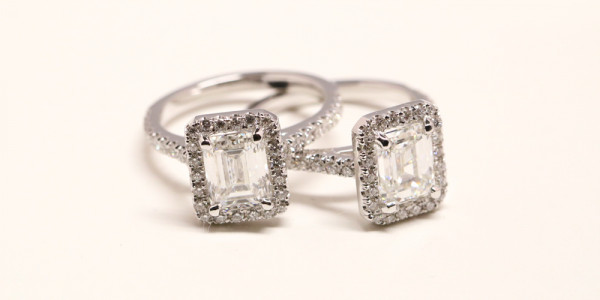
The difference between the baguette cut and the emerald cut
The baguette cut as a central or side stone?
Baguette cut diamonds are rarely used as central stones
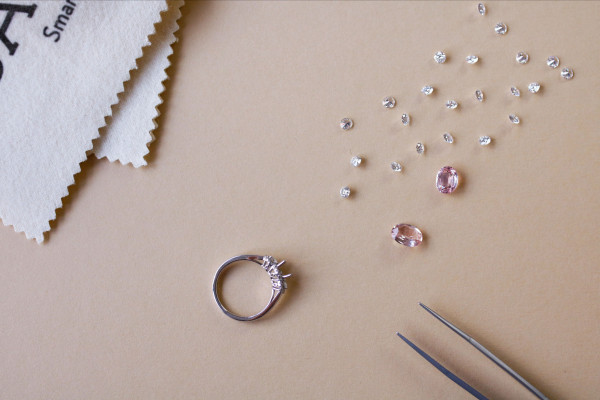
What should I pay attention to when purchasing a baguette cut diamond?
- Carat: Most baguette cut diamonds have a low carat.
- Colour: Always choose a diamond with a colour of G and higher, depending on the central diamond
- Clarity: The baguette cut is a stepped shape so inclusions can also be seen much easier. However, because they are usually smaller, you often do not see the imperfections with the naked eye. The clarity of the stone is therefore less important for a baguette cut diamond.
- Cut: A baguette cut should have a ratio of 1:5 to 1:7.
-
Kim Wouters
-
BAUNAT Antwerp
-
-
Kim, BAUNAT-certified is quite the Jill of all trades. After being submerged into all aspects of the brand, and being responsible for customer success, order & sales, office management, product management, she has become an expert in everything diamond and jewellery related. Apart from this product expertise, Kim’s master’s degree in communications makes her an excellent Diamond Jewellery Advisor to help you discover your personal taste and make sure all your expectations are exceeded.
Kim, BAUNAT-certified is quite the Jill of all trades. After being submerged into all aspects of the brand, and being responsible for customer success, order & sales, office management, product management, she has become an expert in everything diamond and jewellery related. Apart from this product expertise, Kim’s master’s degree in communications makes her an excellent Diamond Jewellery Advisor to help you discover your personal taste and make sure all your expectations are exceeded.