







Features:
-
Category:
-
Posted at:
-
Author:
- Stephanie Hesters
-
BAUNAT Antwerp
-


-
Reading time:13 minutes
In this article:
Why are coloured diamonds not only beautiful, but also valuable?
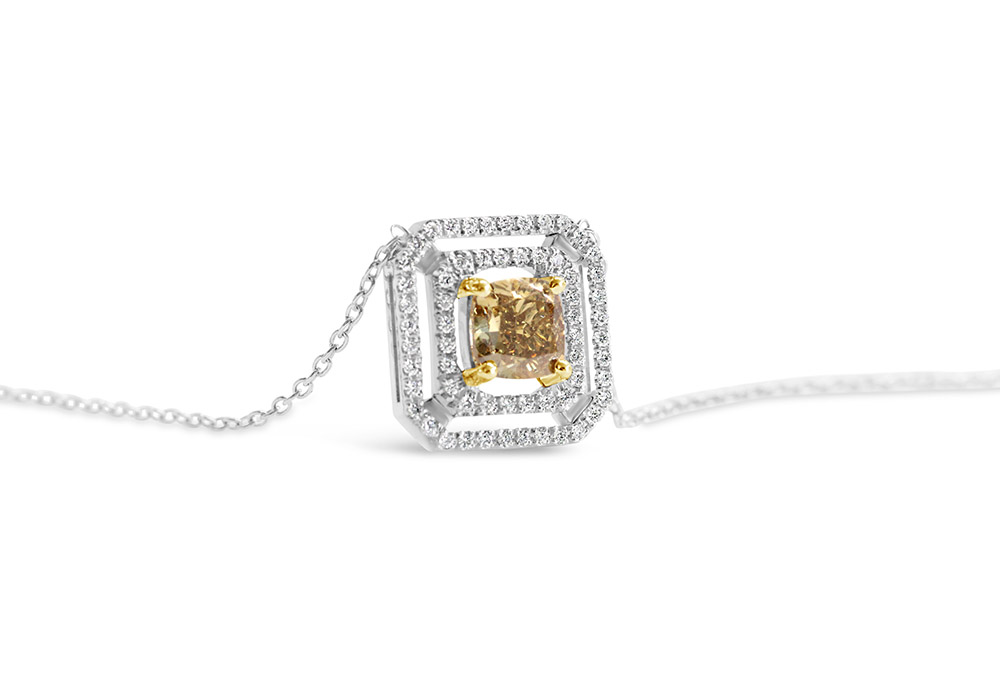
When most people hear the word "diamond", they immediately think of a ring with a colourless diamond in it. Sales of coloured diamonds are on the rise, however. Women are deliberately choosing jewellery more often with coloured diamonds. They are particularly unique and valuable because of their scarcity. How are they formed, how should you wear them, what are the most famous examples, and are they a good investment?
Browse our best-selling diamond jewellery
Read summary
Why Are Colored Diamonds So Valuable and Beautiful?
Looking for something truly exceptional in diamond jewelry? While most people envision colorless diamonds, colored diamonds are gaining popularity for good reason. These rare gems get their distinctive hues from natural elements or structural anomalies present during formation. Only about 2% of all diamonds worldwide have color, making them extraordinarily scarce.
Blue diamonds contain boron, yellow ones have nitrogen, and pink diamonds form under specific geological conditions. The rarest of all are red diamonds, with only 20-30 known to exist worldwide.
What makes colored diamonds valuable isn't just their beauty but their investment potential. Between 2006-2014, colored diamonds appreciated by 157.4% compared to just 62.4% for colorless diamonds. Their value increases with color intensity, unlike colorless diamonds which are priced higher when completely clear.
These natural treasures combine beauty, rarity, and investment value in one remarkable package.
Most viewed diamond jewels
-
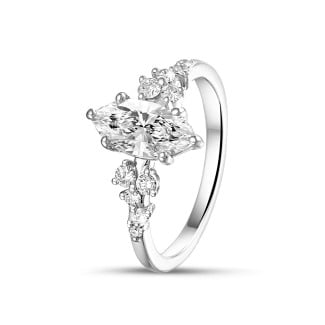
![1.00 carat solitaire cluster ring in white gold with marquise diamond]() BestsellerNew1.00 carat solitaire cluster ring in white gold with marquise diamondFrom USD 4.400,00 (excl. VAT)
BestsellerNew1.00 carat solitaire cluster ring in white gold with marquise diamondFrom USD 4.400,00 (excl. VAT) -
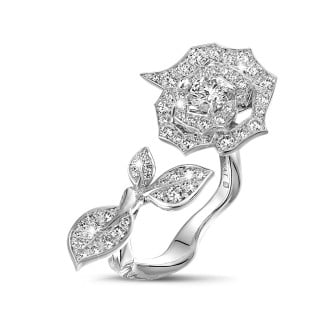
![0.95 carat diamond rose design ring in white gold]() NewPrincess Delphine0.95 carat diamond rose design ring in white goldFrom USD 16.000,00 (excl. VAT)
NewPrincess Delphine0.95 carat diamond rose design ring in white goldFrom USD 16.000,00 (excl. VAT) -
![1.00 carat solitaire ring with an asscher cut diamond in white gold]() Bestseller1.00 carat solitaire ring with an asscher cut diamond in white goldFrom USD 4.700,00 (excl. VAT)
Bestseller1.00 carat solitaire ring with an asscher cut diamond in white goldFrom USD 4.700,00 (excl. VAT) -
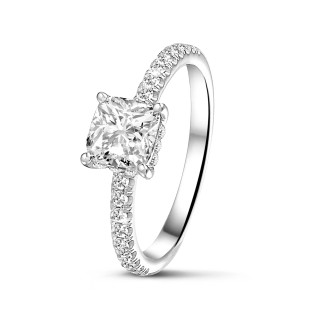
![1.00 carat solitaire ring with a cushion diamond and hidden halo in white gold]() BestsellerNew1.00 carat solitaire ring with a cushion diamond and hidden halo in white goldFrom USD 4.010,00 (excl. VAT)
BestsellerNew1.00 carat solitaire ring with a cushion diamond and hidden halo in white goldFrom USD 4.010,00 (excl. VAT) -
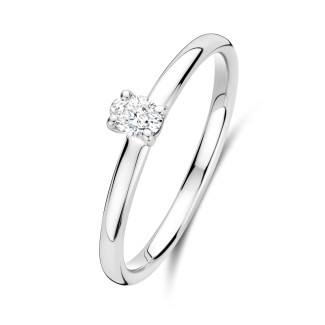
![0.15 carat solitaire ring with a oval cut diamond in white gold]() New0.15 carat solitaire ring with a oval cut diamond in white goldFrom USD 2.210,00 (excl. VAT)
New0.15 carat solitaire ring with a oval cut diamond in white goldFrom USD 2.210,00 (excl. VAT)

What different coloured diamonds are there?
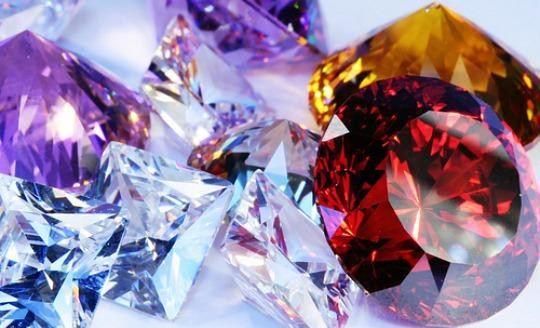
The different colours of diamonds arise from differences in the atomic structure. The difference in atomic structure has to do with impurities in the diamond: another naturally occurring element is compressed along with the carbon.
- If boron were present when forming, the result will be a grey or blue diamond.
- The presence of nitrogen produces a yellow diamond.
- Diamonds get a purple colour in the presence of high levels of hydrogen.
- A distorted crystal lattice can result in pink, red or brown diamonds.
- Green diamonds are colourless until they rise almost to the earth's surface. There, they are exposed to natural radiation. The diamonds absorb this radiation and so turn green.
- There is some doubt about black diamonds, but their colour is probably influenced by graphite.
The way they are formed sees to it that every coloured diamond is unique. Every coloured diamond has its own hue. As a result, they are generally more valuable than colourless ones.

Blue diamonds
Blue diamonds come in all different shades. The Hope Diamond is one of the most well-known blue diamonds.
Sapphires are a lovely alternative to expensive blue diamonds, like the one set into this necklace here.

Brown diamonds
Because their colour makes the diamond sparkle less than a colourless one, brown diamonds are less expensive than other coloured diamonds.

Yellow diamonds
The most well-known yellow diamond is the Tiffany Yellow Diamond. It is one of the largest there is, and among other things, Audrey Hepburn wore it in a necklace on the Breakfast at Tiffany’s film set.

Red diamonds
The Moussaiëff Red Diamond is the largest and most expensive red diamond, at 13.9 carats.
Rubies are a fine alternative to red diamonds, which are extremely rare.

Pink diamonds
The most famous pink diamond is the Pink Star. At no less than 59.6 carats, this gemstone is valued at more than €67 million.
Pink diamonds are a lovely alternative to a colourless diamond in, for example, an engagement ring.

Black diamonds
Black diamonds are very popular with men, set into a wedding ring, for example. The black colour means these diamonds do not sparkle as much, making them look trendier.
The most famous black diamond is the Black Amsterdam Diamond.

Purple diamonds
The most famous purple diamond is the Royal Purple Heart. At 7.34 carats and I1 clarity, it is the largest diamond of its kind.

Green diamonds
One of the most famous green diamonds is the Aurora Green Diamond. The 5.03 carat diamond is set in a halo ring with pink diamonds.
Emeralds are an alternative to green diamonds. Since coloured diamonds are so scarce, they are also very valuable. Emeralds can be a more economical choice here.
Natural vs lab-grown coloured diamonds - what to expect
Certification and disclosure
The key practical difference for buyers is clear disclosure. Reputable laboratories identify whether a stone is natural, treated or laboratory-grown. Natural stones carry reports that state natural origin and any natural modifiers; lab-grown stones receive reports that explicitly note laboratory origin and sometimes the production method. Certificates are the authoritative record and sellers must disclose this information.
Pros and cons for buyers
Natural coloured diamonds: their rarity and geological origin make them preferred by collectors and those seeking long-term value. They carry the cachet of natural provenance and, when strong in intensity and quality, are highly sought after. Lab-grown coloured diamonds: these can offer similar visual colours with different price and availability profiles. For buyers whose primary goal is appearance, lab-grown stones are a viable option. They also avoid some mining-related concerns, though natural stones retain unique market status and historical value.
A short example
A Fancy Intense natural pink will be described on its certificate as natural and will include any modifiers and the intensity grade. A lab-grown pink with similar tone and saturation will have a certificate indicating laboratory origin and may note the production method. The documents are the essential comparator and explain why origin matters to collectors and many investors.
Baunat recommendation
For investment-grade pieces, Baunat prefers natural stones set in 18Kt or higher precious metals and recommends prioritising stronger colour intensity and higher clarity thresholds. Always review the certificate carefully before purchase.
The most popular coloured diamonds
Large pink and blue diamonds continued to do especially well, attracting the highest bids. One highlight was certainly the sale of the Pink Star at Sotheby’s.

The price of coloured diamonds
It can be said of colourless diamonds: the paler the colour, the more expensive they are, because the rarer and more sought after they are. Diamonds with a fancy colour are valued differently. If a colour is rare, such as red, the reasoning goes: the more intense the colour, the more it is worth.
How coloured diamonds are valued (what to look for when buying)
Color (hue, tone and saturation)
Color is the primary determinant for fancy-coloured diamonds. Hue names the colour family, for example pink, blue or yellow. Tone indicates how light or dark that hue appears, and saturation describes its purity or strength. These three aspects combine to create the stone’s visual effect and its rarity. Stones with strong, pure saturation and an appealing tone attract the most interest from collectors.
Certification and origin
Independent laboratory reports are essential. A certificate that confirms colour grade, whether the colour is natural or treated, and any indication of origin supports provenance and market value. Reports also list the cut, carat and clarity, making objective comparisons between stones possible.
Color intensity and pricing - what it means
Laboratories grade intensity with terms such as Fancy Light, Fancy, Fancy Intense and Fancy Vivid. As intensity rises, a stone’s visual presence and scarcity generally increase. Fancy Light stones can be attractive and accessible, while Fancy Intense and Fancy Vivid stones show pronounced, saturated colour and are usually the most sought after. Price does not change in a strictly linear way across these categories: moving from Fancy to Fancy Intense commonly brings a notable uplift in desirability and value, and the step to Fancy Vivid can carry an even larger premium for rare hues.
What to expect when shopping
- Certification expectations: Request an independent laboratory report that states the colour grade, any treatments or enhancements, and the stone’s other 4Cs. GIA reports are widely used for coloured diamond grading.
- Documentation: A complete dossier should include the lab report, any treatment disclosure, and available provenance or purchase documentation.
- How labs describe colour: Descriptions combine hue with intensity, for example Fancy Intense Pink or Fancy Vivid Blue. Secondary hues or modifiers, such as brownish, grayish or greenish notes, will be recorded and can materially affect desirability.
- Baunat thresholds and preferences: Baunat works with settings of 18Kt or higher for its investment-grade jewellery and advises prioritising stronger colour intensity and clarity that does not compromise appearance. Lower colour or clarity levels are not promoted for premium pieces.
The more intense the colour, the more it is worth
The popularity and price of coloured diamonds have been on the rise worldwide for some time, due to their rarity, but also thanks to Asian investors. According to the Fancy Color Research Foundation (FCRF) - the not-for-profit coloured diamond index - coloured diamonds appreciated in value by an average of 157.4% from 2006 to 2014. By comparison, asking prices for colourless diamonds increased "only" 62.4% in the same period.

Where can I buy rare coloured diamonds?
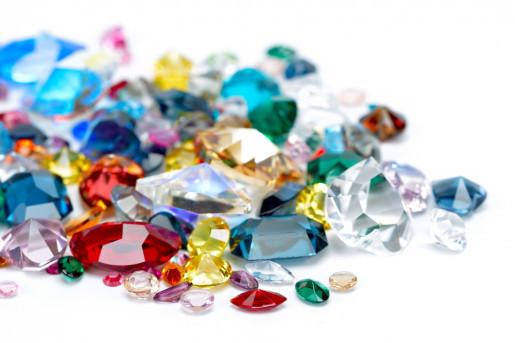
Browse various coloured diamonds
-
Stephanie Hesters
-
BAUNAT Antwerp
-
-
As the Head of Diamond Buying at BAUNAT, Stephanie has an extensive knowledge of the diamond and the evolution of diamond prices. Thanks to her broad product knowledge gained throughout her years at BAUNAT and the Diamond Foundation Course by De Beers, Stephanie advises our customers interested in the investment side of diamonds to optimize every investment. To support her skills she has a bachelor’s degree in Business Management together with her master’s in Communication.
About Stephanie Hesters (also known as Stephanie Lasters)
Stephanie Hesters, sometimes listed online as Stephanie Lasters, is Head of Diamond Buying at BAUNAT. She manages diamond sourcing and valuation, advises clients on market trends and pricing, and helps those looking for investment-grade stones. She completed the Diamond Foundation Course by De Beers and holds a bachelor’s degree in Business Management and a master’s in Communication.
Selected projects & collaborations
• Eternal Bloom Collection with Princess Delphine of Saxe-Coburg (2026), curator and project lead - guided creative direction and diamond selection for an exclusive collection that blends classical motifs with contemporary craftsmanship.
• Investment Diamonds Advisory Series (2024), author and presenter - developed client-facing guides and presentations on diamond valuation and market dynamics for private buyers and collectors.
• BAUNAT Editorial Features and Product Launches (2022–2025), contributor - worked with design and marketing teams to shape product narratives and ensure technical accuracy in launch materials and editorial content.
As the Head of Diamond Buying at BAUNAT, Stephanie has an extensive knowledge of the diamond and the evolution of diamond prices. Thanks to her broad product knowledge gained throughout her years at BAUNAT and the Diamond Foundation Course by De Beers, Stephanie advises our customers interested in the investment side of diamonds to optimize every investment. To support her skills she has a bachelor’s degree in Business Management together with her master’s in Communication.
About Stephanie Hesters (also known as Stephanie Lasters)
Stephanie Hesters, sometimes listed online as Stephanie Lasters, is Head of Diamond Buying at BAUNAT. She manages diamond sourcing and valuation, advises clients on market trends and pricing, and helps those looking for investment-grade stones. She completed the Diamond Foundation Course by De Beers and holds a bachelor’s degree in Business Management and a master’s in Communication.
Selected projects & collaborations
• Eternal Bloom Collection with Princess Delphine of Saxe-Coburg (2026), curator and project lead - guided creative direction and diamond selection for an exclusive collection that blends classical motifs with contemporary craftsmanship.
• Investment Diamonds Advisory Series (2024), author and presenter - developed client-facing guides and presentations on diamond valuation and market dynamics for private buyers and collectors.
• BAUNAT Editorial Features and Product Launches (2022–2025), contributor - worked with design and marketing teams to shape product narratives and ensure technical accuracy in launch materials and editorial content.